Starting an anti-inflammatory diet doesn’t have to be complicated. It’s simply about eating more whole foods like fruits, vegetables, and healthy fats while cutting back on processed items that can trigger inflammation. This article walks you through the basics, what to stock in your kitchen, and a practical 7-day meal plan to get you started.
Key Takeaways
- Focus on whole, unprocessed foods like fruits, vegetables, whole grains, and lean proteins.
- Include omega-3-rich foods such as fatty fish, nuts, and seeds daily.
- Limit sugary drinks, refined carbs, and processed meats to reduce inflammation triggers.
- Plan meals and prep ingredients ahead to make sticking with the plan easier.
- Be patient; noticeable changes in energy and discomfort may take a few weeks to months.
What is an Anti-Inflammatory Diet Meal Plan?
An anti-inflammatory diet meal plan focuses on whole, unprocessed foods rich in antioxidants and omega-3 fatty acids. It emphasizes fruits, vegetables, whole grains, lean proteins, and healthy fats. The goal is to reduce systemic inflammation, which is linked to various chronic health issues like heart disease and diabetes. This is a sustainable eating pattern, not a restrictive diet, making it easier to incorporate beneficial foods daily without feeling deprived.
Essential Foods for Your Anti-Inflammatory Kitchen
Stocking your kitchen with the right staples makes following this plan simple. Focus on these core categories:
- Fresh fruits: Berries, cherries, oranges, apples, and grapes for antioxidants.
- Fresh vegetables: Leafy greens like spinach and kale, broccoli, bell peppers, and tomatoes.
- Whole grains: Oats, quinoa, brown rice, and whole-wheat bread for fiber.
- Legumes: Beans, lentils, and chickpeas for plant-based protein and fiber.
- Fatty fish: Salmon, mackerel, and sardines for omega-3s.
- Lean poultry: Chicken breast and turkey for protein without excess saturated fat.
- Nuts and seeds: Almonds, walnuts, chia seeds, and flax seeds for healthy fats.
- Olive oil: Extra virgin olive oil as your primary cooking fat.
- Herbs and spices: Turmeric, ginger, garlic, and cinnamon for flavor and anti-inflammatory compounds.
Your 7-Day Anti-Inflammatory Meal Plan for Beginners
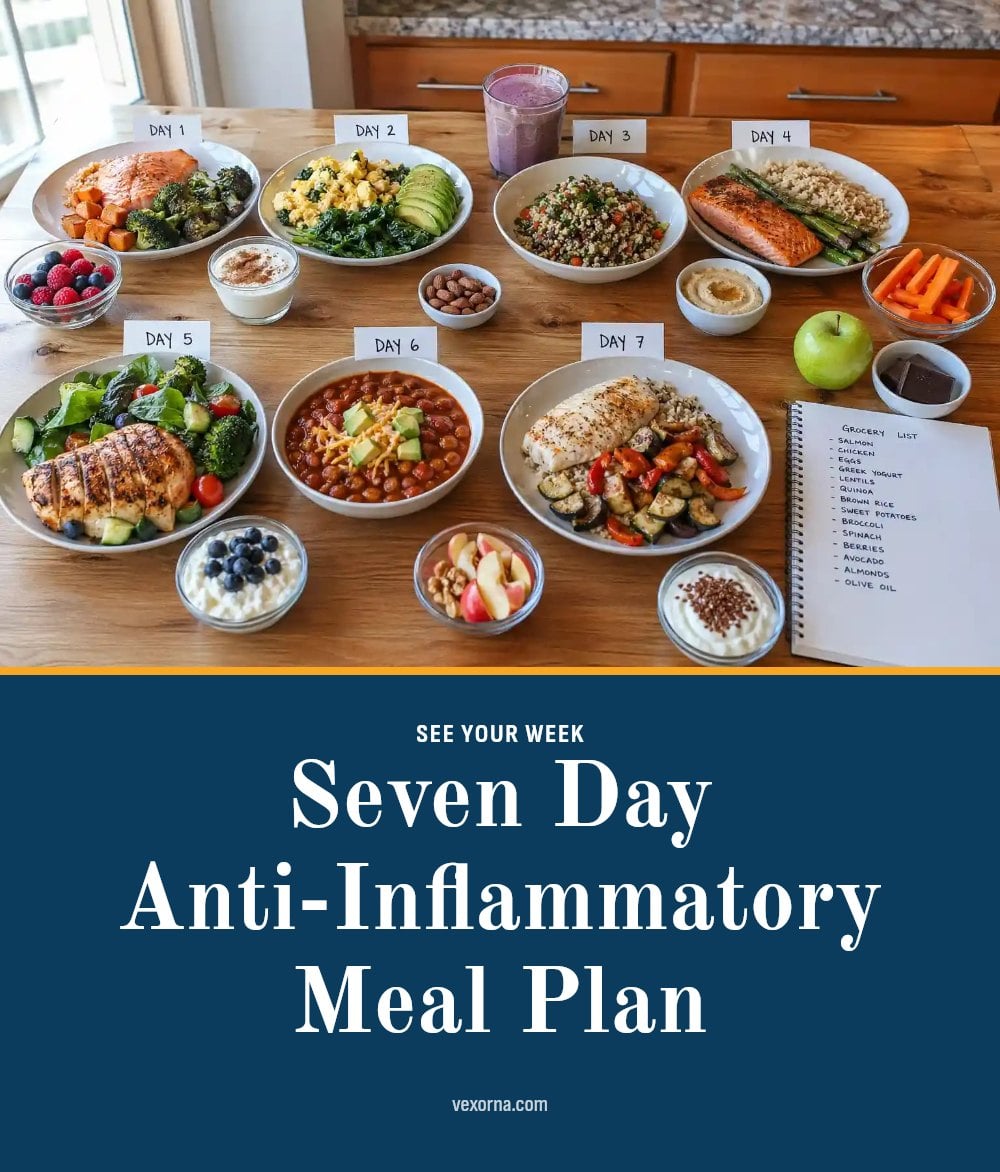
This sample meal plan gives you a week of balanced, anti-inflammatory meals. Feel free to swap meals between days or substitute with similar anti-inflammatory foods you enjoy. Focus on variety to ensure a wide range of nutrients. Remember to stay hydrated by drinking plenty of water throughout the day.
| Day | Breakfast | Lunch | Dinner |
|---|---|---|---|
| Monday | Oatmeal with berries and walnuts | Spinach salad with grilled chicken, chickpeas, and olive oil dressing | Baked salmon with quinoa and roasted broccoli |
| Tuesday | Greek yogurt with sliced almonds and apple | Lentil soup with a side of whole-wheat bread | Turkey and bell pepper stir-fry with brown rice |
| Wednesday | Smoothie with spinach, banana, chia seeds, and almond milk | Quinoa bowl with black beans, avocado, and tomatoes | Grilled mackerel with roasted sweet potatoes and kale |
| Thursday | Scrambled eggs with spinach and tomatoes | Leftover quinoa bowl or turkey stir-fry | Baked chicken breast with lentils and steamed green beans |
| Friday | Overnight oats with chia seeds and cherries | Tuna salad (with olive oil) on whole-wheat crackers and carrot sticks | Salmon cakes with a side of mixed greens and quinoa |
| Saturday | Whole-grain toast with avocado and a poached egg | Leftover salmon cakes or chicken with salad | Vegetable and chickpea curry with brown rice |
| Sunday | Pancakes made with oat flour (baked or pan-fried with minimal oil) and topped with berries | Turkey and avocado lettuce wraps with a side of grapes | Roasted vegetables (bell peppers, zucchini, onions) with grilled chicken and quinoa |
Common Mistakes to Avoid on an Anti-Inflammatory Diet
Starting an anti-inflammatory diet is exciting, but a few common mistakes can derail your progress. Avoid these pitfalls to stay on track.
- Expecting instant results: Dietary changes take time to impact inflammation. Focus on consistency over days and weeks, not quick fixes.
- Focusing only on ‘superfoods’: The overall dietary pattern matters more than relying on a few specific items like turmeric or berries alone.
- Unnecessarily eliminating too many food groups: This can lead to nutrient deficiencies. Aim for a balanced approach that includes a variety of foods.
- Not reading food labels: Hidden sugars and inflammatory oils (like trans fats) can be present in many packaged foods, even ones that seem healthy.
- Viewing it as a temporary diet: For lasting benefits, adopt this as a sustainable lifestyle change rather than a short-term fix.
- Neglecting hydration: Adequate water intake is crucial for overall bodily functions and the inflammation response.
Pro Tips for Sticking to Your Anti-Inflammatory Plan

Meal prep for success: Set aside a couple of hours each week to wash and chop vegetables, cook a batch of quinoa or brown rice, and prepare proteins like baked chicken or boiled eggs. Having these ready cuts down on decision time during busy weekdays.
Experiment with herbs and spices: Turmeric, ginger, and garlic do double duty. They add bold flavor and contain recognized anti-inflammatory compounds. Try turmeric in scrambled eggs or ginger in stir-fries.
Hydrate consistently: Sip water throughout the day, and swap one cup for an herbal tea like ginger or chamomile. Tip: Keep a water bottle on your desk as a visual reminder.
Snack smartly: Keep almonds, walnuts, fresh fruit, or chia pudding within reach so you grab something anti-inflammatory instead of a processed option.
Prioritize colorful produce: Aim for a rainbow on your plate, red bell peppers, orange carrots, leafy greens, blueberries. Each color brings different antioxidants to fight oxidative stress.
Cook at home more often: You control the oil, salt, and cooking method. Avoid high-temperature grilling or frying that can create inflammatory compounds. Bake, steam, or gently pan-fry with a small amount of olive oil over medium heat instead.
When to Consult a Healthcare Professional
If you have a pre-existing medical condition or take medications, speak with your doctor or a registered dietitian before overhauling your eating pattern. Some anti-inflammatory foods (like leafy greens high in vitamin K) can interact with blood thinners.
Pay attention to how your body responds. If you notice new or worsening symptoms after adding a food, stop and consult a professional. A dietitian can also provide personalized guidance if you plan to restrict certain food groups, ensuring you still get all necessary nutrients.
Frequently Asked Questions
How quickly can I see results from an anti-inflammatory diet?
Results vary, but many people notice improvements in energy levels and reduced discomfort within a few weeks to a few months of consistent adherence. It’s not an overnight fix, so focus on long-term habits rather than quick changes.
Can I still eat my favorite foods on an anti-inflammatory diet?
Yes, you don’t have to give up everything you love. The goal is to emphasize anti-inflammatory foods most of the time while allowing occasional treats. For example, you can enjoy a small serving of your favorite dessert now and then without derailing your progress.
Do I need to take supplements on an anti-inflammatory diet?
Focus on getting nutrients from whole foods first. Supplements aren’t usually necessary if you eat a balanced diet rich in fruits, vegetables, and healthy fats. If you have a specific deficiency or medical condition, talk to your doctor before adding supplements.
Is an anti-inflammatory diet suitable for weight loss?
It can support weight loss because it emphasizes whole, nutrient-dense foods that are often lower in calories and higher in fiber, which helps you feel full. However, weight loss isn’t guaranteed; it depends on your overall calorie intake and physical activity level.
What is the difference between acute and chronic inflammation?
Acute inflammation is a short-term response to injury or infection, like a swollen ankle. Chronic inflammation is long-lasting and can contribute to health issues such as heart disease and diabetes. An anti-inflammatory diet aims to reduce chronic inflammation over time.
Final Thoughts
My tip: Start by swapping one meal or snack each day with an anti-inflammatory option, like a berry smoothie or a salmon salad. Consistency matters more than perfection, so don’t stress if you slip up. Over time, these small shifts can help support your body’s natural balance and overall well-being.
This article provides general information about an anti-inflammatory diet for wellness purposes. It is not a substitute for professional medical advice. If you have a pre-existing condition or are taking medication, consult your doctor or a registered dietitian before making significant dietary changes.