
If you’ve been struggling with digestion or just want to feel fuller longer, fiber is the nutrient you’re probably missing. It’s a type of carbohydrate your body can’t digest, but it does so much behind the scenes: it helps regulate blood sugar, manage cholesterol, and keep things moving. This article covers easy, practical ways to add more fiber to your meals using whole foods like fruits, vegetables, whole grains, and legumes.
Key Takeaways
- Adult women should aim for 25 grams of fiber daily, and men for 38 grams.
- Pair soluble fiber sources like oats and beans with insoluble ones like whole wheat and nuts for full benefits.
- Increase fiber gradually over several weeks and drink plenty of water to avoid digestive discomfort.
- Choose whole fruits over juices and keep edible skins on vegetables to retain fiber.
- Legumes like lentils and chickpeas deliver both soluble and insoluble fiber in one package.
What Are Fiber Foods and Why Do They Matter?
Fiber is a type of carbohydrate your body can’t digest, but it’s essential for digestive health, blood sugar control, and managing cholesterol. There are two types: soluble fiber, which dissolves in water and forms a gel that helps lower blood sugar and cholesterol, and insoluble fiber, which adds bulk to stool to keep you regular. Eating more fiber from whole foods can improve overall health and support weight management. The general recommendation is 25 grams per day for women and 38 grams for men.
The Power Duo: Soluble vs. Insoluble Fiber
The Power Duo: Soluble vs. Insoluble Fiber
Soluble fiber, found in oats, beans, apples, and carrots, dissolves in water to create a gel-like substance. This slows digestion, which can help manage blood sugar and lower cholesterol levels. Insoluble fiber, found in whole wheat, nuts, seeds, and fruit skins, doesn’t dissolve. It adds bulk to stool and promotes regular bowel movements, preventing constipation. Both types are vital for your health, and most plant foods contain a mix of the two. Aim to include a variety of sources daily.
1. Fruits and Vegetables: Nature’s Fiber Boosters

Whole fruits with edible skins are fiber powerhouses. Apples, pears, and berries are excellent choices. Leafy greens like spinach, root vegetables such as carrots and sweet potatoes, and cruciferous veggies like broccoli and Brussels sprouts also pack significant fiber.
My tip: Don’t peel fruits and veggies if the skin is edible; that’s where a lot of the fiber is.
2. Whole Grains and Legumes: Your Daily Fiber Foundation

Swap refined grains for whole grains like oats, brown rice, quinoa, and whole wheat bread to boost your fiber intake significantly. Legumes such as beans, lentils, and chickpeas are excellent sources of both soluble and insoluble fiber, making them a versatile addition to meals.
My tip: Start your day with oatmeal and add lentils to your soups and salads for an easy fiber boost.
3. Nuts and Seeds: Small but Mighty Fiber Sources
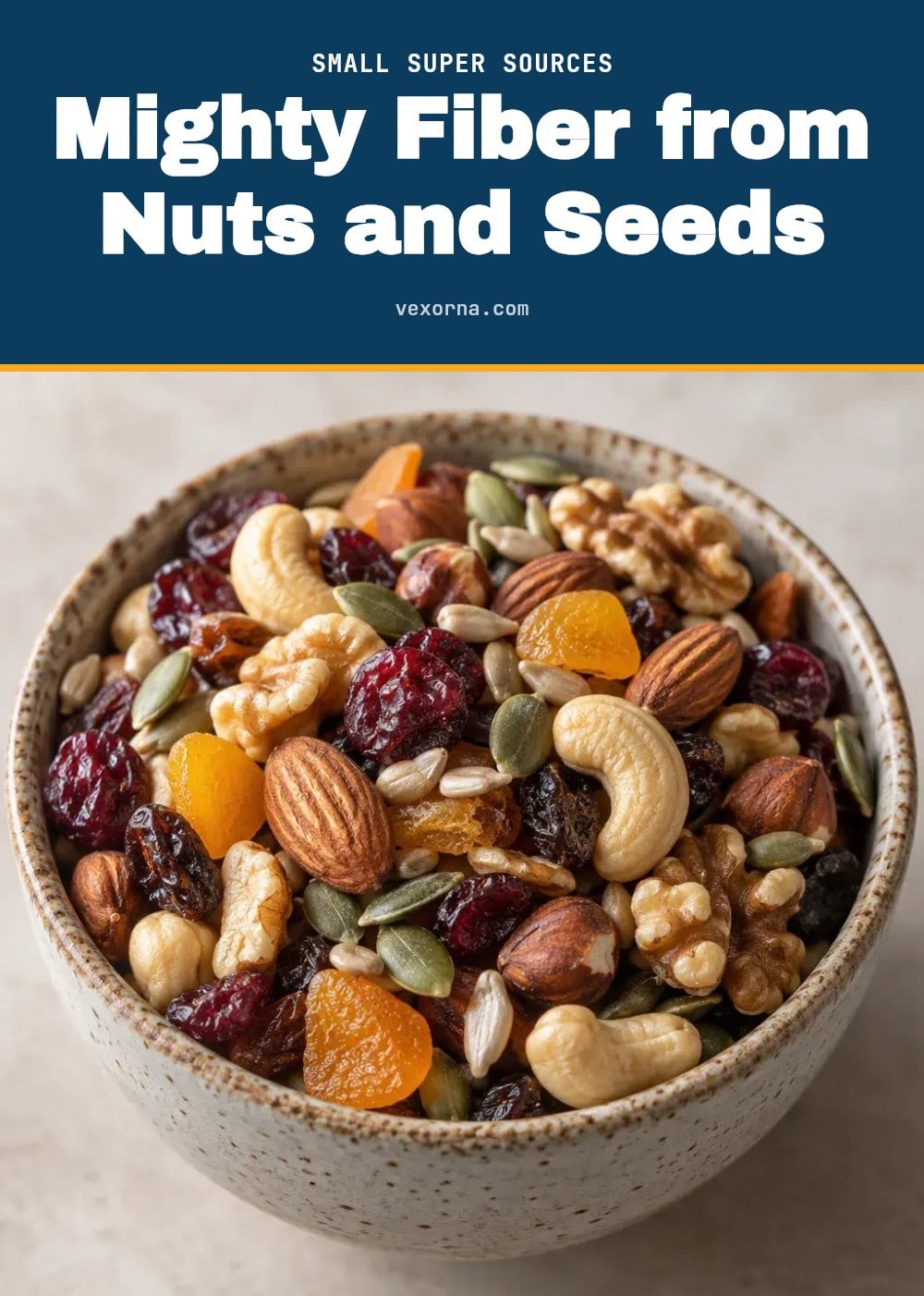
Almonds, walnuts, and pecans pack fiber alongside healthy fats and protein, which makes a small handful a filling snack rather than an empty one. Seeds are even more concentrated: chia, flax, and sunflower seeds deliver a solid fiber hit in a spoonful, and ground flax stirs into almost anything without changing the taste.
- Easy add-ins: Sprinkle seeds over yogurt or a salad, or blend them into a smoothie. A spoonful of chia or ground flax thickens a smoothie and adds fiber at the same time.
My tip: Keep a small jar of mixed seeds on the counter. You will reach for it far more often than a bag buried in the pantry.
Smart Strategies for Boosting Your Fiber Intake
Going from a low-fiber diet to a high one works best in stages. These habits keep the process comfortable and make the increase stick.
- Start slow: Add a little more fiber every week or so over several weeks. A jump from one day to the next is what tends to bring on gas and bloating.
- Hydrate: Fiber needs water to do its job. Drink more as your intake climbs, because fiber without fluid can backfire and cause constipation instead of relieving it.
- Read labels: Check the fiber grams per serving. Foods with at least 3 to 5 grams per serving pull their weight; anything under 1 gram is mostly filler.
- Choose whole over juice: Juice strips out the fiber and leaves the sugar. Eat the fruit instead and you keep the part that slows digestion.
- Mix it up: Rotate your sources across the week so you get both soluble and insoluble types rather than leaning on one food.
Common Fiber Mistakes to Avoid
Most fiber trouble comes from how you add it, not from fiber itself. These are the slips I see most often.
- Increasing too quickly: Doubling your intake overnight is a fast route to gas, bloating, and discomfort. My tip: Take it slow and let your body adjust week by week.
- Forgetting water: Fiber pulls in fluid, so skimping on drinks can leave you constipated rather than regular. My tip: Keep a water bottle handy and sip through the day.
- Relying on supplements: Powders and pills can help, but they do not replace the range of nutrients in whole foods. My tip: Think food first whenever possible.
- Ignoring food labels: You cannot tell fiber content by looking, so a quick check per serving keeps you on track. My tip: Become a label-reading pro and compare similar products.
When to Talk to a Healthcare Professional
Fiber is safe for most people, but a few situations call for a doctor’s input rather than a diet tweak.
- New or severe symptoms: Severe abdominal pain, persistent bloating, or significant changes in bowel habits after increasing fiber are worth checking out.
- Existing conditions: If you have Crohn’s disease, ulcerative colitis, or diverticulitis, talk to your doctor before making major dietary changes.
- Very high intake with low fluid: Excessive fiber without enough water can, in rare cases, contribute to intestinal blockages. Mention it to a professional if you are concerned.
Frequently Asked Questions
How quickly can I see benefits from eating more fiber?
Many people notice improved digestion and more regular bowel movements within a few days to a week of increasing their fiber intake. However, long-term benefits like better cholesterol levels and reduced disease risk develop over months and years of consistent eating habits.
Can I get too much fiber?
Yes, it’s possible to have too much fiber too quickly, which can cause gas, bloating, or discomfort. In rare cases, very high fiber intake without enough water can lead to intestinal blockages. The key is to increase gradually and keep your fluid intake up.
Are fiber supplements as good as food sources?
Supplements can help you reach your daily goal, but they don’t provide the vitamins, minerals, and phytonutrients that whole foods offer. It’s best to rely on fruits, vegetables, whole grains, and legumes as your primary sources and use supplements only as a backup.
What are the best high-fiber snacks?
Good options include a handful of almonds or walnuts, an apple or pear with the skin on, raw vegetables like carrot sticks, or a small bowl of berries. Chia seeds or ground flax seeds can also be stirred into yogurt for a quick fiber boost.
Does cooking reduce fiber in foods?
No, cooking generally does not break down fiber. In fact, it can sometimes make fiber more accessible, as with cooked legumes or steamed vegetables. Just avoid overcooking vegetables to the point of mushiness, which can cause some water-soluble nutrients to leach out, but the fiber itself remains.
Final Thoughts
My tip is to start with one swap: replace white rice with brown rice or add a handful of beans to your salad. You’ll likely notice better digestion within a few days, but the real payoff for your heart and blood sugar builds over months of consistent intake. Fiber is a simple lever you can pull every day to improve your health without overhauling your whole diet.
This article provides general information about dietary fiber for educational purposes and does not constitute medical or nutritional advice. If you have a medical condition, experience severe digestive symptoms, or are considering significant dietary changes, please consult a healthcare professional or registered dietitian for personalized guidance.