If you’ve ever caught yourself spiraling from a small worry to a full-blown disaster scenario, you’re not alone. That pattern has a name: catastrophizing. It’s a common cognitive distortion where your mind jumps to the worst possible outcome, and it can leave you feeling anxious and overwhelmed. In this article, I’ll walk you through what catastrophizing really is, why it happens, and practical ways to challenge those thoughts so you can find a more balanced perspective.
Key Takeaways
- Catastrophizing is a cognitive distortion, not a fact or a prediction.
- Challenge thoughts by asking about the actual likelihood and listing evidence.
- Mindfulness and journaling help you observe and reframe catastrophic thoughts.
- Focus on what you can control instead of dwelling on ‘what if’ scenarios.
- Seek professional support if catastrophizing disrupts your daily life.
What Exactly Is Catastrophizing?
Catastrophizing is a cognitive distortion where you predict the worst possible outcome for any situation, often exaggerating negative consequences. It’s a common response to stress or anxiety, leading to increased worry and distress. Recognizing this thought pattern is the first step toward managing it effectively.
Why We Fall Into Catastrophic Thinking
Why We Fall Into Catastrophic Thinking
Catastrophizing is a biased way of thinking about yourself and the world. It often starts with a single ‘what if’ question, like ‘What if I mess up this presentation?’, and then spirals into worse scenarios, such as losing your job or financial ruin. This thought pattern is linked to anxiety, depression, and chronic pain, and it can show up in many areas of life: health concerns, relationships, work, and finances.
- Health: You might assume a headache means a serious illness.
- Relationships: A partner’s late reply could feel like the end of the connection.
- Finances: A small unexpected expense might seem like the start of bankruptcy.
Practical Strategies to Challenge Catastrophic Thoughts

When a catastrophic thought hits, you can learn to challenge it rather than accept it as fact. Here are three practical methods to try.
Question the Likelihood
Ask yourself: ‘What is the actual probability that this worst-case outcome will happen?’ List the evidence for and against your prediction. Tip: Write down three more realistic, less severe outcomes to shift your perspective.
Practice Mindfulness
Mindfulness helps you observe thoughts without judgment, which can reduce their intensity. When you notice a ‘what if’ spiral, take a few slow breaths and say to yourself, ‘I am having a catastrophic thought. It is just a thought, not a fact.’ Caution: This takes practice; don’t expect it to work perfectly the first time.
Focus on Problem-Solving
Instead of dwelling on potential negatives, shift to what you can control. Ask: ‘What is one small action I can take right now to address this situation?’ For example, if you’re catastrophizing about a work deadline, break the task into smaller steps and start the first one. My tip: Keep a notepad nearby to jot down solutions, not just worries.
Tools to Help You Manage Catastrophizing
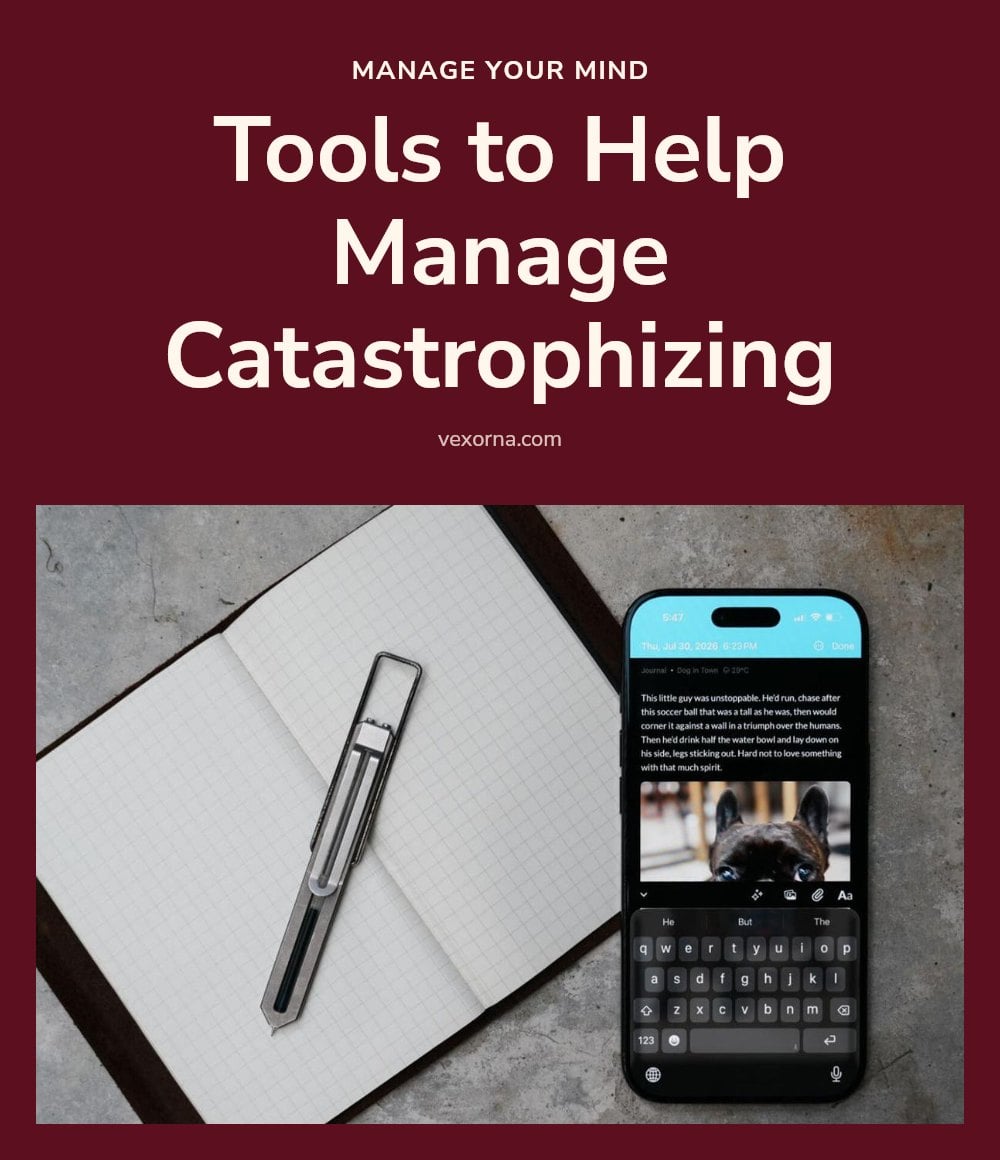
A few simple tools can make a big difference in managing catastrophic thoughts.
- Journal: Use a notebook to identify and label each catastrophic thought as it occurs. Write down the trigger, the worst-case prediction, and a more realistic outcome.
- Mindfulness apps: Apps like Calm or Headspace offer guided exercises that help you stay present and observe thoughts without judgment.
- Therapy resources: CBT workbooks provide structured exercises for challenging cognitive distortions, including catastrophizing. Many are available online or at libraries.
Common Mistakes When Trying to Stop Catastrophizing
Believing every catastrophic thought is reality: Your brain is not a fortune teller. A thought is just a thought, not a guaranteed outcome. Trying to completely stop negative thoughts: Suppression backfires. Instead of pushing thoughts away, practice reframing them. Ask yourself, “What is a more balanced possibility?” Dismissing the impact on health: Chronic catastrophizing can increase stress hormones, disrupt sleep, and worsen anxiety. Take it seriously. Confusing catastrophizing with realistic risk assessment: Real risks are specific and have evidence; catastrophic thoughts are vague and exaggerated. Use facts, not fear, to evaluate danger.
Long-Term Strategies to Prevent Catastrophic Thinking
- Identify your triggers: Notice which situations spark catastrophic thinking. A health symptom, a work email, a relationship conflict. Knowing your triggers lets you prepare a coping response.
- Practice challenging thoughts daily: Each time a catastrophic thought appears, write it down and list two realistic alternative outcomes. Consistency rewires the habit.
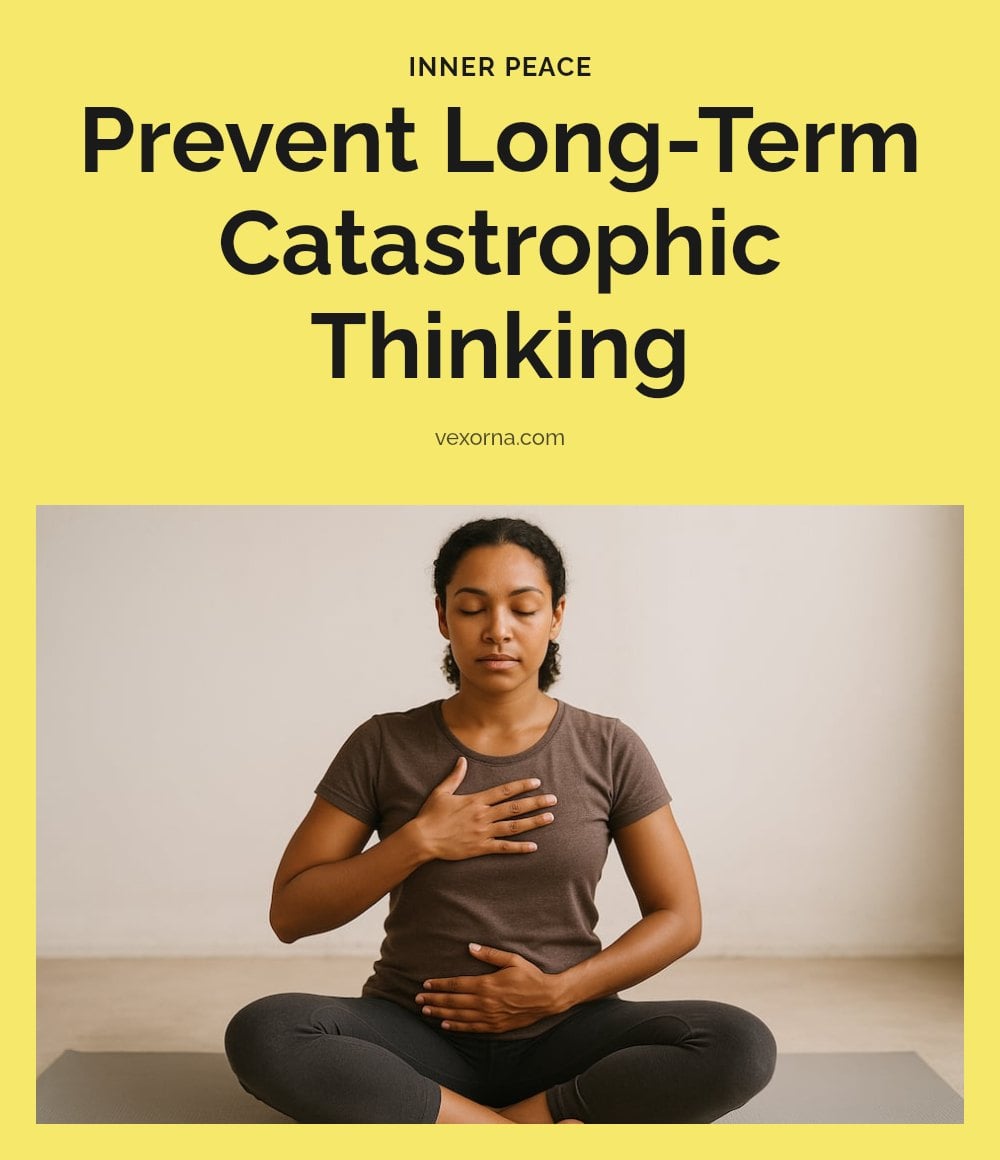
- Use relaxation techniques: Deep breathing or a short meditation shifts your nervous system out of fight-or-flight mode, making it easier to think clearly.
- Focus on what you can control: List the actions you can take right now, even small ones, and let go of the rest.
When to Seek Professional Support for Catastrophizing
If catastrophizing interferes with your daily routine, relationships, or ability to function, it may be time to talk to a professional. Cognitive Behavioral Therapy (CBT) is a structured approach that helps you identify and change distorted thought patterns. Seek immediate help if catastrophic thoughts lead to severe anxiety, panic attacks, or any thoughts of self-harm. A licensed therapist can provide personalized strategies and support.
Frequently Asked Questions
Is catastrophizing a mental illness?
No, catastrophizing is not a mental illness on its own. It’s a cognitive distortion, a biased way of thinking that can be a symptom of or a contributing factor to conditions like anxiety, depression, or chronic pain. If you’re concerned about your mental health, a professional can help you understand how this pattern fits into your overall well-being.
Can catastrophizing cause physical symptoms?
Yes, intense anxiety from catastrophizing can lead to physical symptoms like a racing heart, muscle tension, headaches, or stomach issues. The mind and body are closely connected. If you experience severe physical symptoms or panic attacks, it’s wise to talk to a doctor or mental health professional for guidance.
How long does it take to stop catastrophizing?
There’s no fixed timeline, but with consistent practice, many people notice improvements within weeks or months. It’s an ongoing process, not a quick fix. The more you practice challenging your thoughts and using tools like journaling or mindfulness, the more natural it becomes to catch and reframe them.
What is the difference between worrying and catastrophizing?
Worrying is a normal part of life, but catastrophizing takes it to an extreme. Worrying involves considering possible negative outcomes, while catastrophizing assumes the worst-case scenario is the most likely one and exaggerates its severity. For example, worrying about a job interview is common, but catastrophizing would have you convinced you’ll be fired and homeless.
Can therapy really help with catastrophizing?
Yes, therapy can be very effective. Cognitive Behavioral Therapy (CBT) is a widely recognized approach that helps you identify, challenge, and change distorted thought patterns like catastrophizing. A therapist can guide you through structured exercises and provide support as you practice new ways of thinking. Many people find CBT helpful for reducing anxiety and building resilience.
Final Thoughts
Managing catastrophizing takes consistent practice, but you can make real progress. My tip: start by labeling the thought when it appears, then ask yourself, ‘What’s the evidence for this outcome?’ That simple step can break the spiral before it gains momentum. Expect that it will take weeks or months of daily effort to see noticeable changes, and that’s okay. Be patient with yourself, and remember that a thought is just a thought, not a prophecy. If the pattern feels overwhelming, reaching out to a therapist who uses CBT can give you structured tools to work through it.
This article is for general information only and is not a substitute for professional medical or mental health advice. If you’re experiencing severe anxiety, panic attacks, or thoughts of self-harm, please reach out to a qualified mental health professional or a crisis hotline right away. Always consult with a doctor or therapist for guidance on your specific situation.