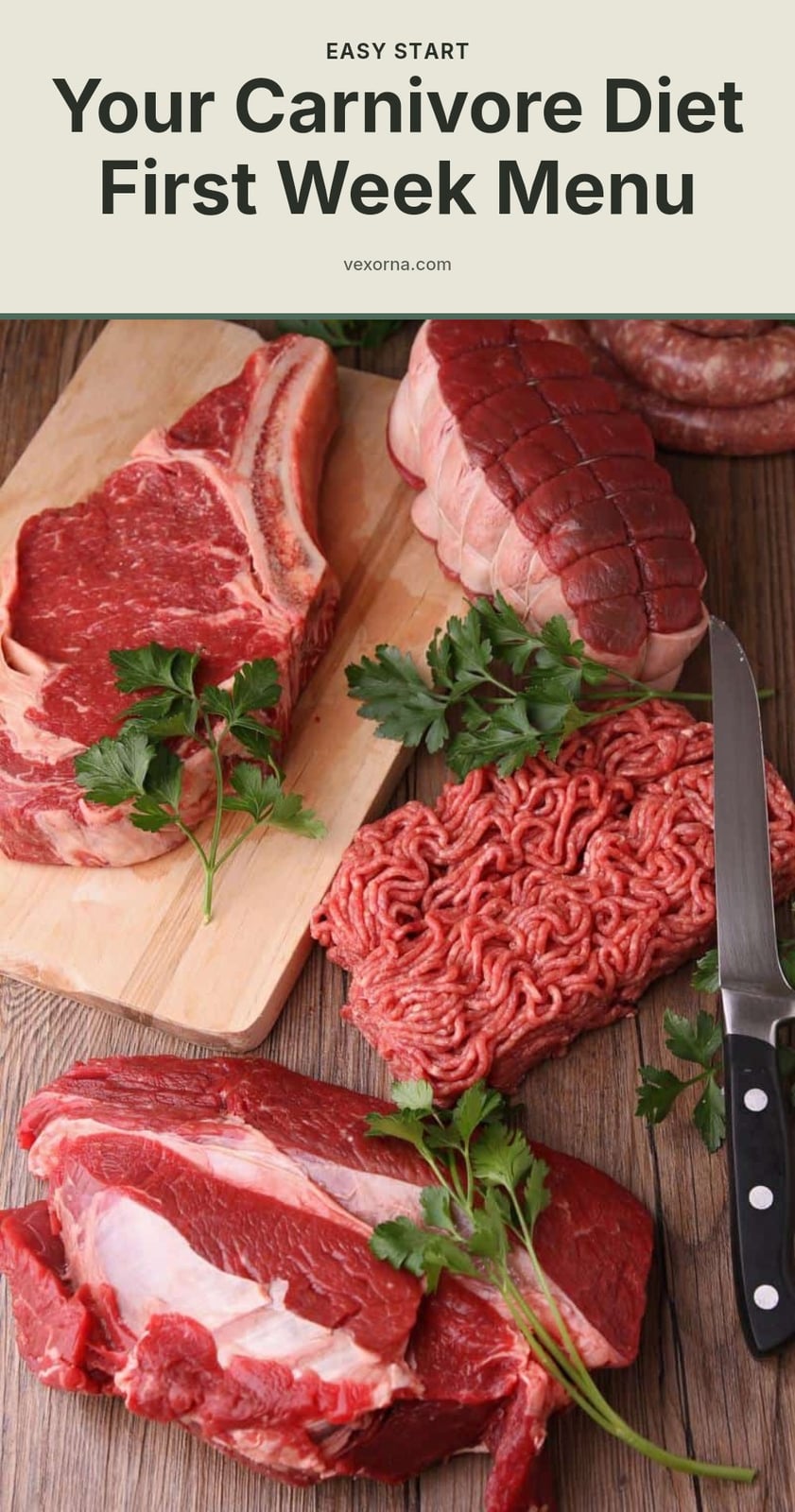
If you’re curious about the carnivore diet, you’ve probably heard it’s meat-only and nothing else. But what does that actually look like on your plate for a whole week? This article breaks down exactly what the carnivore diet is, gives you a practical first-week plan, and covers the common pitfalls to avoid so you can decide if it’s right for you.
I’ll walk you through the shopping list, a sample day-by-day menu, and what to expect during the adaptation phase. My tip: always check with a doctor before starting any extreme diet, especially if you have health conditions.
Key Takeaways
- The carnivore diet includes only animal products like meat, fish, eggs, and some dairy.
- Prioritize fatty cuts such as ribeye, pork belly, and 80/20 ground beef for energy.
- Drink plenty of water and consider electrolytes to ease adaptation symptoms.
- Consult a doctor before starting, especially if you have kidney, heart, or other conditions.
- Adaptation can last a few days to two weeks, with possible fatigue or digestive changes.
What Exactly Is the Carnivore Diet?
The carnivore diet is an extremely restrictive eating plan that consists exclusively of animal products, meat, fish, eggs, and some dairy. It eliminates all plant-based foods, including fruits, vegetables, grains, legumes, nuts, and seeds. Water, coffee, and tea are generally permitted. This diet lacks broad scientific support and is considered controversial within the medical and nutritional communities due to concerns about nutrient deficiencies and long-term health risks.
Your Carnivore Diet Shopping List

Building a carnivore diet shopping list means focusing on animal products and nothing else. Prioritize fatty cuts of meat like ribeye, pork belly, and ground beef for adequate caloric intake. Include a variety of animal proteins to get a broader spectrum of nutrients.
- Beef: steaks, roasts, ground beef
- Pork: chops, bacon, pork belly
- Lamb: chops, roasts
- Poultry: chicken, turkey, duck
- Fish: salmon, mackerel, sardines, cod
- Eggs and dairy: eggs, butter, ghee, or heavy cream
- Cooking fats: lard, tallow
- Essentials: salt and plenty of water
Don’t forget salt. It helps with electrolyte balance, especially during the initial adaptation phase.
Your First Week on the Carnivore Diet: A Sample Plan
Your first week on the carnivore diet keeps meals simple: meat, salt, and water. Emphasize fatty cuts like ribeye and ground beef to stay satisfied. Vary your protein sources across the week for a wider nutrient range. Stay hydrated with plenty of water throughout each day.
| Day | Breakfast | Lunch | Dinner |
|---|---|---|---|
| Monday | 3 eggs fried in tallow | Ground beef patties with salt | Ribeye steak |
| Tuesday | Bacon and eggs | Canned sardines | Pork chops |
| Wednesday | Scrambled eggs with tallow | Leftover pork chops | Ground beef with salt |
| Thursday | 3 eggs and bacon | Salmon fillet | Lamb chops |
| Friday | Fried eggs in tallow | Leftover lamb | Chicken thighs with skin |
| Saturday | Bacon and eggs | Canned mackerel | Ribeye steak |
| Sunday | 3 eggs fried in tallow | Ground beef patties | Pork belly |
Drink water with every meal and between meals. Your body needs extra hydration since you’re no longer getting water from plant foods.
Common Mistakes to Avoid When Starting Carnivore
Starting the carnivore diet comes with common pitfalls that can make the transition harder than it needs to be.
- Not eating enough fat: Lean meats leave you hungry and low on energy. Prioritize fatty cuts like ribeye, pork belly, and 80/20 ground beef.
- Skipping water: Without fiber-rich foods, you lose a key source of water intake. Drink consistently throughout the day to avoid worsening ‘keto flu’ symptoms.
- Ignoring nutrient gaps: The diet eliminates all plant foods, which can lead to deficiencies in Vitamin C, Vitamin K, and antioxidants. Be aware of this risk.
- Starting without medical advice: This diet is not suitable for everyone. Consult a doctor before beginning, especially if you have kidney disease, heart conditions, or are pregnant or breastfeeding.
Approach the diet with realistic expectations and prioritize professional guidance over anecdotal claims.
Practical Tips for a Smooth Carnivore Transition

Your body will need time to adjust, and digestive changes are normal during the first weeks. Some people experience looser stools or temporary constipation as their gut adapts to the absence of fiber. Listen to your body and give it time before judging how you feel.
Vary your animal proteins beyond beef. Rotate in pork, lamb, chicken, turkey, and fish like salmon or mackerel. Each brings a slightly different nutrient profile, and variety also keeps meals from becoming monotonous.
Tip: Pay attention to electrolytes, especially sodium, potassium, and magnesium. The shift away from carb-heavy foods can cause your body to flush more water and electrolytes, which may worsen fatigue or headaches. Salting your food to taste and drinking plenty of water helps many people through the ‘keto flu’ phase.
Choose fatty cuts over lean ones. Fat is your main energy source on this diet, and it also keeps you full between meals. Ribeye, pork belly, chicken thighs, and ground beef with higher fat content are solid choices.
What to Expect: Adaptation Timeline and Costs
The adaptation phase, often called ‘keto flu,’ typically lasts from a few days to two weeks. You may experience fatigue, headaches, or irritability as your body shifts from burning carbohydrates to fat for fuel. Digestive changes like constipation or diarrhea can persist longer, sometimes for several weeks, as your gut adjusts to the lack of fiber.
Cost varies widely depending on your meat choices. Fatty cuts like ribeye and pork belly tend to be more expensive than ground beef or chicken thighs. Buying in bulk or choosing less popular cuts can help manage the budget, but expect your grocery bill to differ from a standard diet that includes grains and produce.
When to Consult a Doctor About Your Carnivore Diet
Before starting the carnivore diet, check with your doctor, especially if you have underlying health conditions like diabetes or heart disease. During the diet, seek medical advice if you experience severe fatigue, muscle cramps, dizziness, or an irregular heartbeat. These can signal electrolyte imbalances from the restrictive eating. Persistent constipation or diarrhea that doesn’t resolve may mean your body isn’t adapting well to the lack of fiber.
Caution: Individuals with kidney disease should avoid this diet due to the high protein load, which stresses the kidneys. Those with heart conditions or high cholesterol need extreme caution because of the high saturated fat content. Pregnant or breastfeeding individuals should also skip it, as nutrient deficiencies from excluding plant foods can affect fetal development and milk production.
Frequently Asked Questions
Can I drink coffee on the carnivore diet?
Yes, coffee and tea are generally permitted on the carnivore diet, though some strict followers only drink water. If you include coffee, avoid adding sugar, milk, or cream if you’re following a strict version. Stick to black coffee to stay within the diet’s rules.
How long does it take to adapt to the carnivore diet?
The adaptation phase, often called ‘keto flu,’ typically lasts from a few days to two weeks. During this time, you may feel fatigue, headaches, or irritability as your body shifts from burning carbs to fat. Digestive changes like constipation or diarrhea can persist longer for some people.
What are the most common side effects of the carnivore diet?
Common side effects include fatigue, headaches, and irritability during the initial adaptation, often called ‘keto flu.’ Digestive issues like constipation or diarrhea are also common due to the lack of fiber. Some people experience muscle cramps or dizziness, which may signal electrolyte imbalances.
Is the carnivore diet safe for long-term use?
There is no scientific consensus or long-term research supporting the safety of the carnivore diet. It is inherently low in fiber and may lead to deficiencies in vitamins like C and K, as well as antioxidants. Consult a doctor or dietitian before considering long-term use, especially if you have health conditions.
Can I eat dairy on the carnivore diet?
Some variations of the carnivore diet allow small amounts of dairy, such as cheese or heavy cream, while others are strictly meat, salt, and water. If you include dairy, choose full-fat options and watch for any digestive reactions. It’s best to start with a strict version and adjust based on how you feel.
What if I don’t like red meat?
You can still follow the carnivore diet by focusing on other animal proteins like pork, lamb, chicken, turkey, fish, and eggs. Fatty fish like salmon or mackerel and poultry with skin can help meet your fat needs. The key is to include a variety of animal foods to get a broader nutrient range.
Final Thoughts
If you decide to try the carnivore diet, keep it simple: meat, salt, and water, with fatty cuts to stay satisfied. Expect an adjustment period of a few days to two weeks, and don’t ignore persistent side effects. Ultimately, listen to your body and prioritize professional medical advice over anecdotal claims.
This article provides general information about the carnivore diet and is not a substitute for professional medical advice. Dietary changes can affect individuals differently, especially those with pre-existing health conditions. Always consult a doctor or registered dietitian before starting any restrictive diet, and seek medical help if you experience concerning symptoms.