
If you’ve ever felt awkward or shy in social situations, you’re not alone. The good news is that social skills aren’t something you’re born with. They can be learned and improved at any age through consistent practice. In this article, we’ll cover a simple daily habit to build your skills, the power of active listening, common pitfalls to avoid, and practical tips to make your interactions smoother.
Key Takeaways
- Commit to practicing one social skill daily until it becomes natural.
- Practice diaphragmatic breathing to feel more present before conversations.
- Listen fully without formulating your reply until the other person finishes speaking.
- Pause for a moment of thought before responding to show you care.
- Focus on improving just one specific skill per interaction to avoid overwhelm.
What Are Social Skills and Why Do They Matter?
Social skills are the communication and interaction abilities that let us connect effectively with others. They cover both verbal and non-verbal communication, from the words we choose to our body language, eye contact, and tone of voice. These skills are crucial for building stronger relationships in every setting, whether at work, with friends, or within your family.
While some people seem naturally gifted, these abilities are not fixed. You can learn and improve them at any age through conscious effort and consistent practice. My tip: treat social skills like any other skill, with patience and regular reps.
A Simple Daily Habit to Improve Your Social Skills
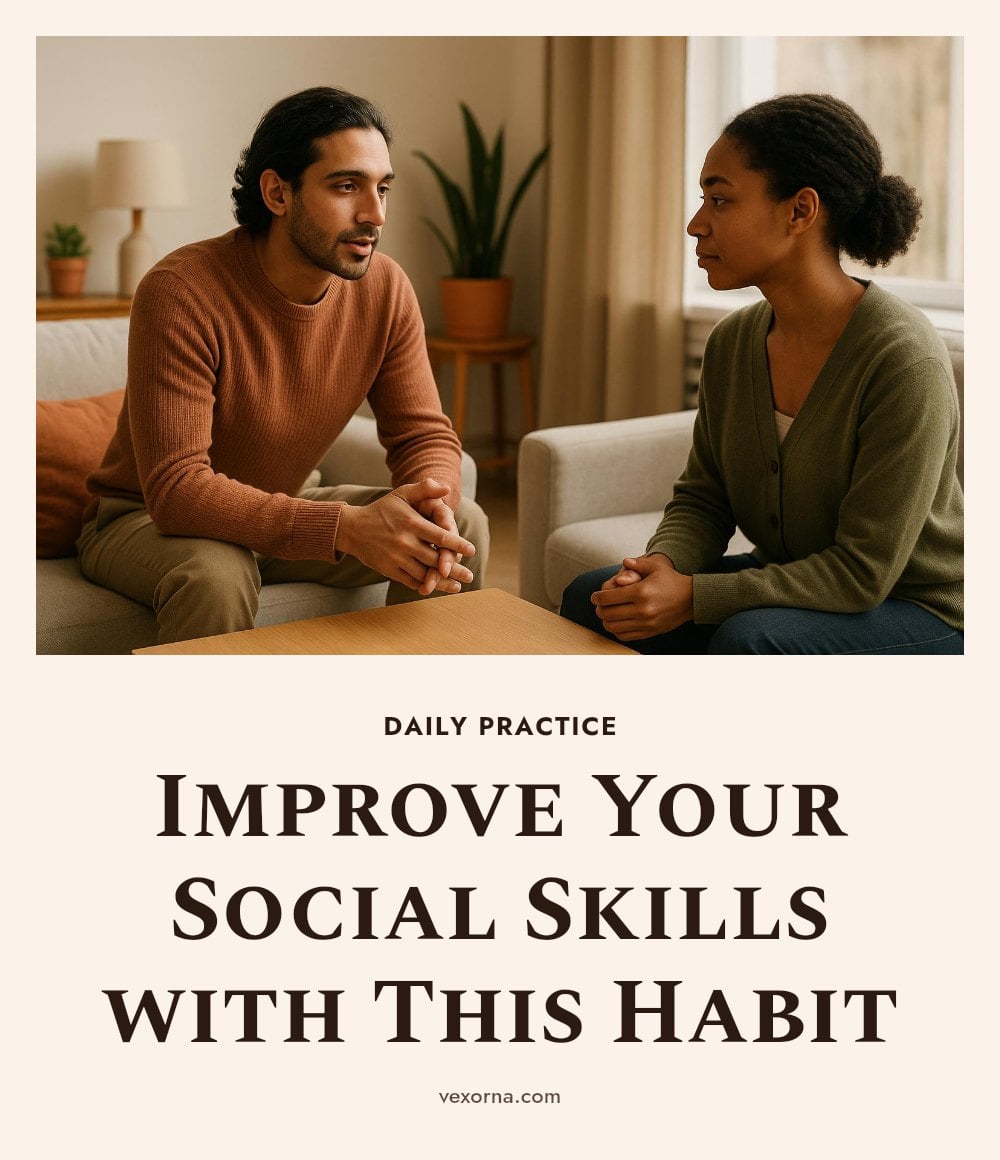
Improving your social skills doesn’t require a complete personality overhaul. This simple daily habit, practiced consistently, can make a real difference.
- Commit daily: Make it a morning goal. Tell yourself, “Today I will practice my social skills,” and repeat this intention until it becomes automatic.
- Breathe from your diaphragm: Before any interaction, take a few slow, deep breaths that expand your belly, not your chest. This calms your nervous system and helps you stay present.
- Listen fully: When someone speaks, give them your complete attention. Resist the urge to formulate your reply while they are still talking. Just listen.
- Pause before responding: After the other person finishes, wait a moment in silent thought. This shows you care and gives you time to craft a thoughtful answer.
- Focus on one skill: For each conversation, consciously pick a single social skill to improve, such as being more authentic, speaking louder, or showing more kindness. Concentrate on that one thing.
Consistency is key. Reading about these steps is not enough; you have to apply them daily. Information alone doesn’t build skill, only practice does.
Here is the method in action: brinyheart. demonstrates it in about 5 minutes. The how-to part starts at 2:59.
Understanding the Power of Active Listening and Pausing
Active listening is more than just hearing words. It means fully concentrating on what someone is saying, rather than waiting for your turn to speak. When you listen this way, you avoid making assumptions and truly absorb the other person’s message.
Taking a moment to pause before you respond is a small but powerful act. It demonstrates that you value what was said, and it gives you the space to formulate a more articulate and thoughtful answer. This practice transforms a simple exchange into a deeper, more meaningful conversation.
My tip: if you catch your mind drifting to your reply, gently bring your focus back to the speaker’s words. You can even summarize their point silently in your head to stay engaged.
Common Pitfalls When Learning Social Skills
As you work on your social skills, watch out for these common pitfalls that can slow your progress.
- Trying to do too much at once: Overwhelming yourself with many tips at once is counterproductive. Focus on one specific skill per interaction.
- Thinking of your reply while someone is speaking: This leads to assumptions and prevents true active listening. Wait until they have finished before you start formulating your response.
- Believing social skills are innate: This is a myth. These skills can be learned and improved with conscious effort and practice, no matter your starting point.
- Avoiding social situations: Avoiding only feeds fear. Seek out opportunities for interaction, even small ones like chatting with a cashier, to build comfort.
- Ignoring non-verbal cues: Pay attention to body language, eye contact, and facial expressions. These cues often say more than words and help you respond appropriately.
Tips for Enhancing Your Social Interactions

Practice self-awareness: Notice how your emotions affect your interactions. When you feel anxious, your body language might tighten. Catching that early lets you adjust before it derails the conversation.
Ask open-ended questions: Replace “Did you have a good weekend?” with “What did you do this weekend?” The second invites a story, not a one-word answer. It keeps the exchange moving naturally.
Maintain appropriate eye contact: Look at the other person for about 60-70% of the conversation. Break away briefly every few seconds so it doesn’t become a stare. This signals you are engaged without making them uncomfortable.
Offer genuine compliments: Point out something specific: “That was a sharp observation in the meeting” or “I like how you explained that concept.” Specific compliments feel more sincere and build rapport quickly.
Observe and mimic positive body language: Watch people who seem at ease in conversations. Notice their posture, hand gestures, and smile. Subtly mirror those cues to feel more connected and appear more approachable.
Minimize distractions: Put your phone face down or in your bag during a conversation. A single glance at a notification breaks the connection. Being fully present shows the other person they matter.
How Long Until You See Results?
Consistent daily practice leads to gradual improvement over weeks and months. You will notice small wins first: a longer conversation, a smoother introduction, a moment where you catch yourself listening instead of planning your reply. Regular application accelerates progress, just like any skill you are building. The best part is that improving social skills costs nothing but your time and effort. No special tools, no subscriptions, just a commitment to showing up and practicing each day.
Frequently Asked Questions
How long does it take to improve social skills?
With consistent daily practice, you can expect gradual improvement over weeks and months. You’ll start noticing small wins first, like a longer conversation or a smoother introduction. Regular application accelerates progress, just like with any other skill.
Can social skills be learned at any age?
Yes, absolutely. While some people seem naturally gifted, social skills can be learned and improved at any age through conscious effort and practice. It’s never too late to build stronger connections with others.
What are some non-verbal social cues?
Non-verbal cues include body language, eye contact, facial expressions, and gestures. Learning to read these cues, along with tone of voice and posture, can help you respond appropriately in conversations and avoid misunderstandings.
How can I practice social skills if I’m shy?
Start small by practicing short interactions like saying hello to a cashier or asking a coworker a simple question. Focus on one skill at a time, such as maintaining eye contact for a few seconds, and gradually build up as your comfort grows.
What is active listening?
Active listening means fully concentrating on what someone is saying, rather than just waiting for your turn to speak. It involves absorbing their message without making assumptions, and it helps you respond more thoughtfully and show genuine interest.
Is it okay to make mistakes when practicing social skills?
Yes, absolutely. Learning is a process, and making mistakes is a natural part of it. Don’t be afraid to stumble. Each interaction is a chance to learn and improve. The key is to keep practicing and not let fear hold you back.
Final Thoughts
My tip: pick one small skill, like asking an open-ended question or maintaining eye contact, and practice it in just one conversation each day. You’ll likely notice small wins within a few weeks, like a longer chat or a moment where you truly listened instead of planning your reply. Consistent practice really does pay off over time.