
Feeling constantly tired, foggy, or just off? It might be time to look at your B12 levels. This essential vitamin powers your nerves, blood cells, and DNA, but your body can’t make it on its own. In this article, I’ll walk you through why B12 matters, how to spot a potential deficiency, and the smartest ways to keep your levels where they should be.
Key Takeaways
- Vitamin B12 is essential for nerve function, red blood cell formation, and DNA synthesis.
- Adults need 2.4 mcg daily, primarily from animal products or fortified foods.
- Vegans, vegetarians, and older adults are at higher risk for deficiency.
- Don’t ignore symptoms like persistent fatigue, numbness, or memory problems.
- Always consult a healthcare professional before starting B12 supplements.
What is B12 and Why Do You Need It?
Vitamin B12, also called cobalamin, is an essential water-soluble vitamin your body needs for nerve function, red blood cell formation, and DNA synthesis. Your body can’t produce it, so you must get it from food or supplements. Without enough, you may develop megaloblastic anemia (large, immature red blood cells) and neurological issues like numbness or memory problems. That’s why keeping your levels in check matters.
Why B12 Levels Can Drop
Why Your B12 Levels Might Be Low
Several everyday factors can quietly drain your B12. The most common is diet: B12 is naturally found in animal products like meat, fish, poultry, eggs, and dairy. If you follow a vegan or vegetarian diet and don’t eat fortified foods, you’re at higher risk.
Age plays a role too. As you get older, your stomach produces less acid, which is needed to release B12 from food. That’s why many adults over 50 struggle to absorb it from meals.
Digestive conditions like Crohn’s disease, celiac disease, or pernicious anemia can impair absorption. So can certain medications, including some acid reducers and metformin. The key player is intrinsic factor, a protein made in your stomach that helps B12 get absorbed in your small intestine. Without enough of it, even a B12-rich diet won’t help.
How to Get B12 Through Your Diet

Food First: Getting B12 From Your Diet
If you eat animal products, you’re likely covered. Include meat, fish, poultry, eggs, and dairy regularly. A serving of cooked salmon or a couple of eggs can contribute significantly to your daily 2.4 mcg.
For vegans and vegetarians, rely on fortified foods. Look for plant milks, breakfast cereals, and nutritional yeast that list B12 on the label. Caution: not all plant-based products are fortified, so always check the nutrition facts. Aim for multiple fortified sources daily, not just one.
Remember, B12 from fortified foods may be less bioavailable than from animal sources, so you might need more of them or consider a supplement.
Choosing the Right B12 Supplement
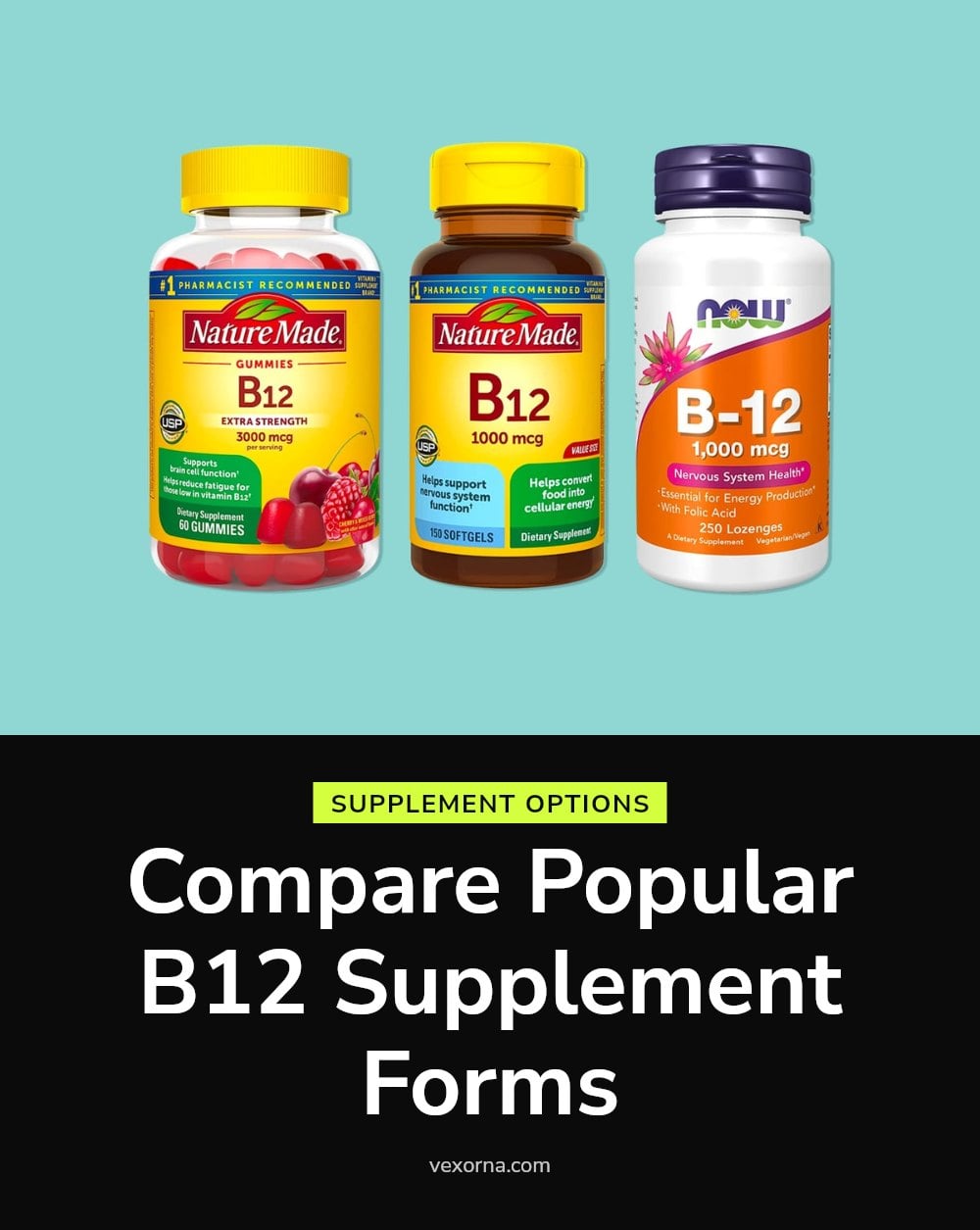
Supplement Forms: Which One Fits You?
If diet alone isn’t enough, supplements come in several forms. Here’s how they compare:
- Oral tablets: The most common and affordable option. They work well for many people, but if you have absorption issues, they may not be as effective.
- Sublingual tablets: These dissolve under your tongue, allowing B12 to absorb directly into the bloodstream, bypassing some digestive problems. Tip: hold it under your tongue for 1-2 minutes before swallowing.
- Liquid drops: Flexible dosing and easy to swallow. You can add them to water or juice. Caution: measure carefully to avoid taking more than intended.
- Injections: Typically reserved for severe deficiencies or when absorption is impossible. These are given by a healthcare professional, not at home.
Which form is right for you depends on your reason for deficiency and your health history. Pro move: talk to your doctor before choosing. They can run a blood test and recommend the best type and dose for your situation.
Common Mistakes to Avoid with B12
Mistake: Believing all plant-based foods contain B12. Only fortified sources like certain plant milks, cereals, and nutritional yeast are reliable. Unfortified vegetables, fruits, and grains have no B12.
Mistake: Ignoring deficiency symptoms. Persistent fatigue, weakness, or tingling is not just stress or aging. These can signal low B12 and should be discussed with your doctor.
Mistake: Self-diagnosing or self-treating. Always consult a healthcare professional before starting supplementation. They can confirm the cause and recommend the right dose.
Mistake: Assuming high doses are harmful. B12 is water-soluble, so excess is usually excreted. But still check with a professional, especially if you have other conditions.
Mistake: Not checking B12 levels. Regular blood tests are crucial if you’re in a risk group, such as vegans or older adults. Don’t guess your status.
Smart Tips for Maintaining Healthy B12 Levels

Tip: Consult a healthcare professional. Before any new supplement, especially B12, get medical advice to ensure it’s right for you.
Tip: Get regular blood tests. If you’re vegan, over 50, or have digestive issues, ask your doctor about checking B12 levels periodically.
Tip: Choose reputable brands. Look for supplements with third-party testing for quality and purity. This ensures you get what you pay for.
Tip: Combine sources. If you’re vegan, don’t rely on just one fortified food. Incorporate several daily, like fortified milk, cereal, and nutritional yeast.
Tip: Listen to your body. Notice unusual fatigue, weakness, or tingling? Discuss these symptoms with your doctor promptly.
When to Talk to Your Doctor About B12
Talk to your doctor if you experience persistent fatigue, weakness, numbness, tingling, or memory problems. Also seek advice if you follow a strict vegan or vegetarian diet and haven’t been supplementing. People over 50 should discuss B12, as absorption naturally decreases with age. If you have a digestive disorder like Crohn’s, celiac disease, or a history of gastric surgery, regular checks are essential. Always consult a healthcare professional before starting any B12 supplementation, especially if you have other health conditions or take medications.
Understanding the B12 Supplement Timeline and Cost
Timeline for results: Some people notice energy improvements within days to weeks. Neurological symptoms like numbness or memory issues may take longer to improve, and severe cases may not fully reverse.
Consistency is key: Regular, daily supplementation is crucial for long-term improvement. Skipping doses can delay progress.
Cost of supplements: Oral tablets are generally affordable, ranging from $10 to $30 for a monthly supply, depending on brand and dosage. B12 injections are typically more expensive but may be covered by insurance if medically necessary.
Frequently Asked Questions
Can B12 deficiency be reversed?
Yes, many cases of B12 deficiency can be reversed with proper treatment, especially when caught early. However, severe or long-standing neurological symptoms like numbness or memory problems may not fully resolve. That is why it is important to see a doctor as soon as you notice symptoms.
How long does it take to feel better after taking B12?
Some people notice improvements in energy within days to weeks of starting supplementation. Neurological symptoms like tingling or memory issues often take longer, sometimes months, and may not completely reverse if the deficiency was severe. Consistent daily intake is key.
Are B12 injections better than oral supplements?
Injections are not necessarily better for everyone. Oral tablets work well for many people, but if you have absorption issues (like pernicious anemia or after gastric surgery), injections may be more effective. Your doctor can help decide which form is best for your situation.
Can I get B12 from fermented foods?
Fermented foods like tempeh, miso, or sauerkraut are not reliable sources of B12. While some fermented products may contain trace amounts from bacterial action, the levels are inconsistent and generally too low to meet your daily needs. Stick with fortified foods or supplements instead.
What are the best plant-based sources of B12?
The best plant-based sources are fortified foods such as plant milks, breakfast cereals, and nutritional yeast. Always check the label to confirm B12 is added. Unfortified plant foods like vegetables, fruits, and grains do not naturally contain B12.
Is it possible to take too much B12?
B12 is water-soluble and generally considered safe even at high doses, with no established upper limit. However, very high doses can mask a folate deficiency, which has serious health implications. Always follow your doctor’s recommended dosage and never self-prescribe megadoses.
Final Thoughts
My tip: If you’re vegan, over 50, or have a digestive condition, get your B12 levels checked with a simple blood test. Consistency matters more than megadoses, so find a supplement form you can stick with daily. Expect energy improvements within days to weeks, but give neurological symptoms more time. Your body will thank you for paying attention.
This article is for informational purposes only and does not constitute medical advice. Vitamin B12 needs and deficiency symptoms vary by individual. Always consult a qualified healthcare professional before starting any supplement, especially if you have a medical condition or are taking medication.