
If you’ve been feeling stressed, restless, or just disconnected from nature, grounding might be the simple reset you need. Also called earthing, it’s the practice of making direct skin contact with the Earth’s surface, and it’s easier than you think to fit into your day, even if you’re mostly indoors. In this article, I’ll walk you through what grounding is, how to do it outdoors and indoors, and share practical tips to make it a consistent habit.
Key Takeaways
- Walk barefoot on grass, sand, soil, or unsealed concrete for at least 30 minutes daily.
- Use a grounding mat or sheet only with a properly tested grounded outlet.
- Avoid asphalt, sealed concrete, wood, and rubber-soled shoes for grounding.
- Consult your doctor before grounding if you have a pacemaker or chronic condition.
- Be consistent: noticeable effects may take a few days to weeks.
What is Grounding and How Does It Work?
Grounding, also called earthing, is the practice of making direct skin contact with the Earth’s surface. The Earth carries a negative electrical charge, and when you touch it, your body can absorb free electrons. Proponents suggest this transfer may help neutralize free radicals in the body, potentially promoting a sense of well-being. It’s a simple concept: reconnect physically with the planet.
Essential Tools for Grounding
You don’t need much to start grounding. Natural surfaces like grass, sand, soil, or unsealed concrete are free and work immediately. If outdoor access is limited, indoor grounding products offer a practical alternative.
- Outdoor options: Grass, sand, soil, unsealed concrete.
- Indoor products: Grounding mats, sheets, or patches that connect to a grounded electrical outlet.
Caution: Always confirm your indoor product is properly connected to a grounded outlet. Check the outlet with a tester if you’re unsure.
Ways to Connect with the Earth Outdoors

Ways to Connect with the Earth Outdoors
Walking barefoot on natural surfaces is the most direct way to ground. Grass, sand, soil, and unsealed concrete all allow your skin to make contact with the Earth’s charge. Avoid asphalt, sealed concrete, and wood. These materials act as insulators and won’t give you the same connection. My tip: start with a short walk on your lawn or a local park, even 5 minutes, to get comfortable with the sensation.
Sitting or lying directly on the Earth deepens the practice. Spread a blanket on the grass and sit with your bare feet touching the ground, or lie flat on your back for a full-body connection. This works especially well during a picnic break or while reading in the yard. The key is keeping skin in contact with an unsealed, natural surface.
Natural bodies of water are excellent conductors for grounding. The ocean, lakes, and rivers all carry the Earth’s electrical charge. Wading, swimming, or simply sitting with your feet in the water can be very effective. Saltwater is particularly conductive, but freshwater works too. Just be mindful of safety, avoid areas with strong currents or hidden hazards. Always check for posted warnings about water quality or wildlife before entering.
How to Ground Effectively Indoors with Products
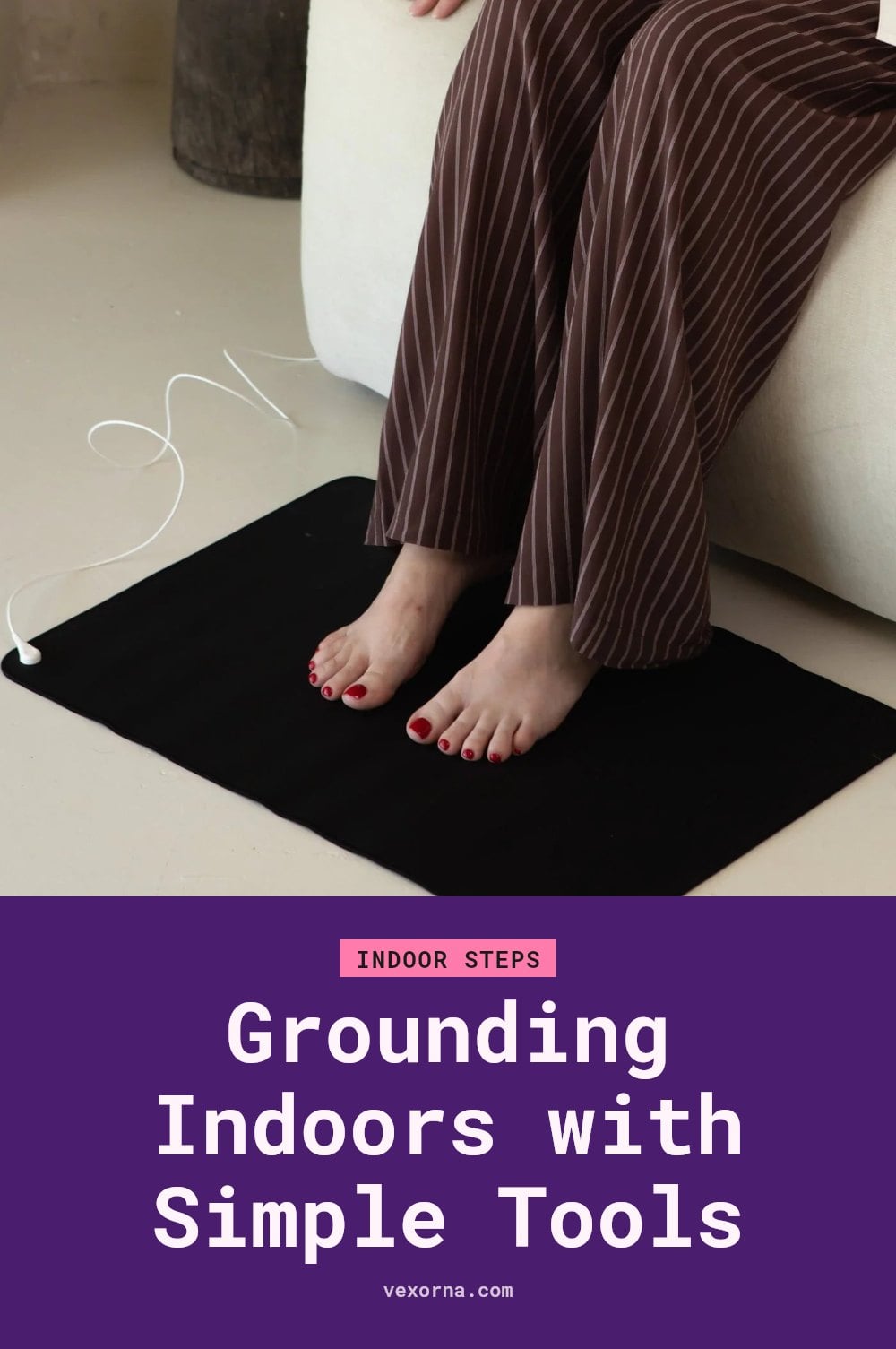
- Choose your product: Select a grounding mat, sheet, or patch designed for indoor use. Look for products that connect via a cord to a grounded outlet.
- Test your outlet: Use a simple outlet tester to confirm the ground port is working. This step is non-negotiable for safety and effectiveness.
- Connect the cord: Plug the grounding cord into the outlet’s ground port. Attach the other end to your mat or sheet as instructed.
- Maintain contact: Place the mat under your feet while sitting, or use a grounding sheet on your bed. Keep bare skin in contact with the product for at least 30 minutes daily. Consistent use may yield better results over time.
Common Grounding Mistakes to Avoid
Not every surface that looks natural actually conducts the Earth’s charge. Asphalt, sealed concrete, wood, and synthetic materials like rubber or plastic act as insulators. Walking barefoot on these won’t ground you. Stick to grass, sand, soil, or unsealed concrete.
Myth: Grounding can cure serious health conditions. It’s a complementary practice, not a medical treatment. Never replace prescribed care with it.
Caution: Indoor grounding products only work if your outlet is properly grounded. Use a circuit tester to confirm before connecting. A faulty setup gives no benefit and may pose a risk.
Best Tips for Consistent Grounding
My tip: Anchor grounding to something you already do. Walk barefoot on your lawn while having your morning coffee or sit on the grass during a phone call. Consistency matters more than duration.
Before stepping outside, scan the area for hazards like glass, sharp stones, or chemical sprays. If you’re using indoor products, check your skin for irritation and take breaks if needed.
Pay attention to how you feel. Some days 15 minutes feels right; other days you might want an hour. Adjust based on your body’s signals.
How Long Does Grounding Take and What’s the Cost?
Aim for at least 30 minutes of direct skin contact with the Earth daily. Some people notice improved relaxation or sleep within a few days, but for others it takes weeks of consistent practice.
Outdoor grounding costs nothing, just step outside. Indoor products vary in price, from basic mats to full sheets. Expect to invest more for larger or higher-quality items, but there’s no need to buy anything to start.
When to Consult a Healthcare Professional About Grounding
Always check with your doctor before starting grounding if you have a chronic health condition, are pregnant, or take medications. This is especially important if you have a pacemaker or any implanted electronic device.
Grounding may support well-being, but it is not a substitute for medical care. If you have symptoms that concern you, see a healthcare professional first.
Frequently Asked Questions
How long should I practice grounding each day?
Aim for at least 30 minutes of direct skin contact with the Earth daily. You can break this up into shorter sessions throughout the day if that’s easier. Consistency matters more than a single long session, so find a time that works for you and stick with it.
Can children and pets also benefit from grounding?
Many people find that children and pets enjoy being outdoors and may benefit from grounding as well. The practice is generally safe for them, but always supervise young children and pets to avoid hazards like sharp objects or toxic plants. If you have concerns, consult your pediatrician or veterinarian.
Are there any side effects to grounding?
Grounding is generally considered safe, but some people may experience mild discomfort or skin irritation, especially when using indoor grounding products. If you notice any adverse reactions, discontinue use and consult a healthcare professional. Also, be cautious when walking barefoot outdoors to avoid injuries.
What’s the difference between grounding and earthing?
Grounding and earthing are the same practice; the terms are used interchangeably. Both refer to making direct skin contact with the Earth’s surface to absorb its electrical charge. Some people prefer one term over the other, but there is no practical difference.
Can I ground through socks or thin clothing?
No, grounding requires direct skin contact with the Earth’s surface. Socks, even thin ones, act as insulators and block the flow of electrons. The same applies to clothing when using grounding mats or sheets, so place them directly against your skin for best results.
Does grounding work in all weather conditions?
Yes, grounding can work in most weather, as long as you have direct skin contact with a conductive surface like wet grass or sand. Rain can make surfaces more conductive, but always prioritize safety: avoid lightning storms and areas with standing water that may hide hazards.
Final Thoughts
Grounding is a low-cost, low-risk practice that can complement your wellness routine. My tip: start by walking barefoot on your lawn or a patch of grass for 30 minutes each day, and see how you feel after a week. While you might notice relaxation or better sleep within a few days, for others it takes a few weeks of regular practice. Remember, grounding is not a cure-all, so keep it as one part of a healthy lifestyle and check with your doctor if you have any health concerns.
This article is for general informational purposes only and is not a substitute for professional medical advice. Grounding is not intended to diagnose, treat, or cure any condition. Always consult a doctor or qualified healthcare provider before starting any new wellness practice, especially if you have a chronic condition, are pregnant, or use implanted devices.