
You’ve probably heard that cleansing is the most important step in your skincare routine, but are you doing it right? Many of us make small mistakes without realizing it, from using water that’s too hot to scrubbing too hard, which can leave skin irritated or stripped. This article breaks down the most common cleansing pitfalls and shows you exactly how to fix them, so you can keep your skin barrier healthy and your complexion clear.
Key Takeaways
- Cleanse twice daily with lukewarm water, once in the morning and once at night.
- Choose a cleanser suited to your skin type, such as cream or gel for dry or sensitive skin.
- Double cleanse in the evening if you wear makeup or sunscreen.
- Rinse thoroughly and pat dry with a clean, soft towel.
- Apply serums and moisturizers to damp skin right after cleansing.
Why Proper Cleansing is Crucial for Healthy Skin
Cleansing is the foundation of any good skincare routine. It removes impurities, sweat, and excess oil without stripping your skin’s natural protective oils. When done wrong, it can disrupt your skin barrier, causing dryness, irritation, or breakouts. The key is matching products and techniques to your skin type. That’s how you keep your complexion balanced and healthy.
Your Cleansing Toolkit: What You’ll Need
Before you start, gather the right tools. Here’s what I keep in my cleansing kit:
- Gentle cleanser: Choose a cream, gel, foam, or oil-based formula suited to your skin type.
- Lukewarm water: Hot water dehydrates, cold doesn’t clean well.
- Soft, clean towel: For patting dry, not rubbing.
- Micellar water (optional): For quick clean-ups or sensitive skin, no rinse needed.
- Cleansing balm or oil (optional): For double cleansing to remove makeup and sunscreen.
Choosing the Right Cleansing Method for Your Skin

Not all cleansing methods are equal. Here’s how to pick what works for you.
Single Cleansing
Use a water-based cleanser in the morning or on days without makeup or sunscreen. It’s quick and enough for light buildup.
Double Cleansing
Best for evenings, especially if you wear makeup or sunscreen. Start with an oil-based cleanser to dissolve these, then follow with a water-based one to clean the skin. My tip: massage the oil cleanser for 30 seconds to break down everything.
Micellar Water
Great for sensitive skin, quick refreshes, or when water isn’t available. It’s a no-rinse option, but you may still want to rinse if your skin feels sticky.
Foaming Cleansers
They can be effective for oily skin, but if you have dry or sensitive skin, avoid them. They can strip away too much moisture.
Step-by-Step: The Right Way to Cleanse Your Face
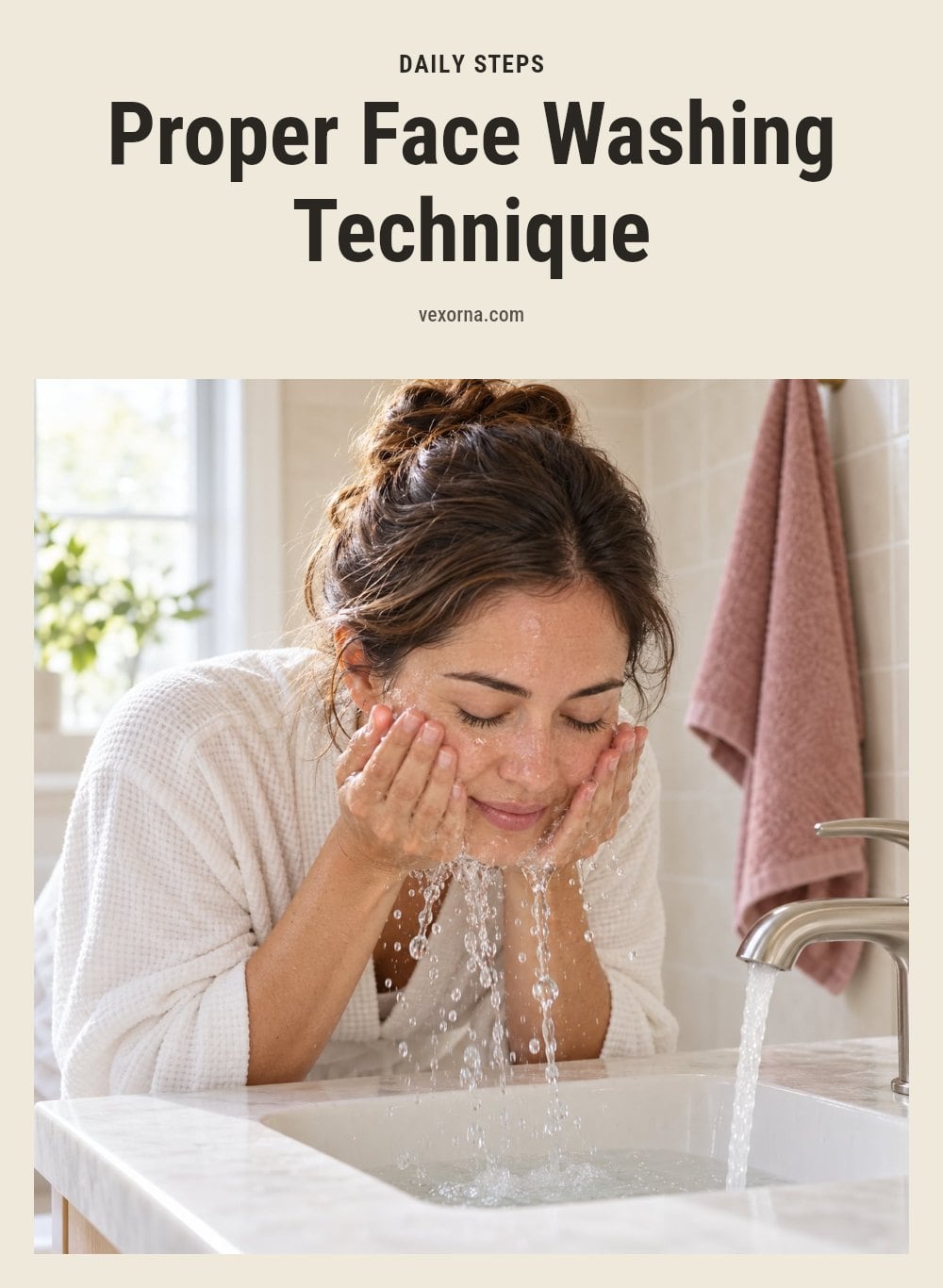
- Wet your face: Start with lukewarm water to open pores and prepare your skin. Avoid hot water, which can strip natural oils and cause irritation.
- Dispense cleanser: Squeeze a pea-sized amount into your palm. More isn’t better, too much can leave residue that clogs pores.
- Massage gently: Use your fingertips to work the cleanser into your skin in circular motions for 30-60 seconds. Focus on the T-zone and jawline where oil and dirt collect.
- Rinse thoroughly: Splash your face with lukewarm water until all traces of cleanser are gone. Residue can cause breakouts or irritation.
- Pat dry: Use a clean, soft towel to gently pat your face dry, leaving it slightly damp. Rubbing can cause micro-tears and dryness.
- Apply products: Immediately after patting, apply serums and moisturizer to damp skin for better absorption. This locks in hydration and boosts product effectiveness.
Common Cleansing Mistakes to Avoid
Most skin irritation comes from small habits that are easy to fix once you know them.
- Using a cleanser that’s too harsh: A foaming cleanser can be great for oily skin but strips dry or sensitive skin. Switch to a cream or gel formula if your face feels tight after washing.
- Washing with very hot or cold water: Hot water dehydrates the skin and can worsen rosacea, while cold water won’t remove oils effectively. Stick to lukewarm.
- Scrubbing too vigorously: Physical scrubs with large particles can create micro-tears. Massage gently with your fingertips for 30-60 seconds instead.
- Not rinsing thoroughly: Leftover cleanser residue clogs pores and irritates skin. Rinse completely, especially around the jawline and hairline.
- Over-cleansing: Washing more than twice a day strips natural oils, which can trigger extra oil production. Unless a dermatologist says otherwise, stick to morning and night.
- Using a dirty towel: A reused towel harbors bacteria that transfers to your face. Use a fresh, soft towel each time or let your skin air dry.
Top Tips for a Better Cleansing Routine
Cleanse twice a day: Morning washing removes overnight oil and sweat. Evening cleansing takes off makeup, sunscreen, and daily grime. Skipping the morning wash leaves bacteria and dead skin cells on your face.
Listen to your skin: If your face feels tight, shiny, or irritated after cleansing, your current product is too harsh. Switch to a gentler formula like a cream or milk cleanser. My tip: A slightly acidic cleanser (pH 4.7-5.75) helps maintain your skin’s natural barrier and prevents that stripped feeling.
Don’t forget your neck and décolletage: These areas collect sweat, product residue, and sunscreen but often get ignored. Extend your cleanser and massage motion down to your collarbone.
Cleanse after sweating: Sweat mixed with bacteria can clog pores and trigger breakouts. A quick rinse with lukewarm water and a gentle cleanser after a workout keeps your skin clear without over-cleansing.
When to Consult a Dermatologist
If your skin still feels tight, red, or irritated after switching to gentle products and techniques, it may be time to see a dermatologist. Persistent issues like severe acne, eczema, or rosacea that don’t improve with proper cleansing need professional evaluation. A dermatologist can also help if you suspect an allergic reaction to a skincare product. They provide personalized advice for managing chronic conditions and can recommend medical-grade products when over-the-counter options aren’t enough.
Frequently Asked Questions
Is it bad to wash your face with just water?
Washing with water alone can remove some surface dirt, but it won’t effectively dissolve makeup, sunscreen, or excess oil. For most people, a proper cleanser is needed to thoroughly cleanse without leaving residue that can clog pores or cause irritation.
How long should I cleanse my face?
Gently massage the cleanser onto your skin for about 30 to 60 seconds. Going much longer can strip natural oils, while less time may not fully remove impurities. Focus on areas with more buildup, like the T-zone, and rinse thoroughly.
Can I use bar soap to cleanse my face?
Bar soap designed for the body is typically too alkaline and harsh for the delicate skin on your face. It can disrupt your skin’s natural pH balance, leading to dryness and irritation. Stick to a gentle facial cleanser formulated for your skin type.
What happens if I don’t cleanse my face at night?
Skipping your evening cleanse allows makeup, sunscreen, sweat, and pollutants to sit on your skin overnight. This can clog pores, cause breakouts, and accelerate signs of aging. It also prevents your night-time skincare products from absorbing properly, so you miss out on their benefits.
Should I cleanse my face in the shower?
You can cleanse in the shower, but be careful with the water temperature. Hot water can dehydrate your skin, so use lukewarm water instead. Also, avoid leaving your cleanser on too long while you do other things, and rinse thoroughly before stepping out.
How often should I change my face towel?
Change your face towel every two to three days, or daily if you have acne-prone or sensitive skin. A damp towel can harbor bacteria that can transfer back to your face, causing irritation or breakouts. Use a clean, soft towel each time you pat dry.
Final Thoughts
To get the most out of your cleansing routine, stick to twice-daily washes with lukewarm water and a cleanser that matches your skin type. Expect to see improvements in skin clarity and comfort within a few weeks of consistent practice. Remember, gentle and consistent is always better than harsh and frequent.
This article is for general informational purposes only and does not constitute medical or professional advice. Individual skin needs vary, and what works for one person may not work for another. If you have persistent skin issues such as severe acne, eczema, or rosacea, please consult a dermatologist for personalized guidance.