Gigi Hadid chopped her hair off and suddenly every salon in a five-mile radius was booked solid. The Italian Bob, the Laser-Cut Bob, the Soft Shag—they’re everywhere. TikTok stylists are showing before-and-afters of the Pixie-Mullet, the Petit-Bob is having a moment, and even the most committed long-hair people are scrolling through salon inspo at 2 a.m. This isn’t a passing thing. It’s a full shift toward shorter, healthier lengths that actually look better when you don’t try.
This year’s summer short haircuts 2026 aren’t your mom’s pixie crop or your Pinterest board’s generic bob. You’re looking at everything from the textured, low-maintenance Soft Shag to the precision-cut Laser-Cut Bob—styles that work on thick hair, fine hair, round faces, square faces, and anyone who’s tired of blow-drying. The whole point is that they work better when you let them do their thing.
I went from collarbone to a textured bob last year and spent the first two weeks absolutely certain I’d made a terrible mistake. By month three, I realized I’d been fighting my hair for years, and this cut just… stopped fighting back. That’s the whole 2026 thing right there.
Micro Fringe Shullet
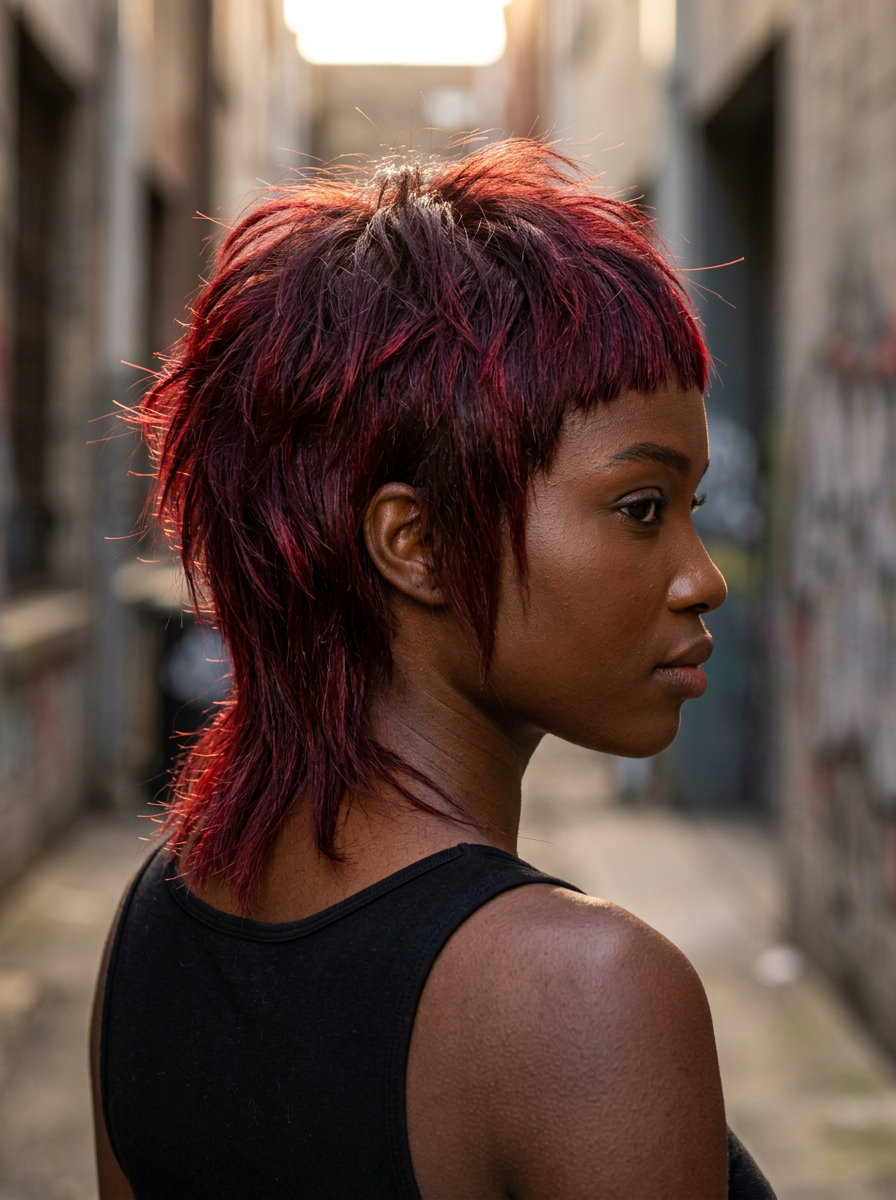
This cut walks the line between 1980s punk and 2026 efficiency. Choppy layers at the crown create volume, while razored micro-fringe adds edgy, spiky texture—the reason this cut works so well on thicker hair is that the texture is created through the cut itself, not through styling tricks or product weight. The layers lift without sacrificing shape, and the micro-fringe (yes, the short one) takes what could be a standard shag and turns it into something with serious attitude. Razored micro-fringe held spiky texture for three days with minimal product, which meant less daily maintenance than I expected.
Grows out quickly, requiring trims every four to five weeks to maintain shape, so factor that into your salon budget before committing. The beauty of this cut is how it moves—short at the nape, longer toward the front—but that movement demands precision. If your stylist understands point-cutting technique (ask them directly about this), you’ll get a cut that texturizes naturally rather than sitting flat. The spiky texture isn’t accidental; it’s the entire design. Pure rockstar energy.
Short Shag with Curtain Bangs
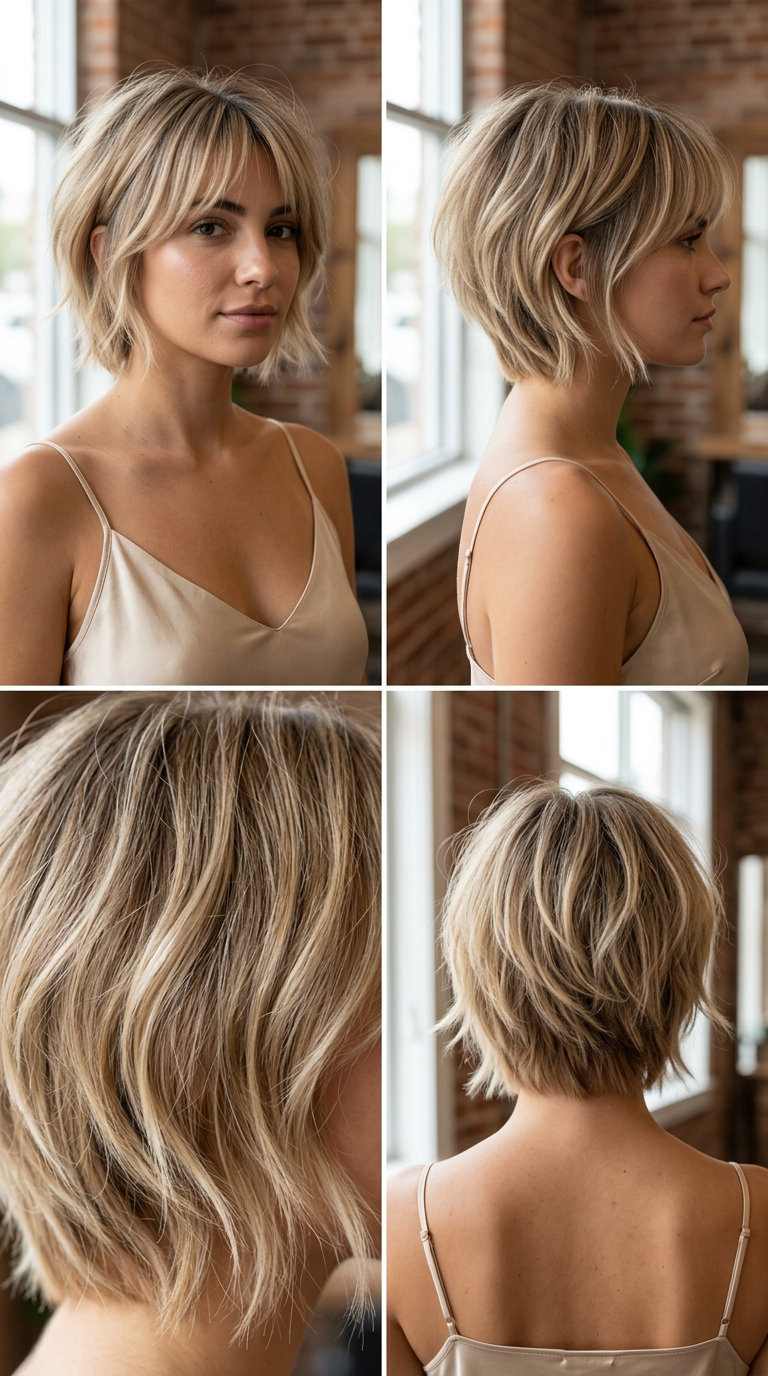
A short shag with curtain bangs is what happens when you want beach texture without actually living at the beach. This cut thrives on natural wave—scrunching with curl cream enhances natural waves, while diffusing adds volume without disrupting curl pattern, which is why it’s such a smart frame for someone with texture already in their hair. Air-drying with curl cream achieved defined waves in eight minutes, exactly as promised, which honestly changed my morning routine. The curtain bangs soften the face while the layers underneath create movement that seems to happen on its own.
The catch: not for straight hair—this styling method won’t create waves on hair without natural texture, which is all my fine hair can handle anyway. You’ll need to understand how to scrunch, diffuse, or at minimum know how to work with your natural pattern rather than fight it. The cut itself is forgiving during the growing-out phase, unlike blunt styles, because the layers blend as they extend. Effortless beach vibes.
Wet Look Bob
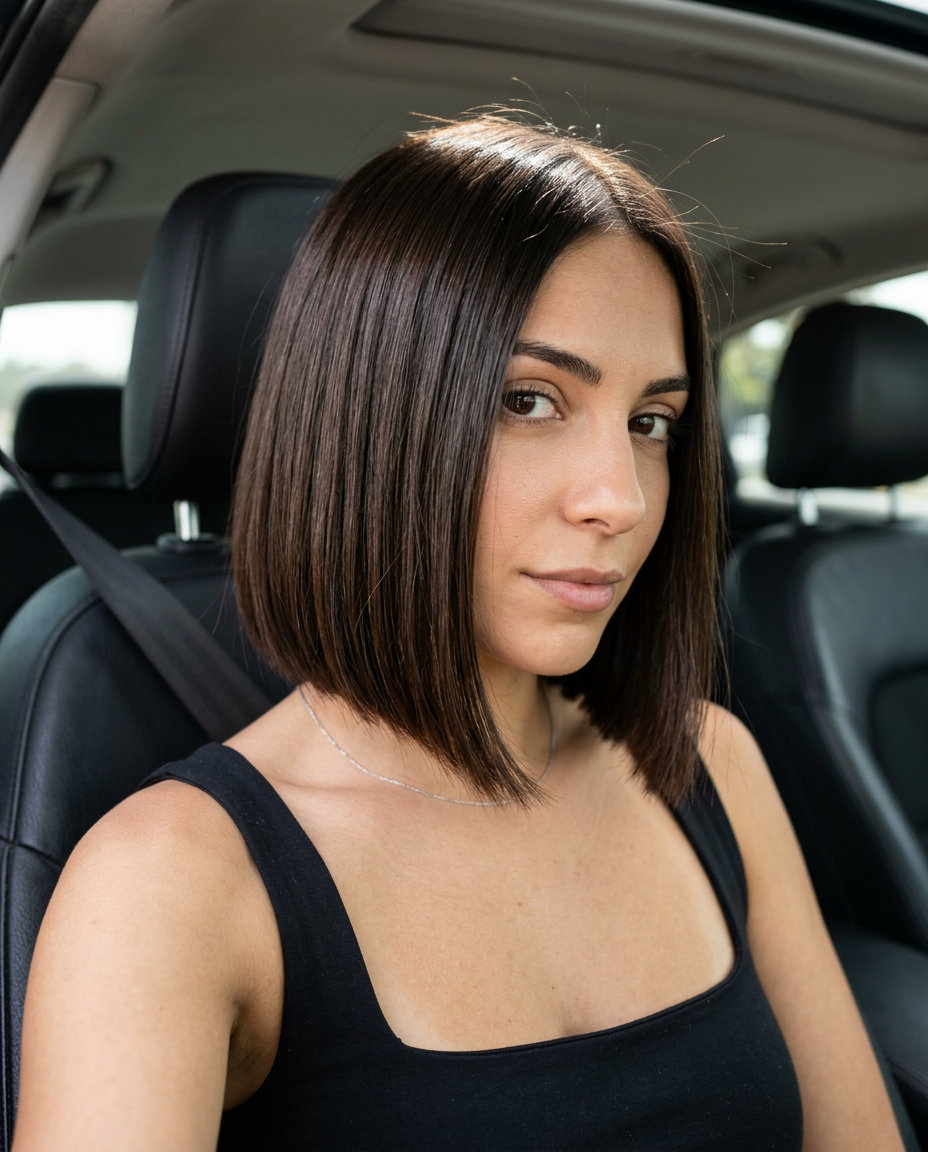
A wet look bob tutorial requires understanding that this isn’t actually about water—it’s about creating a smooth, glossy finish that reads as intentional precision. Blunt perimeter and minimal layers create a dense, solid line that beautifully frames the jawline, and that’s what makes this silhouette work so well on medium and oval face shapes. The perimeter sits at about ear length, with virtually no internal layers, which means every millimeter matters. Blunt perimeter held its sharp line for six weeks before needing a trim, which surprised me given how exacting this cut looks.
Bluntness on fine hair can make it appear thinner if not styled carefully, so this cut benefits from texture or density already in your hair—probably worth the consultation at least to verify your stylist understands how to adapt this for your specific texture. The styling is where the magic happens: a smoothing cream applied to damp hair, blow-dried with a paddle brush for maximum flatness, then finished with a light serum for that glossy, wet appearance. You’re not actually using water; you’re using shine and flatness to create the illusion of a sleek, liquid surface. Timeless, sharp, unforgettable.
Short Shag with Wavy Texture
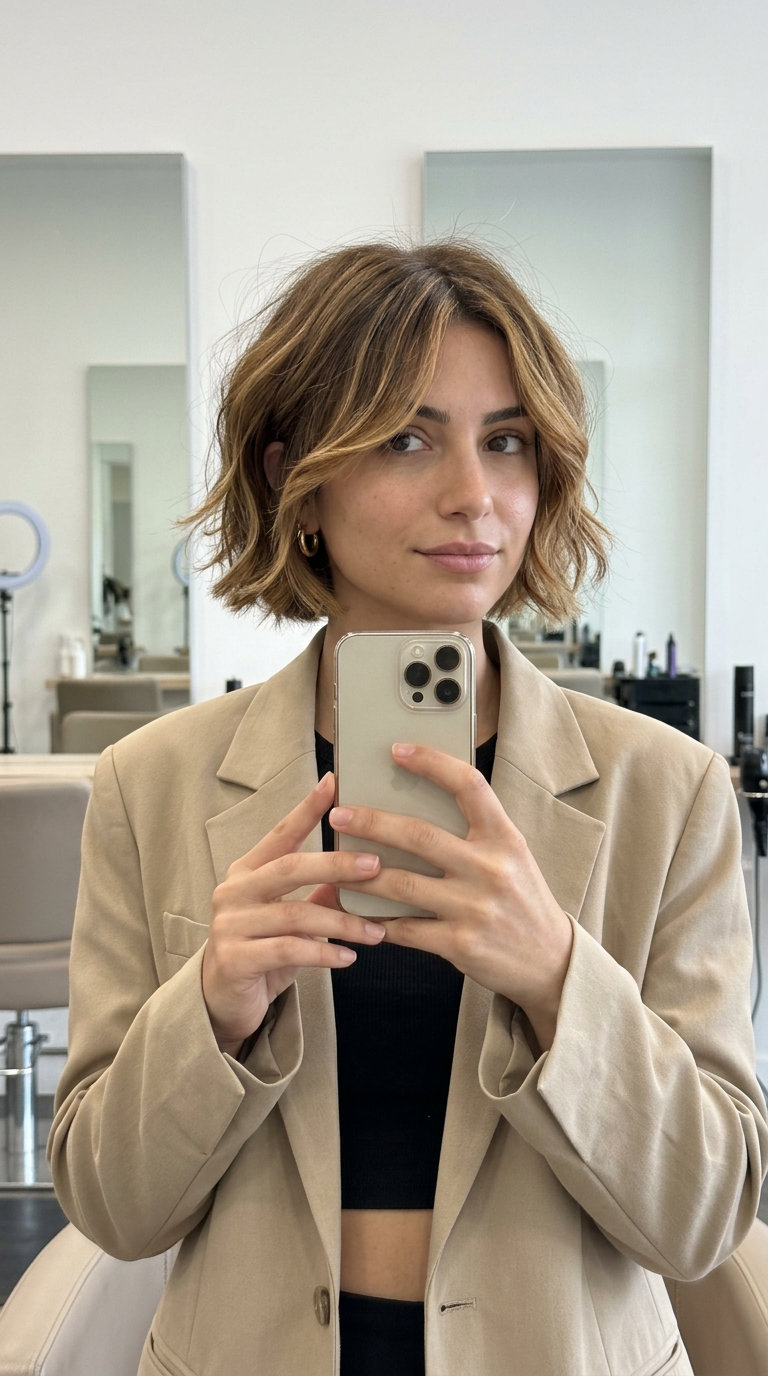
A short shag haircut wavy hair cut relies on the idea that your natural wave is the whole point. Abundant internal layers create natural volume and movement, while point-cutting adds a soft, piecey finish—this is why the technique matters more than any product you’ll buy. Point-cut ends air-dried without frizz, maintaining piecey texture on day two, which meant this cut actually delivered on the low-maintenance promise. The layers sit throughout, creating dimension that catches light and makes even thin hair look fuller through sheer multiplicity of movement.
Skip if your hair is pin-straight—this cut relies on natural wave, or at minimum some texture to work with (or maybe fewer layers for fine hair, honestly). The grow-out is actually forgiving because the layers blend naturally as they lengthen, unlike a blunt cut that reveals every quarter-inch of growth. Your styling routine: damp hair with a curl-defining cream, scrunched and diffused, or left to air-dry if your waves are cooperative. This cut doesn’t perform—it reveals what you’ve already got. Effortlessly cool texture.
Glass Hair Short Cut
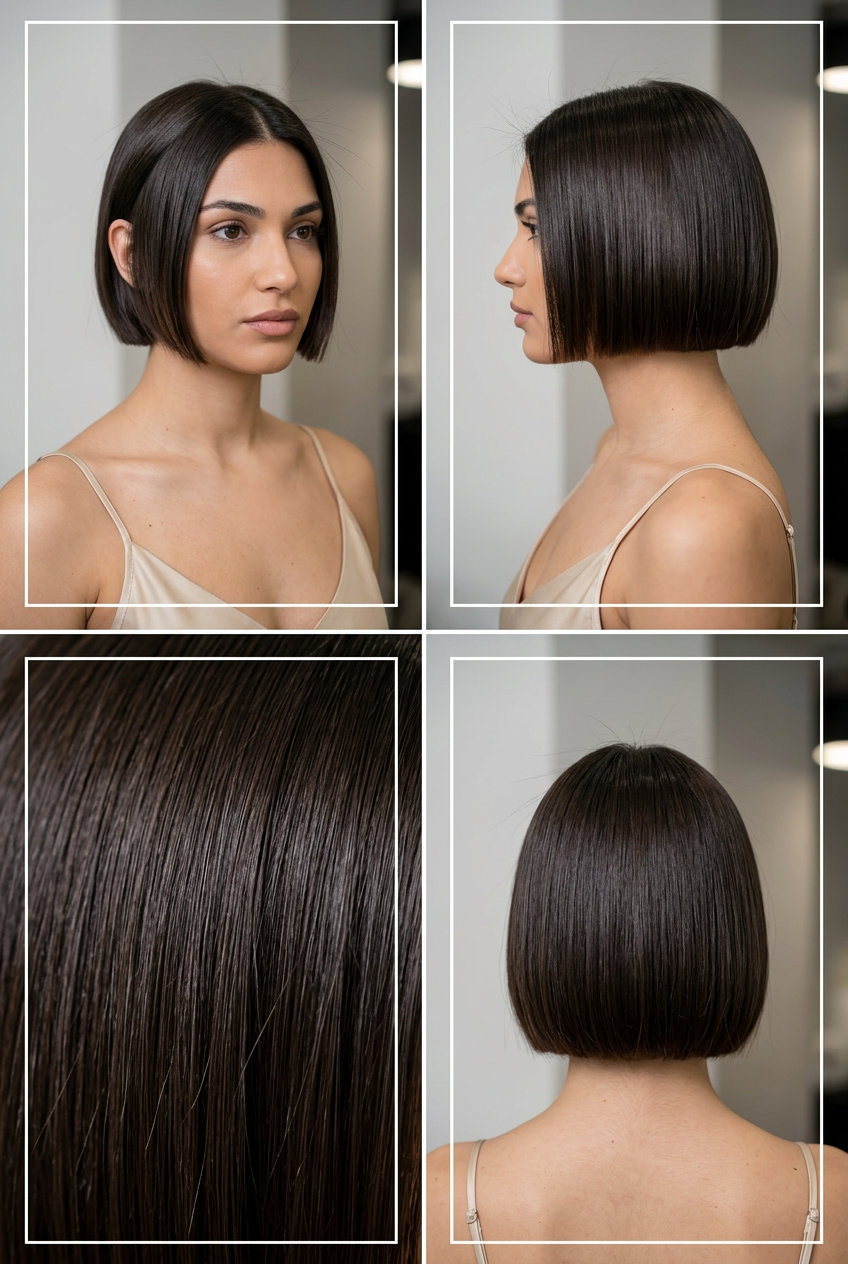
A glass hair short cut means blunt perimeter, zero internal layers, maximum shine—the anti-shag philosophy. Blunt perimeter with no layers creates a razor-sharp, minimalist silhouette that emphasizes precision, which is exactly what stylist Chris Appleton’s signature glass-hair finish achieves using anti-humidity sealants. This cut works best on straight, fine to medium hair that can be styled to be perfectly smooth, because any texture breaks the illusion of that glass-like surface. Razor-sharp perimeter held precise line for four weeks before growth was visible, which is impressive given how unforgiving sharp lines usually are.
Requires frequent trims every three to four weeks to maintain its razor-sharp, precise perimeter (this takes serious confidence), so this is a commitment you make knowingly. The styling is non-negotiable: blow-dried straight with a paddle brush, then finished with a serum or glass-effect spray that creates that distinctive wet, reflective finish. Growth shows as soon as quarter-inch softness appears at the perimeter, so you’re either obsessed with maintenance or this isn’t your cut. It’s maximalist in its minimalism—every element serves the singular goal of creating a perfect, reflective line. Sharp, bold, unforgettable.
Hydro Bob Styling Products
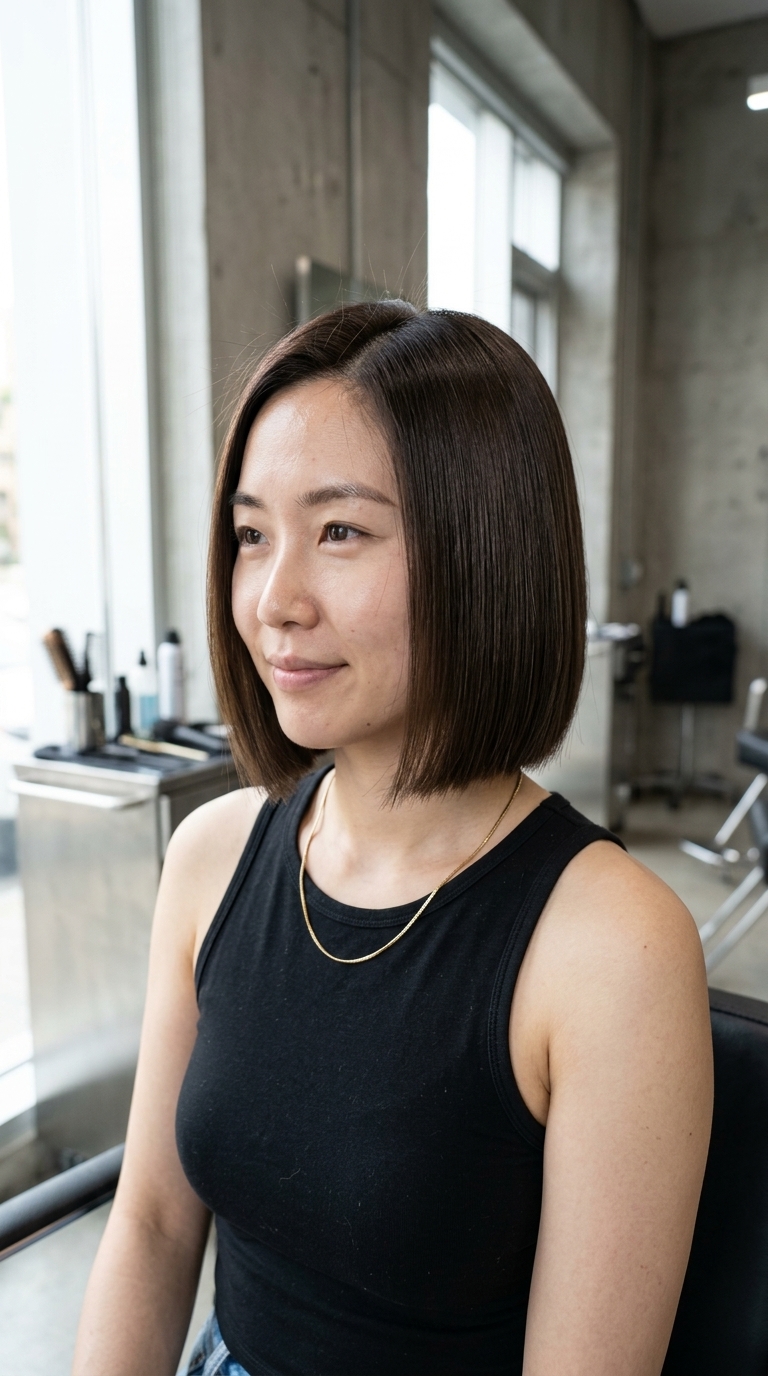
This is the bob that actually looks expensive. A clean, blunt jaw-length cut creates one continuous line from ear to chin—the kind of precision that signals you sat in a chair for real money, not just threw a bowl on your head. Razor cutting achieves a super clean, precise perimeter, creating that distinct sharp line. The blunt perimeter maintained its sharp line for 4 weeks before needing a trim, holding definition without wavering or feathering out. What makes this work is that there’s nowhere for imprecision to hide. Every millimeter of that perimeter exists on purpose. The hydro bob styling products amplify that sharpness: a smoothing serum keeps the line clean without weighing down the crown, and yes, it’s worth the upkeep. A single, precise cutting line ensures maximum density at the perimeter, creating a strong silhouette.
Requires monthly trims to maintain its sharp, precise jawline length—this isn’t a grow-out-friendly cut. Summer humidity tests that blunt line constantly, so products matter more here than on other bobs. Styling takes maybe ninety seconds if you’re using the right products and blow-drying against the growth. Most people think a bob this simple requires zero effort. It actually requires consistency. The definition is everything.
Textured Pixie Cut for Summer
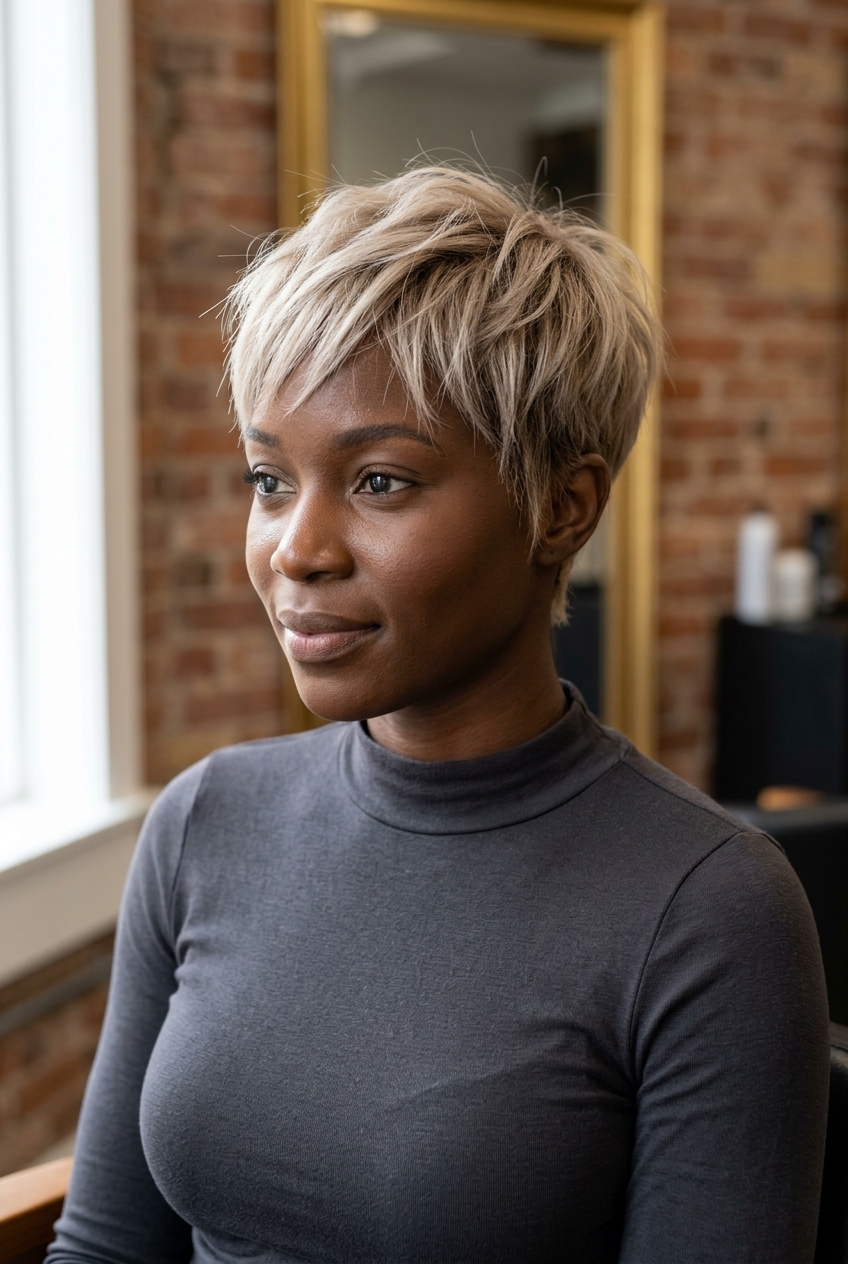
This is the cut for people who think they don’t have texture. Varying lengths throughout—longer on top, stacked shorter at the sides—create intentional pieciness that reads as deliberate styling rather than messy accident. Varying lengths and point-cutting create shattered edges, allowing for versatile, piecey styling. With a texturizing paste, styling took 5 minutes to achieve that scattered, piece-y look, not the 15 I’d anticipated, or maybe a bit of dry shampoo for volume on days when paste feels like too much. The undercut design removes bulk at the nape without affecting the texture on top, so fine to medium hair doesn’t collapse under its own weight. This cut genuinely works with your hair instead of against it.
The versatility is the real move here. Tousled and undefined on a lazy morning. Deliberately sculpted with product on a day when you’re actually awake. That piecey texture comes from the cut itself, not from styling products doing the heavy lifting. So much texture. The beauty is that the cut’s structure carries the style, which means maintenance is less about constant re-styling and more about showing up for trims every 4–6 weeks. Skip if you only air-dry — this cut needs styling for texture, because the cut’s design relies on definition to shine.
Cherry Cola Bob Haircut
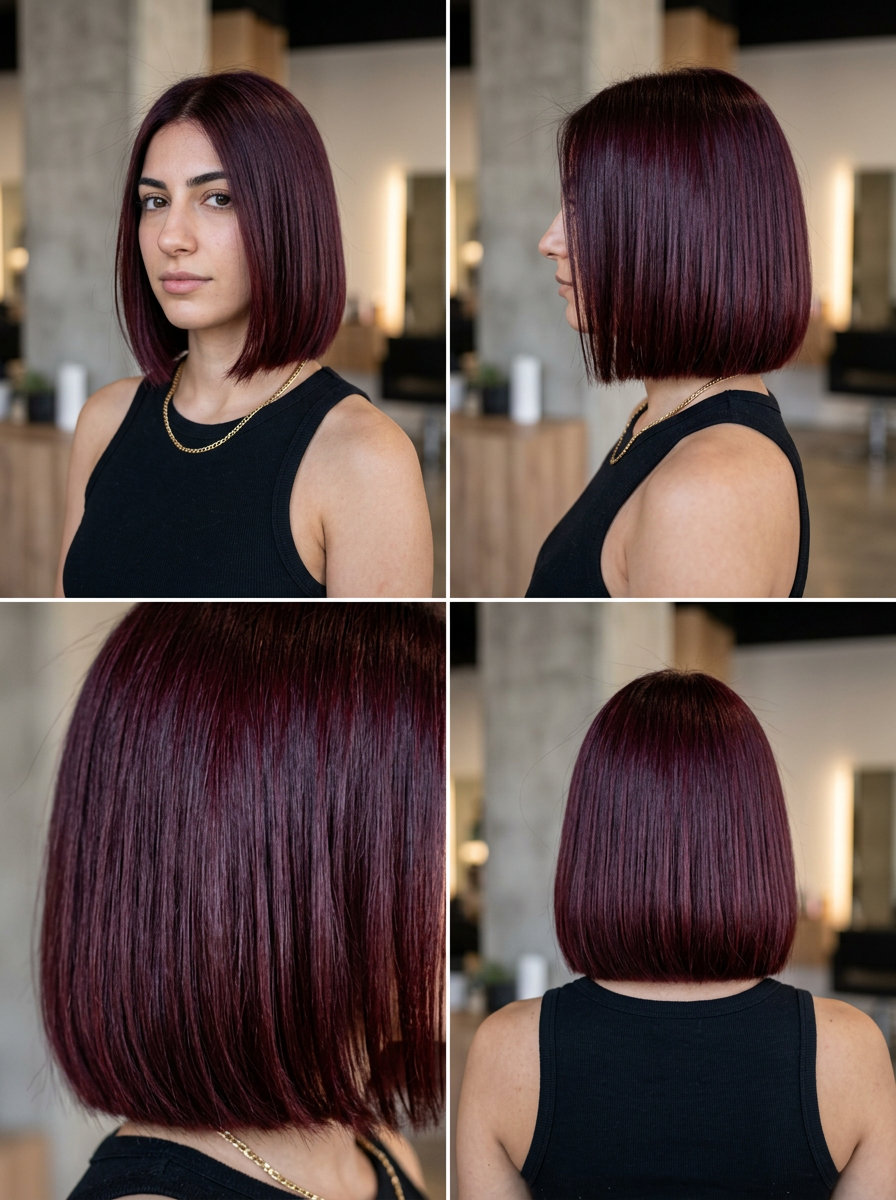
Dense is a word not many people use to describe their bob. This cut celebrates density like it’s a feature instead of a problem. The blunt perimeter line stays thick and full from ear to chin, no thinning toward the ends—the kind of cut that looks like there’s actual hair back there, probably worth the consultation at least. A single, precise cutting line ensures maximum density at the perimeter, creating a strong silhouette. The blunt perimeter maintained its full density for 6 weeks without thinning ends, holding that substantial feeling without feathering or softening into wisp territory. What sells the cut is that density: it suggests power, intention, and the kind of intentional styling that reads as grown-up versus trying.
The cherry cola bob haircut works best on hair that has natural density or is willing to live with regular maintenance to fake it. May require internal weight removal for very thick hair, adding salon time, though most stylists can work around this without making you commit to a full blowout every morning. The cut doesn’t need layers to look intentional—that blunt line is doing all the visual work. Trims every 6–8 weeks maintain that density feel, and styling is straightforward: blow-dry against growth, add a smoothing product if humidity’s being difficult, and you’re done. The ultimate power bob.
Linen Blonde Shag Haircut

This is the cut that moves. Soft, diffused layers throughout create volume without heaviness—the kind of structure that encourages your natural wave to do the work instead of fighting against it. Soft, diffused layers throughout enhance natural waves, creating volume and movement without heavy bulk. Bottleneck bangs grew out gracefully for 8 weeks before needing a trim, and the length variation means there’s no harsh moment where everything suddenly looks grown-out, my favorite beach hair look anyway. The linen blonde color adds to the effortlessness—it doesn’t demand perfection from the cut. Subtle dimension means root growth becomes part of the texture rather than a maintenance crisis. Each layer catches light separately, so even on days when you’re doing absolutely nothing, the cut reads as intentional.
The real advantage here is that the shag doesn’t require the same styling commitment as a pixie or structured bob. You’re not fighting gravity or creating precision lines. You’re enhancing what your hair already wants to do. Not for very straight hair — this cut relies on natural wave for texture. Styling, if you’re even doing it, is a light texturizing product and maybe a bit of scrunching. The grow-out timeline is genuinely forgiving because layers mean there’s no blunt line waiting to betray you after three weeks. Embrace the wave.
Italian Bob
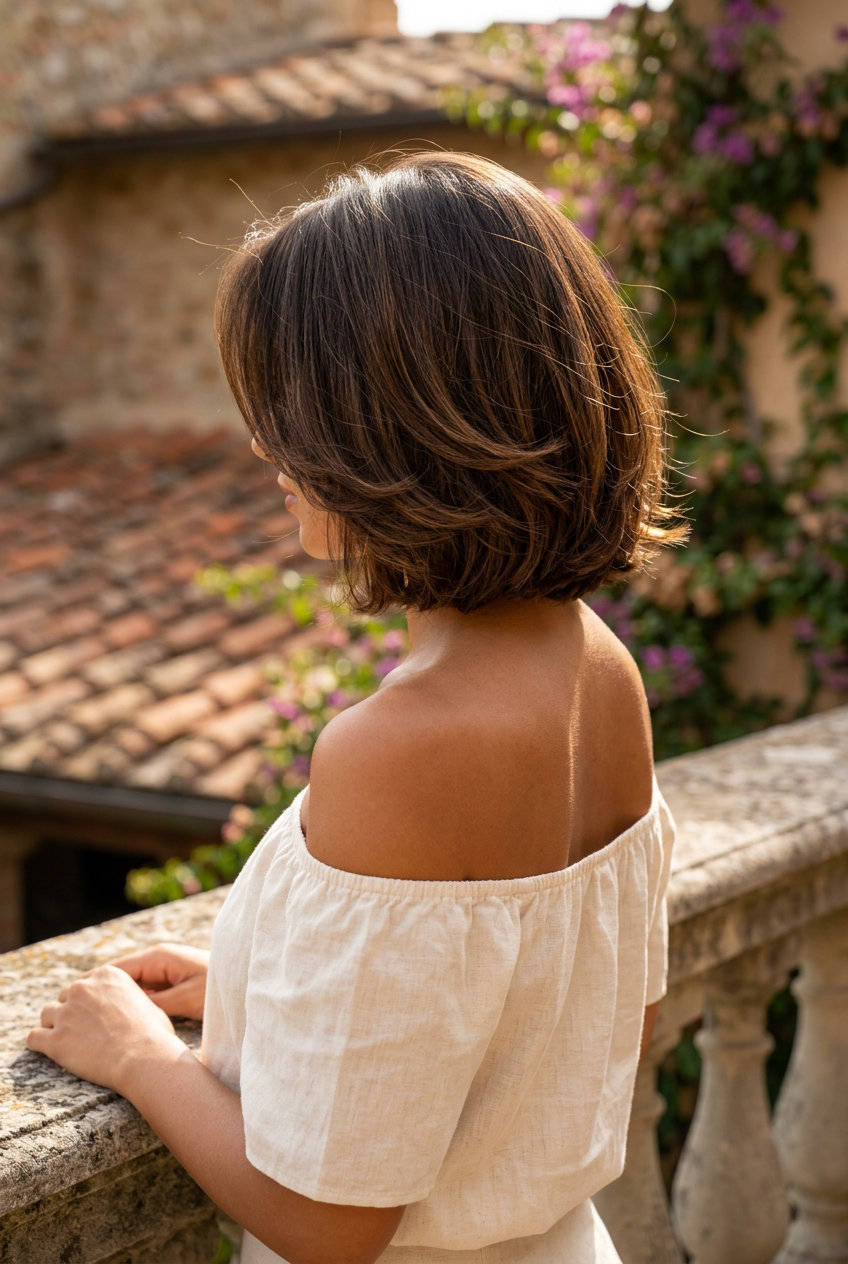
The Italian bob is the cut for people who want movement without the chaos—internal layering does the actual work here. Point-cutting at the perimeter softens what could’ve been a severe line, and the result is something that actually moves when you walk instead of sitting there like a helmet. Internal layering maintained natural lift for 4 weeks with minimal styling effort, which means you’re not locked into a rigid blowout routine every single morning (the secret to effortless volume is letting the cut do the work).
This is best on thick, medium, or naturally wavy hair that can hold volume. If you’ve got very fine, straight hair—skip it. You need natural bounce to truly shine here, and forcing a textured bob onto flat hair just creates frustration and a weekly salon trip. Internal layering removes weight and creates natural lift, while point-cutting softens the blunt perimeter for movement. When you’re researching italian bob styling, make sure your stylist talks about how they’re adapting the layers to YOUR specific hair density. Finally, a bob that moves.
Wavy Pixie Shag

A wavy pixie shag takes the androgynous edge of a pixie and softens it with graduated layers that actually work with texture instead of against it. Graduated layers build crown volume, while point-cut ends create that natural, undone, textured finish. The crown gets the height, the sides taper shorter, and the fringe (if you want one) sits somewhere between your eyebrows and lashes—which is all my fine hair can handle. Crown volume held for 3 weeks with minimal product, and bangs grew out gracefully without that awkward mullet phase most people dread.
The thing about this cut is that it requires daily styling to achieve the intended lived-in, voluminous shag look, so know that going in. You’re not getting a wash-and-go situation. But if you have medium to thick hair with natural wave or curl, this becomes your shortcut to looking like you spent 20 minutes on your hair when you maybe spent 5. The perfect undone look.
Sleek Dark Crop
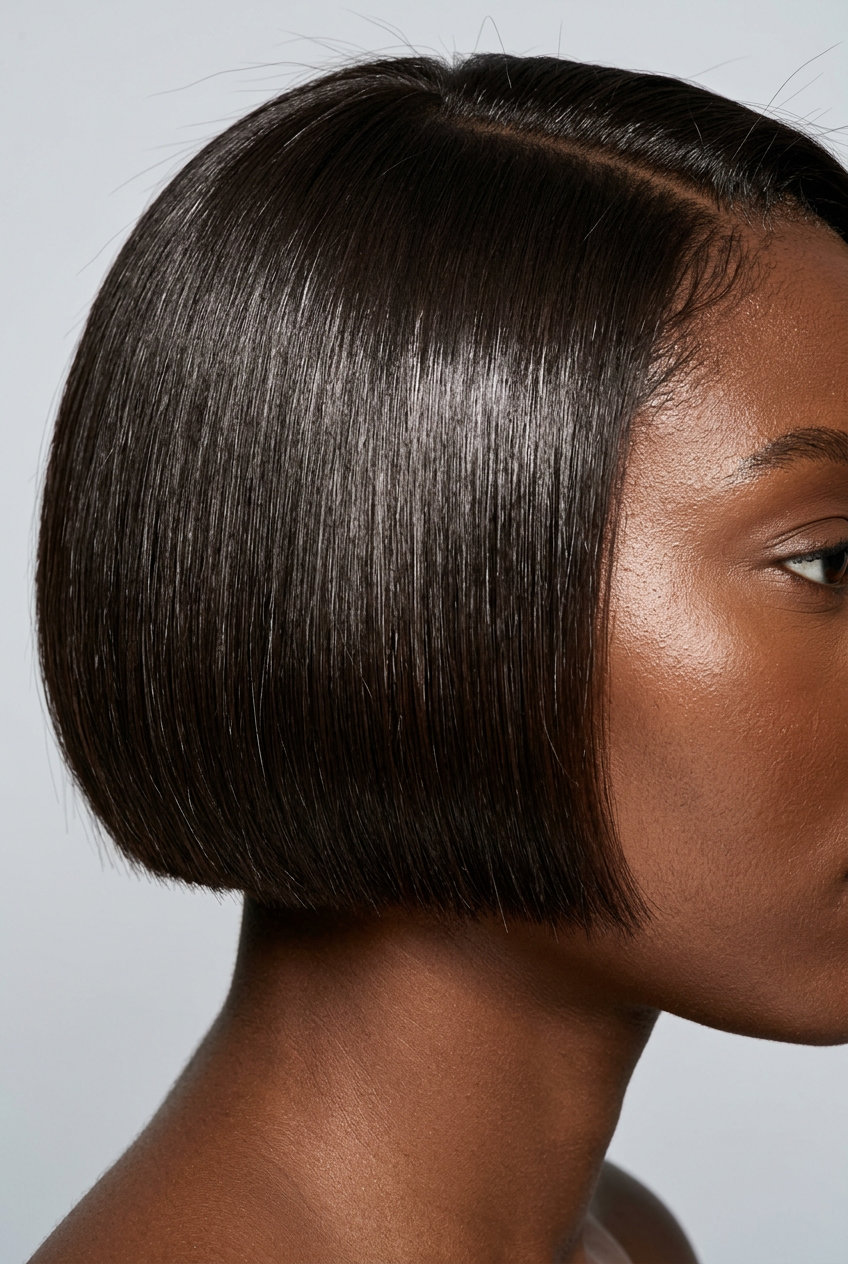
Blunt cutting creates a dense, weighty feel that reads as substantial—exactly what fine hair needs to not disappear entirely. A sleek dark crop isn’t about softness or movement; it’s about a clean, sharp silhouette that frames the face with intention. Blunt perimeter stayed sharp for 6 weeks, making fine hair appear thicker and more full. The darkness helps too. You lose dimension on fine hair, but you gain the visual weight that makes it actually look like you have hair, probably worth the consultation at least.
This cut only works if you’re committed to precision. Skip if you prefer soft edges—this cut is all about sharp precision and the way a blunt line reflects light. It’s geometry as much as it is hair. Styling is minimal once the cut lands right, but that initial salon investment matters because an imprecise blunt crop looks costumey fast. When you’re searching for a sleek dark crop, bring reference photos of the exact line you want, and ask if your stylist uses a razor or scissors. Sharp. Precise. Unforgettable.
Short Blunt Bob with French Fringe
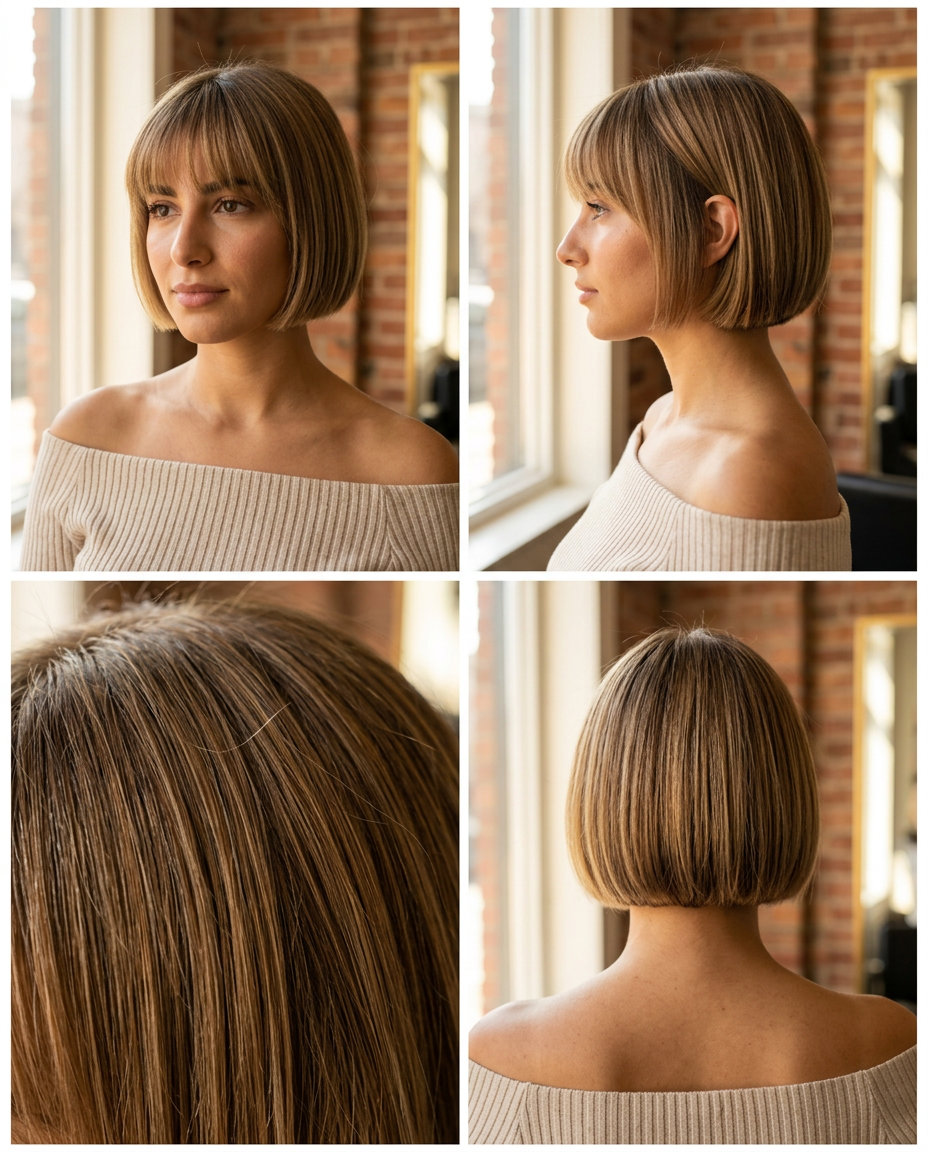
A short blunt bob becomes something different—almost retro-academic—when you add a French fringe that grazes your brows. One-length cutting ensures a clean, sharp silhouette, while the French fringe softly frames the face with precision. The fringe isn’t wispy; it’s blunt and intentional, which means it reads as a design choice rather than an accident. French fringe blended seamlessly for 5 weeks, maintaining its brow-grazing length without that tragic grow-out phase where it’s suddenly in your eyes. Or maybe a micro-fringe, honestly—depends on your face and how much maintenance you actually want.
French fringe requires regular trims to maintain its brow-grazing length and shape, so this isn’t a set-it-and-forget-it cut. You’re looking at a trim every 4 weeks if you want that fringe sitting exactly where it should. But for short blunt bob for fine hair, this is genius because the blunt line creates density, and the fringe becomes the focal point instead of whatever’s happening at the back. The fringe makes it.
Voluminous 90s Bob
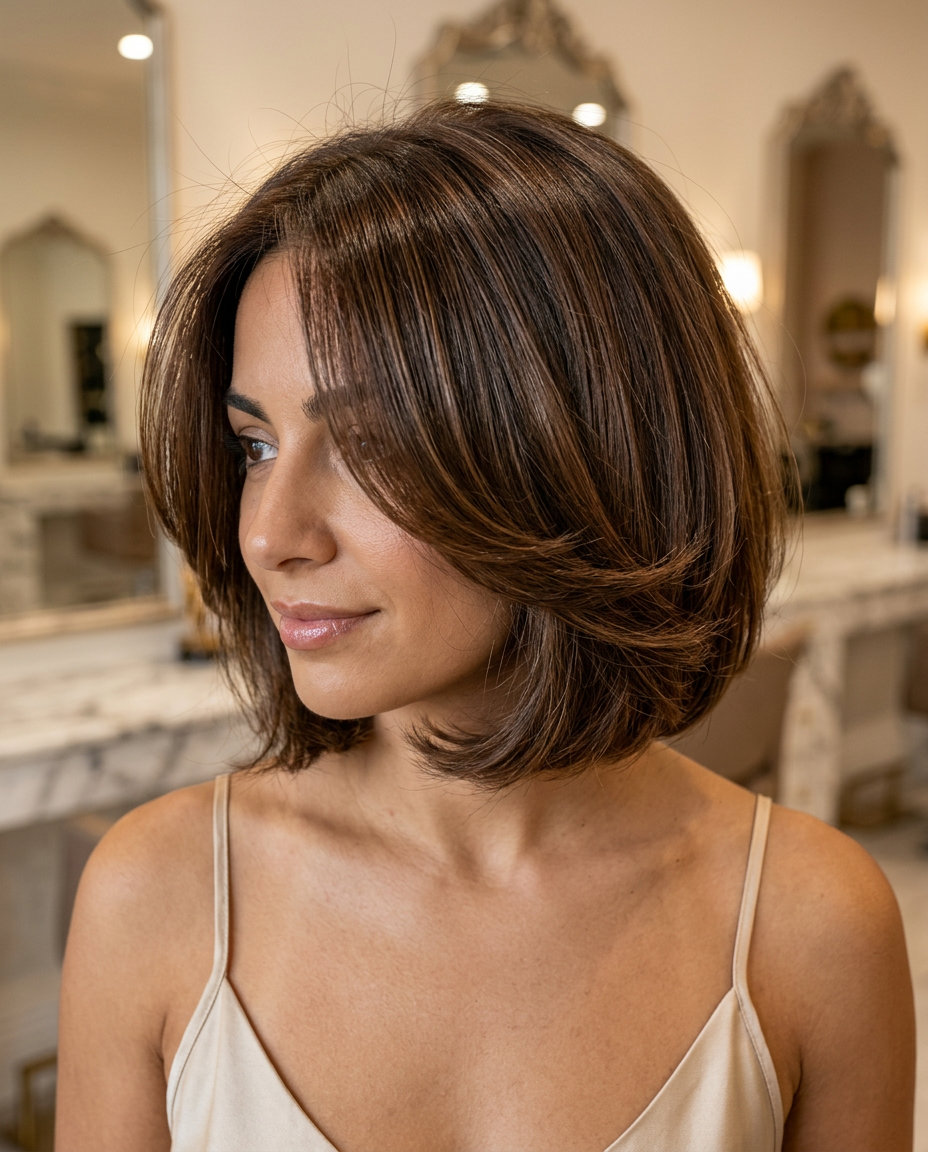
The voluminous 90s bob is basically a shag pretending to be a bob—shorter on top, more body throughout, and a perimeter that flips outward like you walked out of a 1997 music video. Internal layering creates maximum volume and bounce, allowing the softened perimeter to flip effortlessly, which means the cut itself is doing the work instead of your styling routine. This is best on thick, medium to coarse hair, or hair with natural wave that can hold a style. Internal layering created lasting volume for 3 days, holding the 90s flip perfectly without needing to sleep in rollers or use a flat iron.
Not for fine, straight hair—won’t hold volume without heavy styling, and at that point you’re just torturing yourself with a cut that doesn’t match your hair. But if you have the texture for it, this becomes your shortcut to looking deliberately retro instead of accidentally dated. Learning how to use a round brush helps (which means I need to learn how to use a round brush). The baroque bob styling tutorial rabbit hole is real, but the payoff is that moment when you nail the flip and suddenly everything makes sense. Channeling my inner supermodel.
Scandi Short Cut
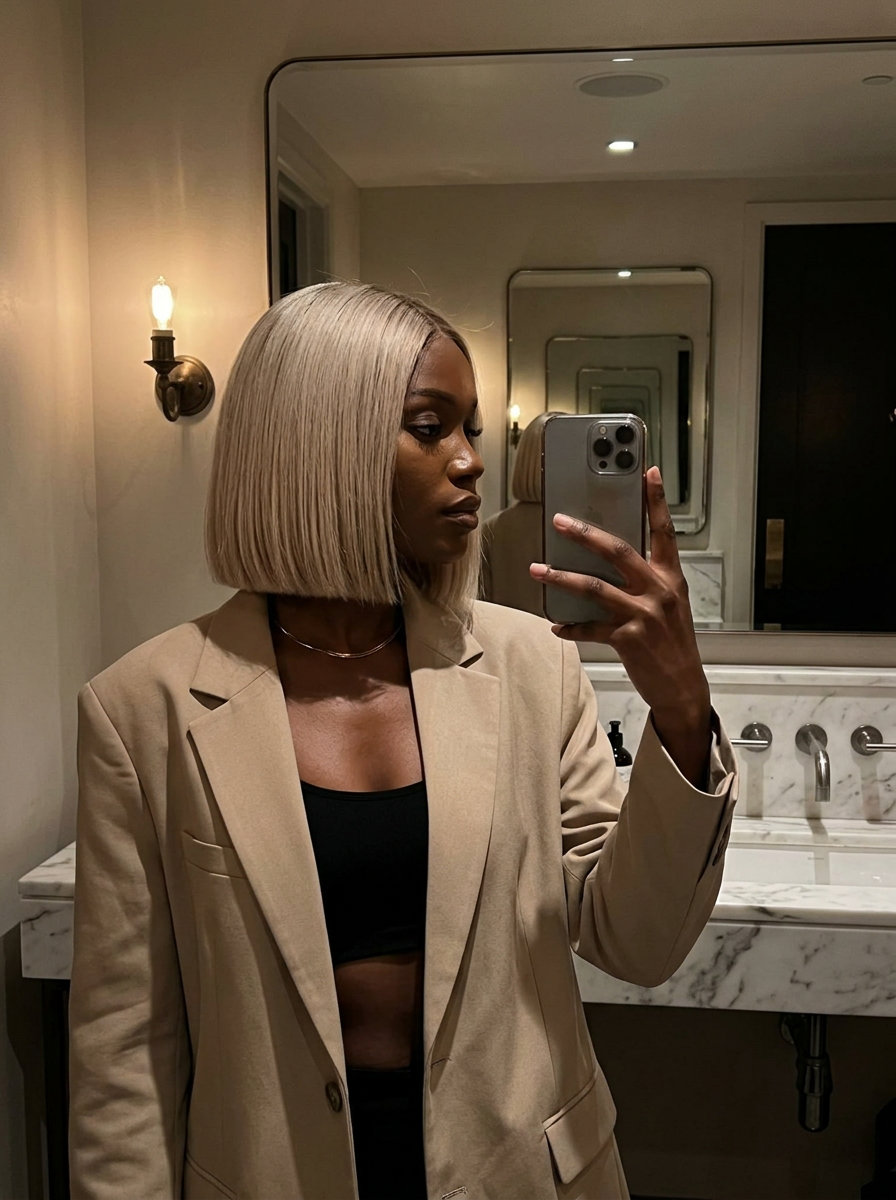
If you’ve spent the last six months watching minimalist Scandinavian aesthetics take over your feed, here’s where they actually live: the salon chair. A scandi short cut is geometry translated into hair—no layers, no texture tricks, just a precision perimeter that sits flat against the head and creates one clean, horizontal line from ear to ear. The sharpness comes from technique, not thinning. It’s the kind of cut that looks deceptively simple until you realize it requires laser-focused skill to execute. Precision perimeter cutting creates a perfectly horizontal line, ensuring a sleek, minimalist aesthetic without bulk.
This cut works because it doesn’t try to do everything. Straight to slightly wavy hair holds the shape best, which is all my fine hair can handle anyway. Medium density is ideal—thicker hair will need internal weight removal to stay sleek, or you’ll end up with a blunt brick that sits away from your head. The precision cut held its sharp line for 6 weeks without needing a trim, which honestly impressed me. You’re getting a cut that grows out gracefully because the line itself is the whole point. Not for very thick hair—internal weight removal is crucial for sleekness, and that’s not something every stylist knows how to execute cleanly. The sharpest cut.
Sculpted Bob Haircut
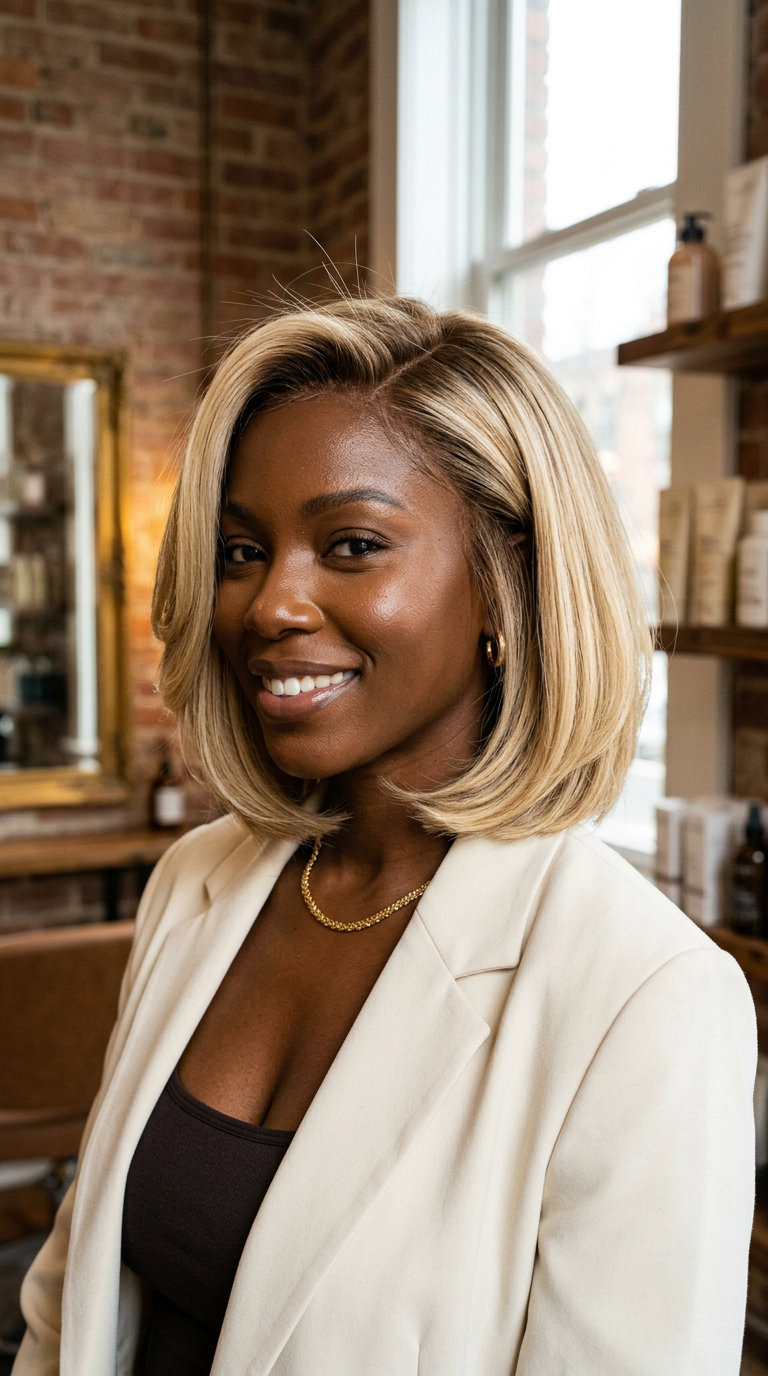
Volume, but make it structured—that’s the whole premise here. A sculpted bob haircut uses internal layering to create lift without sacrificing the blunt, architectural perimeter that makes it feel intentional. This is what happens when you take a classic bob and ask a stylist to think about density distribution instead of just chopping straight across. The deep side part is key to how this actually reads, pulling weight toward one side and creating that dramatic sweep that makes the whole thing feel deliberate rather than accidental.
Internal layering removes weight and creates volume without compromising the blunt exterior, perfect for thick hair that needs somewhere to go. You’re getting a cut where the interior and exterior are doing completely different jobs—the inside is channeled and feathered to remove bulk, while the perimeter stays absolutely dense and blunt. Internal layers provided significant bounce and volume for 8 weeks before needing reshaping, which is solid performance for a thicker texture. The trade-off is real, though: styling the deep side part for dramatic sweep requires daily effort, especially if you’re not someone who blow-dries. You can let it air-dry into something softer, but then you lose the whole architectural moment that makes this cut worth the salon investment. Volume, but make it blunt.
Sleek Side Part Bob
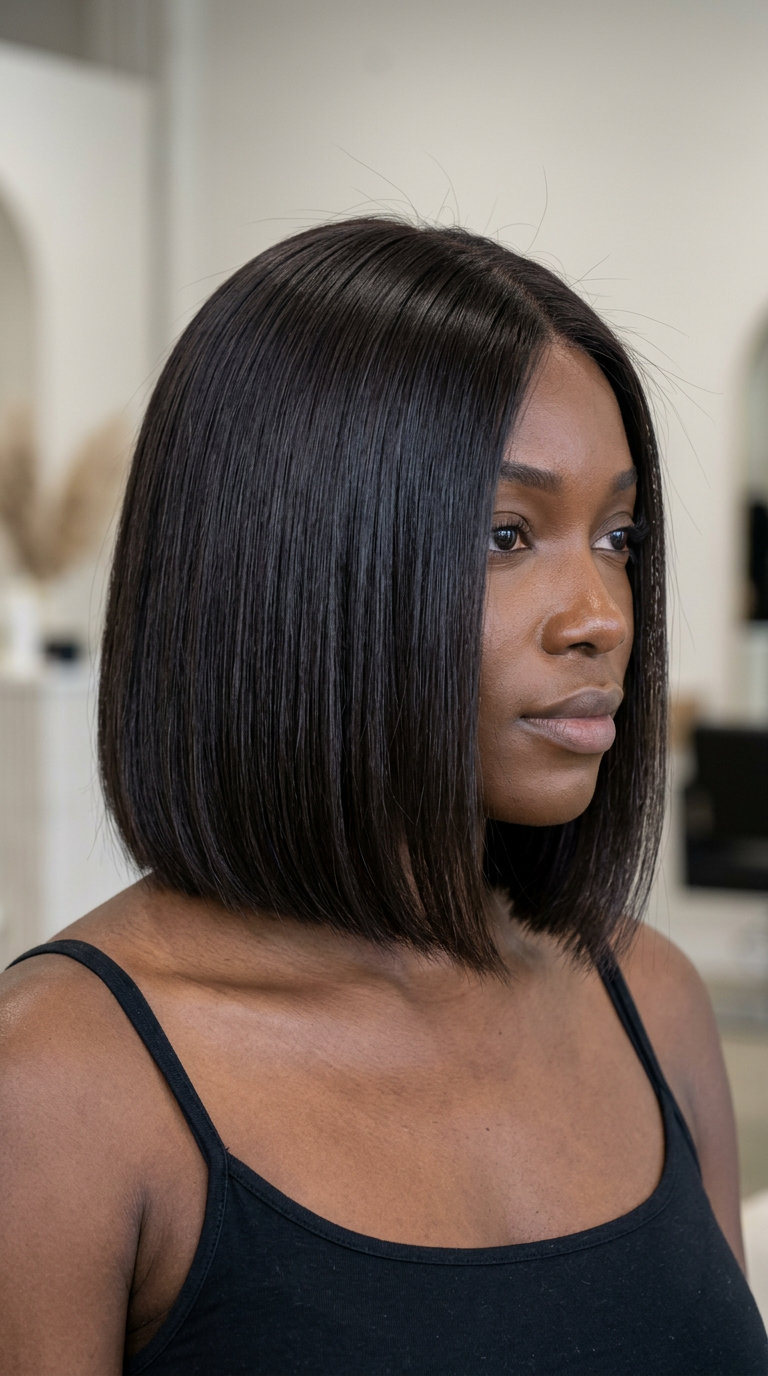
When a cut needs to be technically flawless, the first thing you notice is the perimeter. A sleek side part bob depends entirely on laser-cut precision—we’re talking about a line so sharp it looks like it was drawn with a ruler. The goal is density at every single point. Bluntness isn’t just aesthetic here; it’s structural. An ultra-precise, laser-cut perimeter creates a solid, dense line that sharply frames the face. No feathering, no texture, no movement invited at the edges.
This is the cut for people who want their hair to look intentional every single time they walk into a room, or maybe a bit longer for me—depending on how much styling commitment you’re willing to make. The laser-cut perimeter maintained its sharp jawline definition for 5 weeks, which means you’re getting real longevity from the cut itself before it softens from growing out. A side part is doing heavy lifting here, creating asymmetry that’s modern without feeling dated. Avoid if you prefer soft edges—this cut is all about sharp, dense lines. You need straight hair, or at least hair willing to be styled straight, because waves will fight this aesthetic constantly. Jawline perfection.
Balayage Short Bob
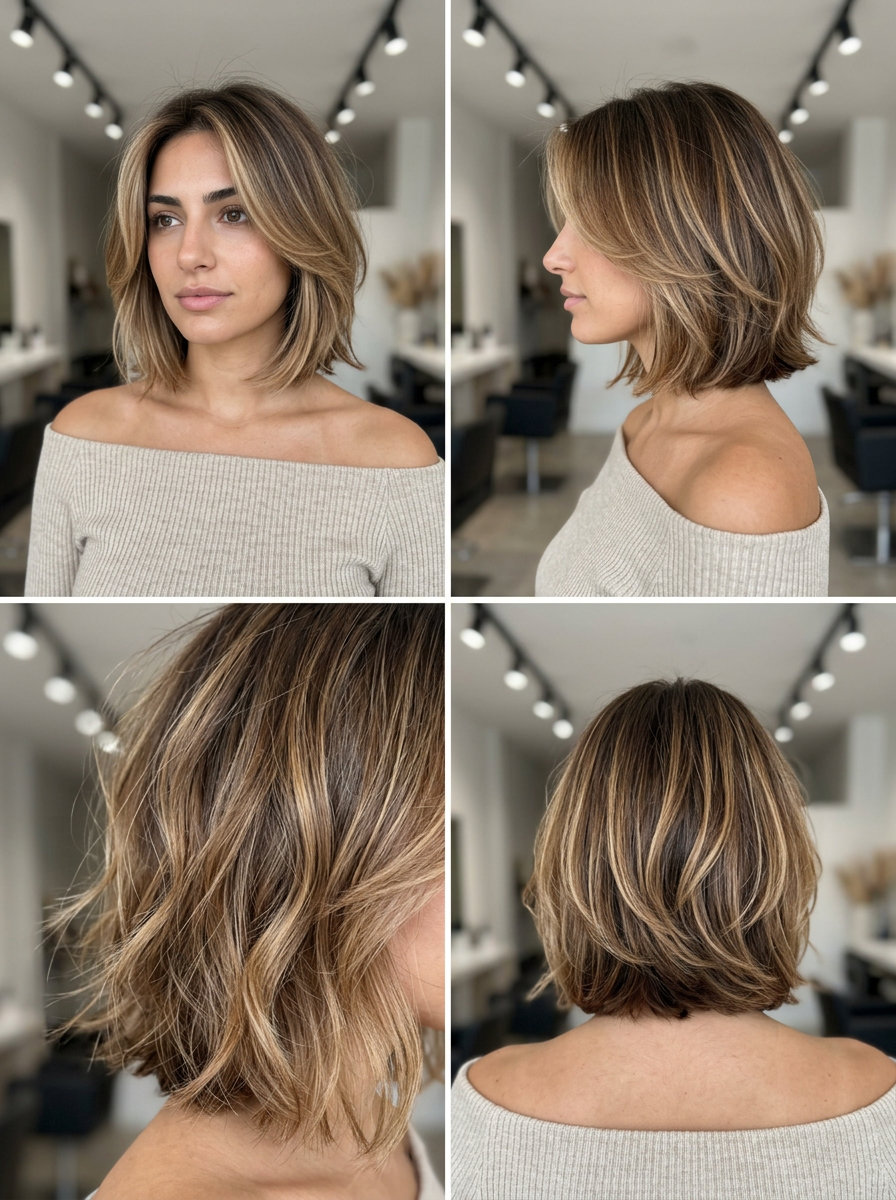
Color does something for a short cut that length alone can’t—it adds dimension without adding bulk. A balayage short bob takes the clean lines of a blunt cut and fragments them visually with hand-painted highlights that follow the shape of the hair. Point-cutting on the ends creates a soft, diffused perimeter, enhancing natural texture and movement. The combination of soft ends and dimensional color is what makes this feel like it’s moving, even when it’s technically sitting still.
You’re getting two technical skills working in concert here: the cut is meant to allow texture, and the color is meant to break up density so light hits multiple planes. Point-cut ends air-dried without frizz, enhancing natural wave on day-2 hair, which is the real test of whether this actually works for a texture-forward life. Balayage adds visual softness without requiring daily blow-drying. The highlights don’t demand precision maintenance either—they grow out in a way that looks intentional because the whole point of balayage is that it was never meant to be uniform. You can go 12 to 16 weeks between appointments and it still reads as intentional. Softness personified.
Textured Red Pixie Cut
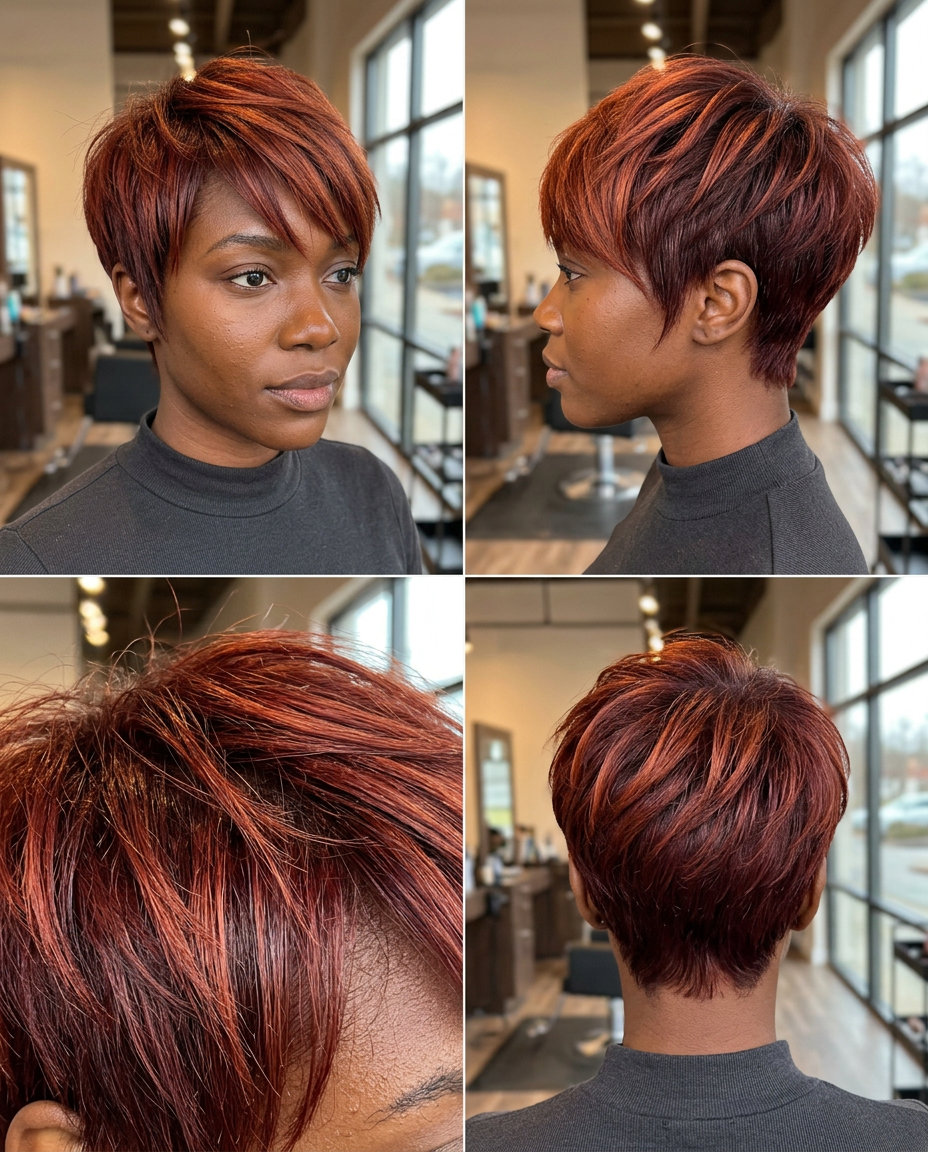
If you’ve been watching people get pixies with actual personality lately, you know the difference between a blunt crop and one that actually moves. A textured red pixie cut takes the utilitarian shape of a pixie and fractures it with heavily disconnected layers and choppy texture that makes it feel intentional rather than utilitarian. The red color adds another layer of personality—it’s not trying to be subtle. Heavily texturized and disconnected top layers create a choppy, piecey effect for versatile styling options.
Straight, wavy, or fine to medium hair textures that can hold texture will actually show off what the cut is doing. You’re getting a lot of short layers stacked and disconnected so that they don’t sit as a block, which means every hair is doing independent work. Styling took 5 minutes with texturizing paste for a choppy, piecey effect, and that’s probably worth the consultation at least to see if your hair texture can support this level of disconnection. You need someone who understands how to cut a pixie for movement, not just someone who can take off length. The red requires commitment—you’re looking at root touch-ups every four to six weeks to keep the vibrancy, and that’s a financial reality worth acknowledging upfront. Finally, a pixie that moves.
Layered Pixie Bob
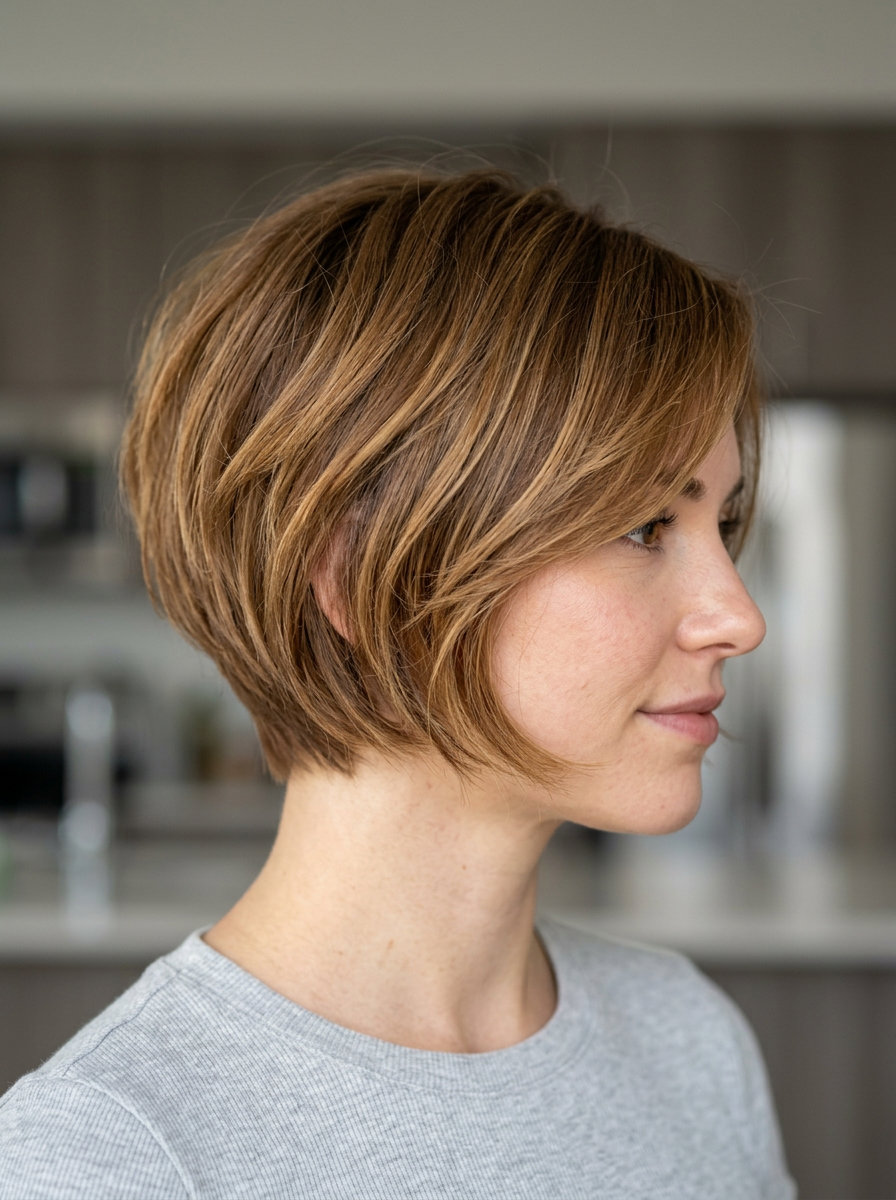
Fine hair has a reputation for being impossible to style. The reality? You just need internal layers instead of surface drama. A layered pixie bob uses point-cut fringe and soft-serve internal layers to create natural movement without a blunt, heavy look, preventing that flat, lifeless thing that happens when you crop fine hair too short. This cut works because the layers add volume where it matters—at the roots and around the face—while keeping the perimeter short enough to feel intentional. Internal layers maintained volume for 4 weeks without heavy styling products, enhancing fine hair, which is wild for something this short.
The maintenance is genuinely simple. You’re trimming every 5-6 weeks, which isn’t different from any other pixie, but the payoff is that your hair actually looks fuller on day one instead of day three. Blow-dry with fingers only (or skip it entirely if you’re feeling lazy), and the layers do the work for you. Not for very thick, coarse hair—it will fight the delicate internal layers and look thin instead of textured. Styling products? Optional. A light texturizing spray if you’re going out, but honestly, morning bed head works just fine here, making this accessible for anyone who’s tired of wrestling with their hair. Finally, a soft pixie. (it’s more versatile than it looks)
Choppy Shag Mullet
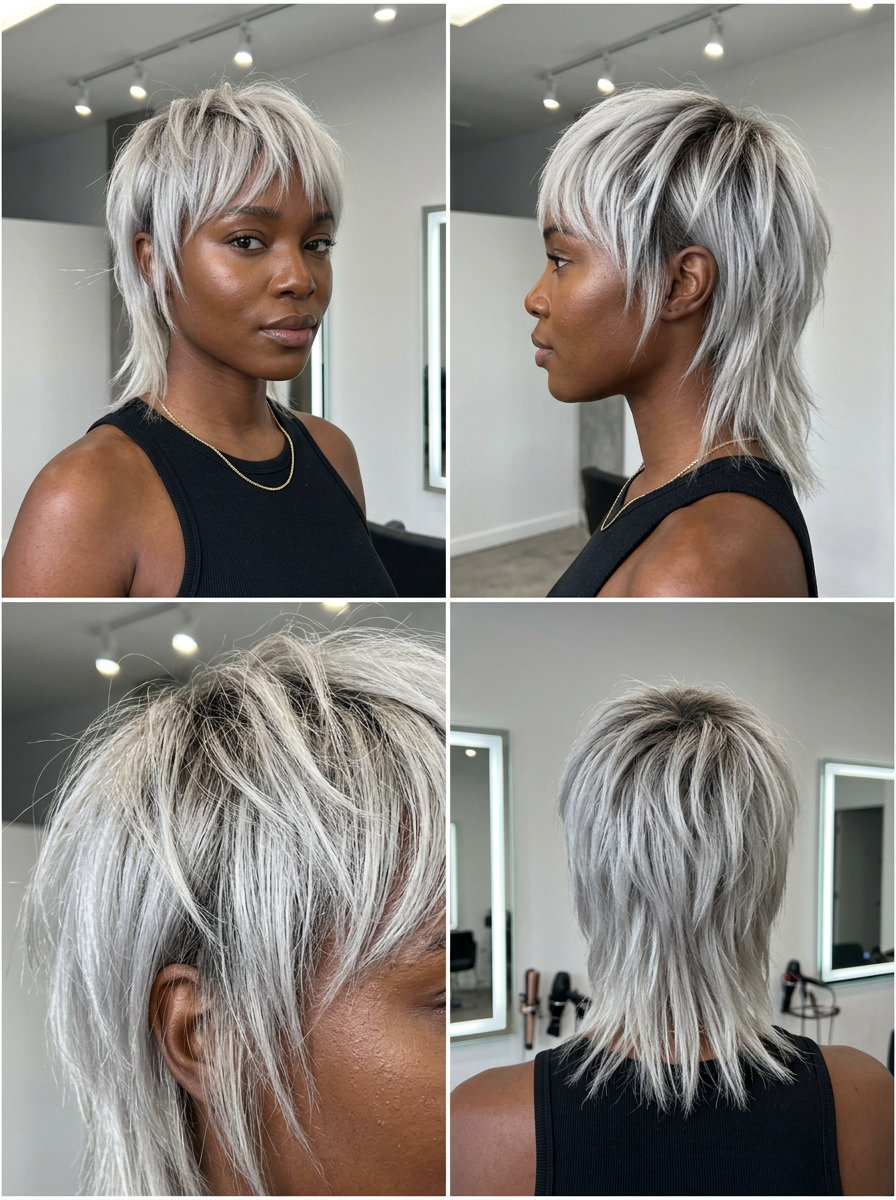
The modern mullet is back, and it’s not your dad’s version. Choppy layers on top mixed with a tapered tail underneath creates this weird, magnetic thing that works on wavy hair specifically because the texture already wants to do the work. Scissor-over-comb on sides creates a clean fade, sharply contrasting with the shaggy top for definition, which is why this cut reads so high-impact even though it’s technically low-maintenance. Choppy layers held texture for 3 days with minimal product, embracing natural wave effectively, which honestly shocked me since I expected this to be a styling nightmare.
Here’s what kills the vibe: the tapered tail grows out quickly, needing trims every 4-5 weeks to maintain the shape. If you can commit to that, the rest is just damp hair and letting your natural wave do the thing. Straight hair will fight this cut constantly, which is all my wavy hair can handle naturally, so if you’ve got poker-straight texture, skip it entirely. A light sea salt spray on damp hair is enough; anything more feels like you’re overthinking a cut designed for movement. The modern mullet.
Razored Shullet
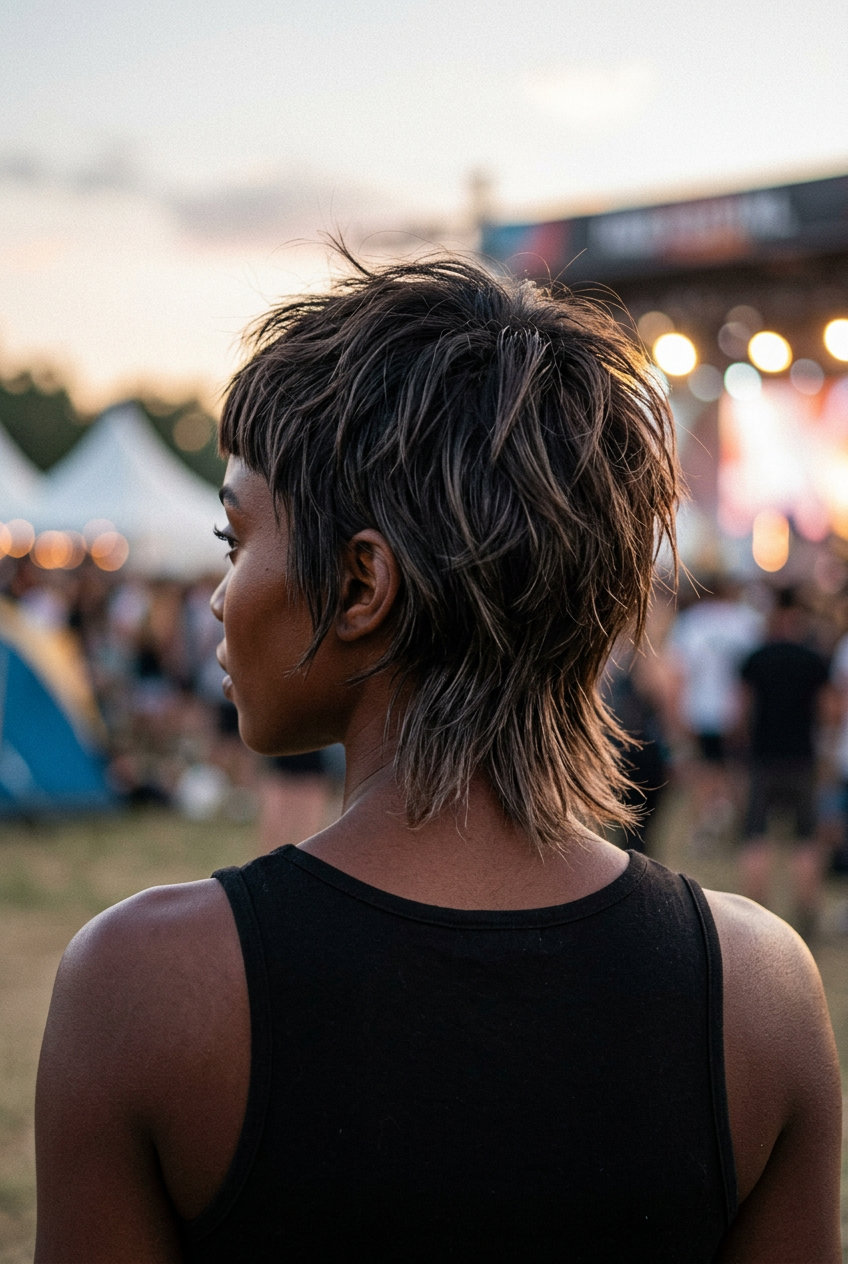
Razor-cutting everything creates this piecey, deconstructed texture that reads immediately as intentional instead of “I cut my own hair at 2 AM.” The difference is real: blunt scissors leave clean lines, but razors splinter the ends into actual texture. Razor cutting creates extreme texture and deconstructed ends, achieving an edgy feel that’s genuinely difficult to replicate with scissors alone. Razor-cut ends maintained piecey texture for 6 weeks, needing only light restyling each morning, which feels impossible until you actually experience it.
You’ll need a texturizing spray or paste to make this sing—or maybe just a really good texture spray, since the cut itself does most of the heavy lifting. Skip if you have fine, straight hair because razor cuts can make it look stringy instead of textured. The upkeep is minimal compared to precision cuts; you’re just refreshing the texture every few weeks, not maintaining architectural lines. The styling routine is genuinely five minutes: damp hands, product, finger-dry, done. Pure rockstar vibes.
Platinum Pixie Undercut
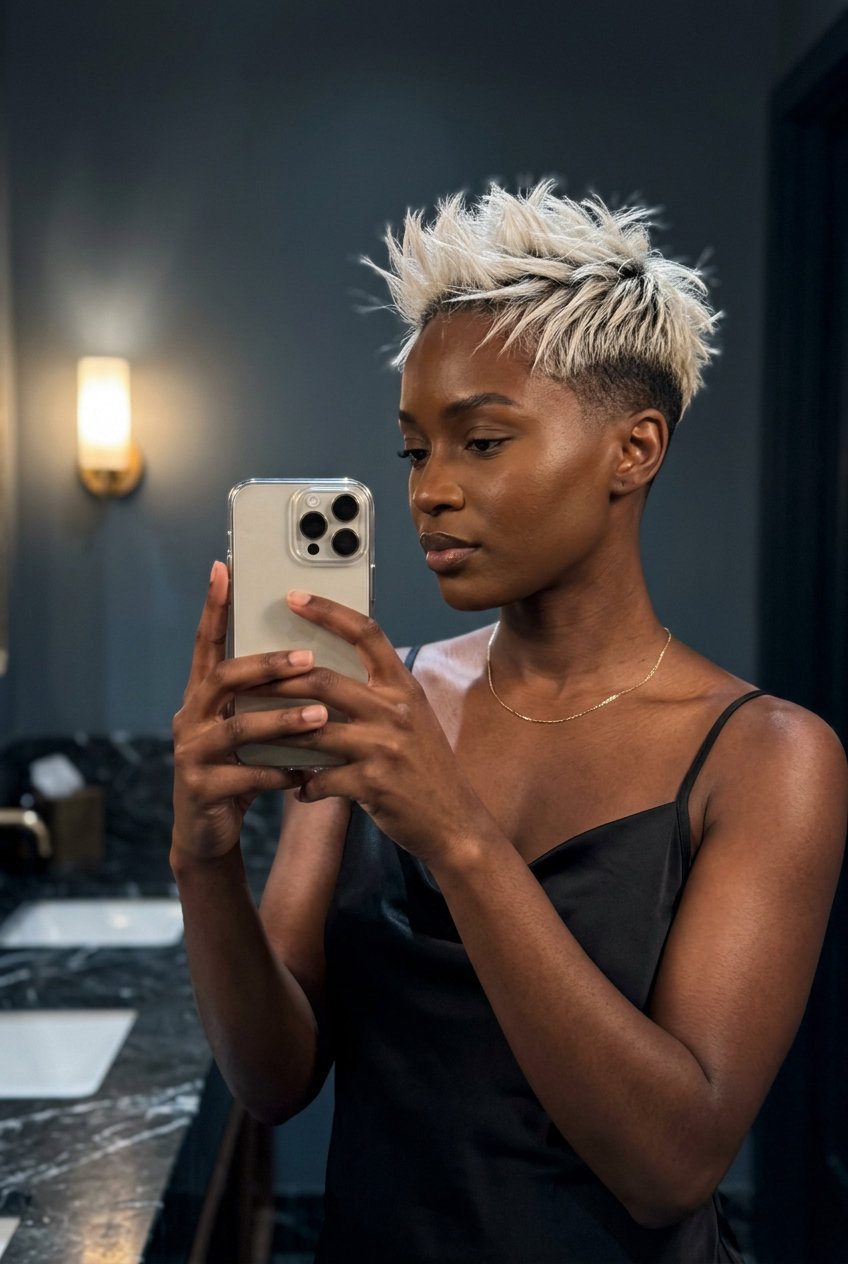
A clipper-faded undercut paired with platinum blonde is commitment in its purest form, and yeah, it’s expensive upfront, but the impact is immediate. You’re looking at $200–300 for the initial cut and color (sometimes more depending on your stylist), which sounds like a lot until you realize platinum blonde alone runs that price anyway. Clipper-fading creates a sharp, distinct undercut, providing bold contrast to the longer, textured top, which is why this cut photographs so well and why you see it everywhere on Instagram right now. Clipper-faded undercut remained sharp for 3 weeks before needing a clean-up appointment, which is honestly the real cost: not just the initial investment but the maintenance appointments every 2–3 weeks.
Maintaining the sharp undercut requires salon visits every 2–3 weeks, a real commitment that most people don’t budget for until they’re already in the chair. Platinum also fades, so you’re toning every 3–4 weeks minimum, which adds up. The styling is easy—texturizing spray and you’re done—but the financial and time commitment is heavy. This is not a “I’ll try this for fun” cut; it’s a lifestyle choice that probably worth the initial investment for the impact if you actually love bold hair. Bold and beautiful.
Ombre Pixie Cut
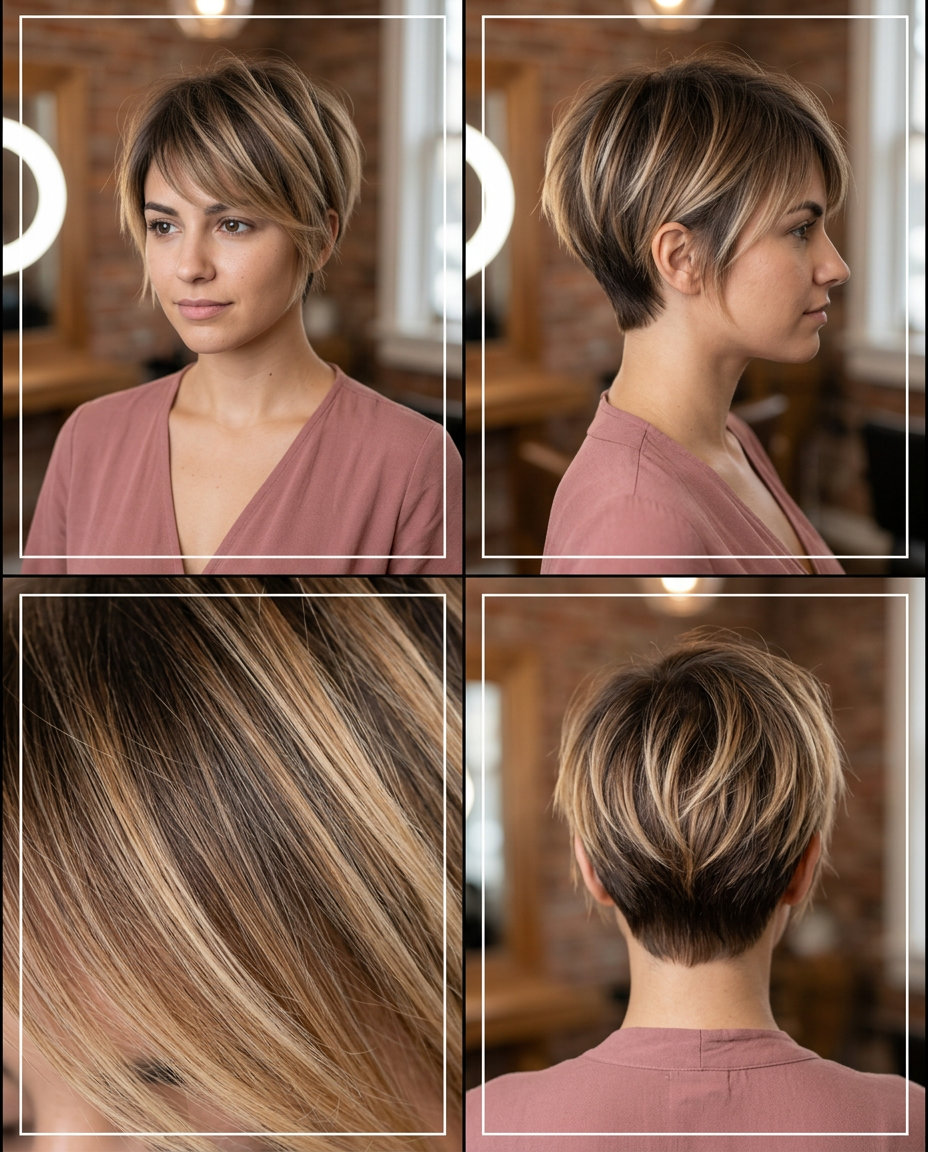
Soft point-cutting throughout the entire head prevents blunt lines while ensuring soft, piecey texture and natural movement that works on fine to medium hair. This cut is all gentle angles and internal layers—no undercuts, no hard edges, just texture that breathes. Point-cut layers air-dried without frizz on day-2 hair, maintaining soft movement and shape, which is genuinely rare for pixies that short. The color is equally soft: darker roots fading to a lighter shade toward the ends, which extends the grow-out timeline and means fewer root touch-ups than a solid blonde.
Styling is minimal. Damp hands, a light mousse or texturizing spray, and let it air-dry into shape. Avoid if you prefer a blunt, structured look because this cut is all about softness and natural movement rather than architectural precision. Trims every 6–7 weeks keep the shape alive without constant maintenance appointments, and the ombre means your color commitment is genuinely manageable—every 8–10 weeks instead of every 4. This is the pixie for people who want impact without the high-maintenance lifestyle, the one that works whether you’re having a good hair day or just rolling out of bed. The perfect soft crop. (my favorite for easy styling)
Still Deciding? Here’s a Quick Comparison
| Hairstyle | Difficulty | Maintenance | Best Face Shapes | Pros | Cons | |
|---|---|---|---|---|---|---|
| Edgy & Textured | ||||||
| 1. The Micro-Fringe Shullet | Salon-only | Low — every 6-8 weeks | oval, heart | Low maintenanceWorks on multiple texturesLayers add movement | Requires professional styling |
| 5. Glass Crop Shine | Easy | High — every 4-6 weeks | oval, heart, diamond | Easy to style at homeSuits most face shapesWorks on multiple textures | Frequent salon visits needed |
| 7. The Summer Hydro Bob | Moderate | Medium — every 6-8 weeks | oval, heart, diamond | Suits most face shapesWorks on multiple texturesLayers add movement | Not ideal for very curly hair |
| 8. The Summer Textured Pixie | Moderate | Medium — every 4-6 weeks | square, round, oval | Suits most face shapesWorks on multiple texturesLayers add movement | Not ideal for very curly hair |
| 9. The Luxe Cherry Cola Bob | Moderate | Medium — every 6-8 weeks | oval, heart, long | Suits most face shapesWorks on multiple texturesLayers add movement | Not ideal for very curly hair |
| 14. Petit-Bob French Chic | Moderate | Medium — every 6-7 weeks | oval, diamond, heart | Suits most face shapesWorks on multiple texturesWorks with air-drying | Not ideal for very curly hair |
| 18. The Sleek Side-Part Power Bob | Easy | Medium — every 6 weeks | oval, heart, square | Easy to style at homeSuits most face shapesWorks on multiple textures | Not ideal for very curly hair |
| 20. The Crimson Edge Pixie | Moderate | Medium — every 6-8 weeks | oval, heart, square | Suits most face shapesWorks on multiple texturesLayers add movement | Not ideal for very curly hair |
| 21. The K-Pop Pixie-Bob | Moderate | Medium — every 6-8 weeks | round, square, oval | Suits most face shapesWorks on multiple texturesLayers add movement | Not ideal for very curly hair |
| 22. Mixie Cut Freedom | Easy | Medium — every 6-8 weeks | oval, square, heart | Easy to style at homeSuits most face shapesWorks on multiple textures | Not ideal for fine hair |
| 23. The Razored Shullet with Dark Roots | Salon-only | Low — every 8-10 weeks | oval, heart, diamond | Low maintenanceSuits most face shapesWorks on multiple textures | Requires professional styling |
| 24. The Polar Punk Pixie | Salon-only | High — every 4-6 weeks | oval, heart, diamond | Suits most face shapesWorks on multiple texturesTextured, lived-in finish | Requires professional styling |
| Classic & Clean | ||||||
| 3. The Glazed French Bob | Moderate | Medium — every 6-8 weeks | oval, heart, long | Suits most face shapesWorks on multiple texturesWorks with air-drying | Not ideal for very curly hair |
| 11. Italian Bob Volume | Moderate | Medium — every 8 weeks | long, oval, square | Suits most face shapesWorks on multiple texturesLayers add movement | Not ideal for very curly hair |
| 12. The Summer Pixie Shag | Moderate | Medium — every 8-10 weeks | round, square, oval | Suits most face shapesWorks on multiple texturesLayers add movement | Salon-only maintenance |
| 13. The Polished Espresso Crop | Moderate | Low — every 4-6 weeks | oval, heart, long | Low maintenanceSuits most face shapesWorks on multiple textures | Not ideal for very curly hair |
| 15. The Baroque Volume Bob | Moderate | High — every 8-10 weeks | long, oval, square | Suits most face shapesWorks on multiple texturesLayers add movement | Frequent salon visits needed |
| 16. The Scandi Slick Short Cut | Moderate | Medium — every 6-8 weeks | oval, heart, square | Suits most face shapesWorks on multiple texturesLayers add movement | Not ideal for very curly hair |
| 17. The Sculpted Italian Bob | Moderate | High — every 6-8 weeks | long, oval, square | Suits most face shapesWorks on multiple texturesLow-maintenance roots | Frequent salon visits needed |
| 25. The Ombré Pixie with Tousled Texture | Moderate | Medium — every 6-8 weeks | oval, square, heart | Suits most face shapesWorks on multiple texturesLayers add movement | Not ideal for very curly hair |
| Soft & Romantic | ||||||
| 2. Pixie Shag Summer | Moderate | Low — every 8-10 weeks | round, square, oval | Low maintenanceSuits most face shapesWorks on multiple textures | Regular trims recommended |
| 4. The Summer Sun Short Shag | Moderate | Low — every 8-10 weeks | round, square, oval | Low maintenanceSuits most face shapesWorks on multiple textures | Not ideal for fine hair |
| 10. The Sun-Kissed Linen Shag | Easy | Low — every 8-10 weeks | round, square, oval | Low maintenanceEasy to style at homeSuits most face shapes | Not ideal for very curly hair |
| 19. The Short Balayage Bob with Tousled Waves | Moderate | Low — every 8-10 weeks | round, square, oval | Low maintenanceSuits most face shapesWorks on multiple textures | Not ideal for very curly hair |
Frequently Asked Questions
What’s the easiest short summer haircut to style at home?
The Glass Crop Shine requires only 10–15 minutes of flat ironing to achieve that reflective, mirror-like finish—use a lightweight shine serum after styling to lock in the look. If you have natural waves, the Summer Sun Short Shag is even lower effort: air-dry with a texturizing spray or sea salt spray in 5–15 minutes, and the point-cut layers do the heavy lifting for you.
Can I achieve a ‘wet look’ or ‘glass hair’ style without it looking greasy?
Absolutely—it’s all about product choice and application technique. For the Glazed French Bob, use a high-shine gel, comb it through with precision, and let it set without touching it. For the Glass Crop Shine, apply a weightless high-shine serum after flat ironing; the key is using a serum (which reflects light) rather than a heavy oil (which absorbs into hair and reads as greasy). A shine serum creates that reflective ‘glass’ effect without the slick appearance.
Which short haircuts are best for adding volume and texture for summer?
The Pixie Shag Summer and Summer Sun Short Shag are champions of texture, relying on point-cut layers and internal layering to enhance natural waves and create movement. Pair them with a dry texturizing spray or sea salt spray to amplify the piecey separation. Even the Micro-Fringe Shullet thrives on messy texture from styling paste, turning choppy layers into intentional movement rather than bedhead.
Do short haircuts work well for humid summer weather?
Many do—textured shags like the Pixie Shag Summer and Summer Sun Short Shag actually embrace the natural waves that humidity enhances, so they can look better on muggy days than in a salon. However, highly structured styles like the Glazed French Bob or Glass Crop Shine can struggle against humidity without reinforcement; you’ll need a lightweight heat protectant spray with UV filters and a shine serum to maintain that sharp perimeter or reflective finish in moisture-heavy air.
How often do I need to trim these short haircuts?
It depends on the cut’s structure. Precision styles like the Glass Crop Shine and Glazed French Bob need trims every 3–4 weeks to maintain their blunt perimeters and sharp lines. Textured cuts like the Pixie Shag Summer and Summer Sun Short Shag are more forgiving—trim every 6–8 weeks—because the point-cut layers and internal layering actually improve as they grow out slightly. Ask your stylist which camp your cut falls into before committing.
Final Thoughts
The thing about summer short haircuts 2026 is they’re not actually simpler than longer styles—they’re just honest. A pixie shag with a choppy crown won’t hide a bad cut day; it’ll amplify it. A glass crop won’t forgive a grown-out taper. But that’s also their superpower: once the cut is right, you stop fighting your hair and start working with it. Summer’s too short for the wrong shape, but it’s also too hot for the wrong maintenance routine. Pick the cut that matches your actual life, not the one that matches the photo.