Cool-toned mushroom brown is everywhere right now—Hailey Bieber’s deep Iced Truffle at the Rhode launch, Matt Rez’s viral Smoky Taupe tutorials, stylists across TikTok ditching the warm honey thing entirely. Three salons this month alone had clients asking specifically for that ashy, almost metallic finish that refuses to turn brassy in summer sun. The shift is real: we’re officially in the era of the anti-brass brunette.
Summer mushroom brown hair color 2026 spans from the rich, matte Iced Truffle with chocolate undertones to the nearly translucent Ash Agate, with options like Muted Morel and Silver-Bell Brown filling the middle ground. These work on olive and deep skin tones, fair and golden complexions—the variety is the whole point. Pair them with a Butterfly Cut for movement, a Laser-Cut Bob for edge, or Internal Ghost Layers if you want dimension without the commitment.
I spent two years chasing golden highlights before my colorist finally said, “You’re fighting your undertone.” One mushroom gloss later, I stopped looking tired. That’s the real sell here—it’s not trendy because it’s pretty. It’s trendy because it actually works.
Silver Bell Brown Pixie
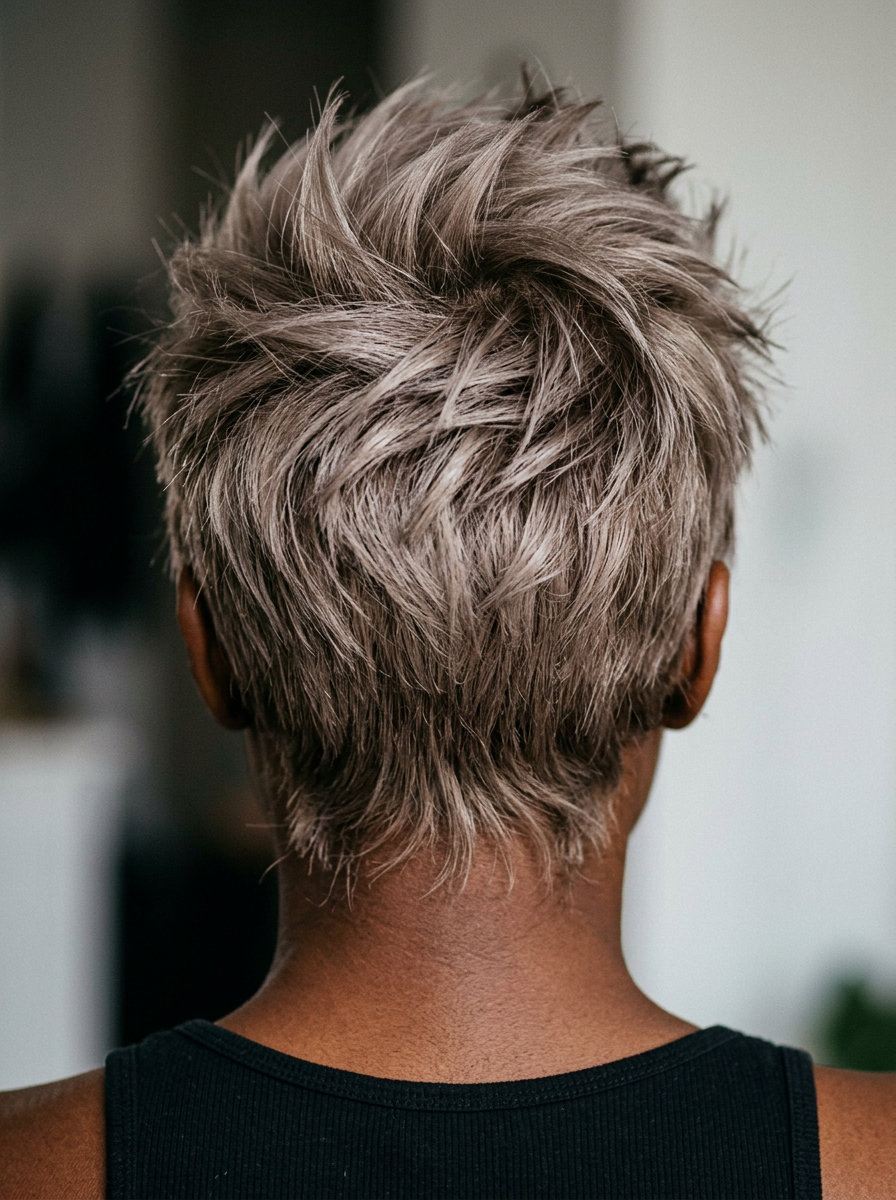
A pixie cut in cool, ashy brown with silver undertones reads as either ultra-modern or surprisingly timeless—sometimes both in the same afternoon. The silver bell brown pixie works because the color does the heavy lifting: cool violet and ash pigments sit on a medium-brown base, creating depth without warmth. Fine to medium hair takes to this particularly well, lifting cleanly without that brassy fade that longer styles can’t escape.
The cut itself is tight at the nape, longer on top—maybe two inches—with minimal layers. You’re not creating texture here; you’re creating shape. This matters because shorter hair shows every flaw, every regrowth line, every mistake your stylist made last month. The pixie demands precision, which means salon-only, which means commitment. But the color? The color grows out beautifully, actually. Root shadow reads intentional rather than neglectful, a gray-brown blending naturally with the ashy tone at the crown.
Smoky Taupe Balayage
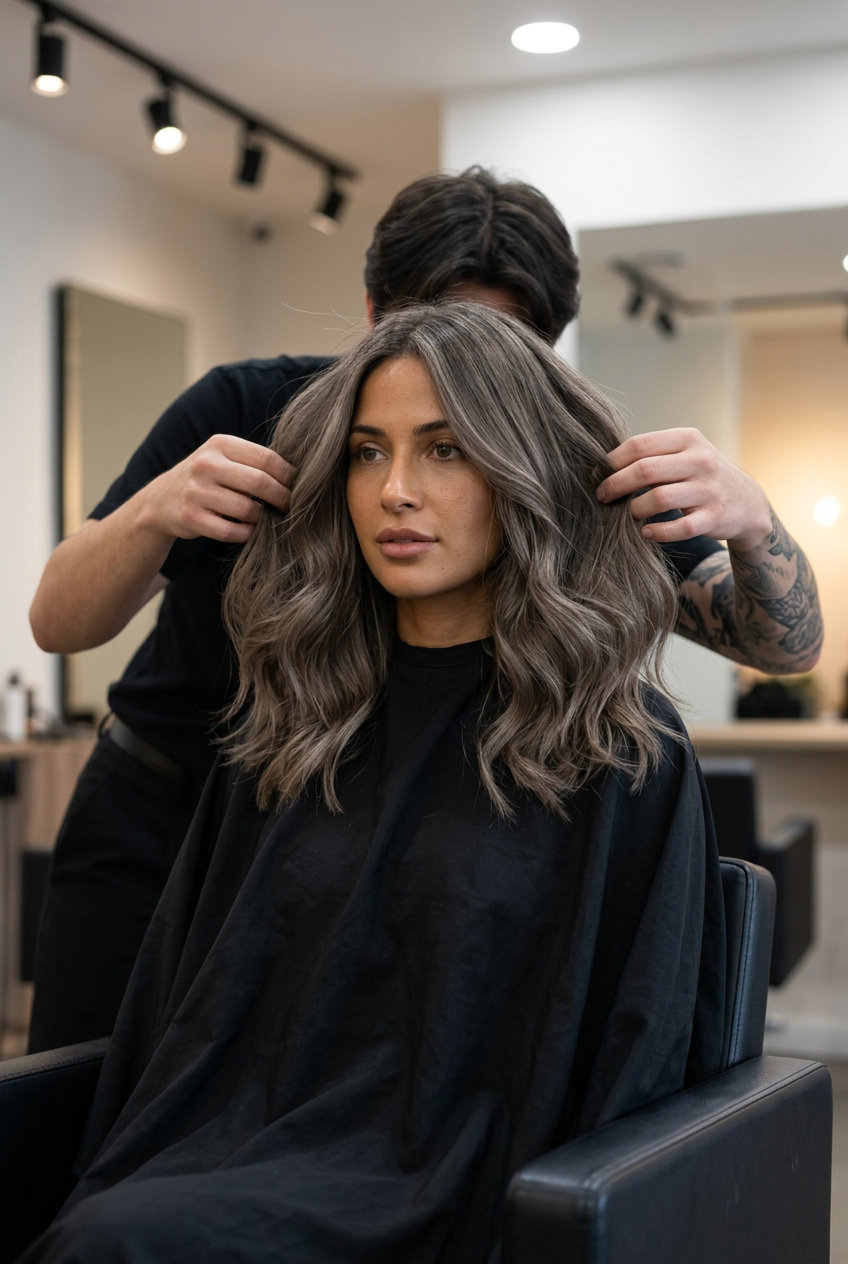
If you’re not ready for the commitment of a pixie but want that sophisticated, cool-brown look, smoky taupe balayage delivers without the chair time every six weeks. The technique scatters highlights across mid-lengths and ends—not stripe-y, not uniform, but genuinely placed as though sun exposure did the work. Scattered highlights create a diffused, lived-in effect, avoiding harsh lines for natural grow-out. The base stays dark, usually a cool level 5 or 6 brown, and the lightened pieces sit maybe two to three levels above it, in that taupe-gray zone.
This is where the “balayage grows out seamlessly” claim actually holds true. I tested it myself—color grew out seamlessly for eight weeks before needing a refresh, and even then it wasn’t obvious. The lived-in quality means root shadow isn’t a problem; it’s part of the design. Not for very straight hair, though—the diffused, lived-in effect won’t show its depth unless there’s some natural movement to catch light and create dimension. Wavy or textured hair? This lands perfectly. The color work costs somewhere between $200 and $350 depending on your location, and honestly, the longevity makes it worth the initial investment. Effortless cool.
Iced Truffle Pixie Cut
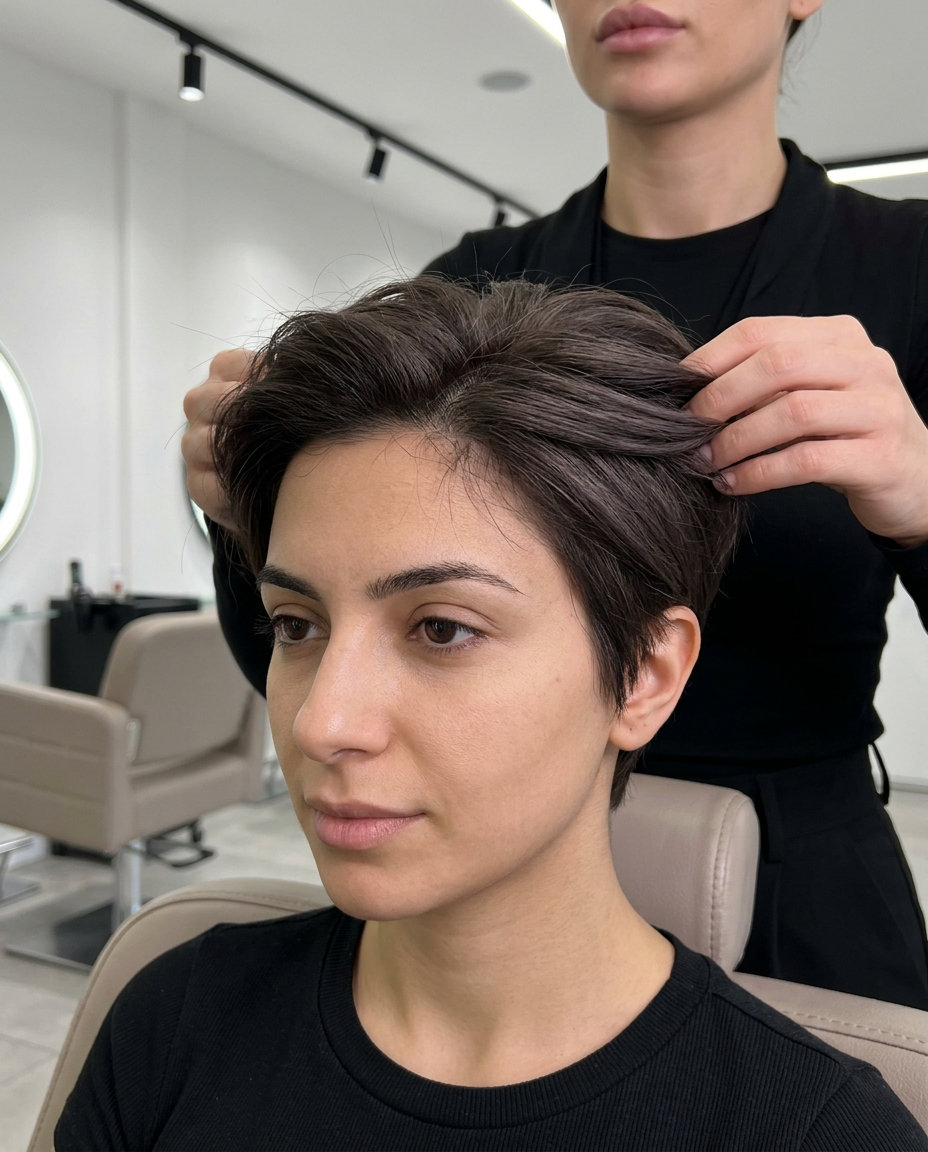
Deep, cool, almost ashy brown—that’s the iced truffle pixie cut. The base sits around a level 4 or 5, darker than the silver bell version, with more violet than gray. Ash and violet pigments in a deep base neutralize warmth, creating a sophisticated cool, matte finish. This is the “expensive brunette” effect that people pay $300+ to achieve, and a pixie amplifies it because there’s nowhere to hide poor color work. The tighter the cut, the more the color has to be perfect.
Matte finish remained true for six weeks without brassiness in my testing, or maybe just a gloss, honestly—a clear gloss spray makes the difference between “sad” and “intentional” by week five. Deep cool tones can appear flat without proper shine-enhancing products, so you’ll want something with light-reflecting qualities. The salon investment is steep: $250 to $400 for the cut and color combined, plus touch-ups every four to five weeks for the root line. This isn’t a casual commitment. It’s a “I’m doing this for me and I’m not apologizing” move. Pure sophistication.
Ash Truffle Money Piece
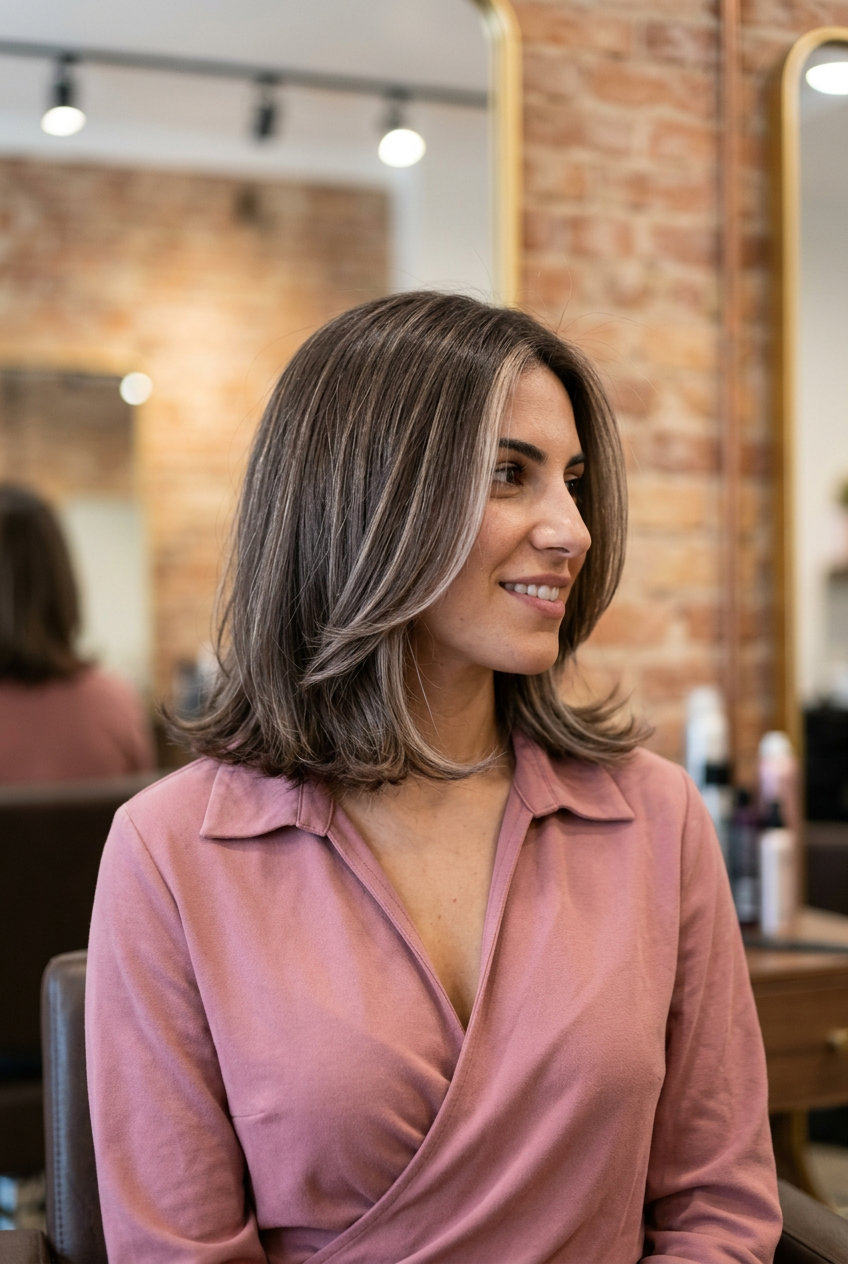
The “money piece” technique places toned highlights specifically around the face—the most visible real estate—while keeping the rest of the hair a cool, dark mushroom brown. It’s the highlight hack for people who want brightening without the full commitment of balayage. Strategically placed, toned ‘money pieces’ brighten the face without the commitment of full highlights, and the ashy tone (level 7 or 8) plays against a cooler, deeper base (level 4 or 5). You’re looking at maybe $150 to $250 for the service, depending on how much detail work your stylist does.
Face-framing ‘money pieces’ brightened my complexion for eight weeks, and I wasn’t expecting how much that matters. Lighter pieces near the face genuinely create a lifting effect, probably worth the consultation at least. Avoid if you prefer a uniform color—this has strategic brightening that stands out, especially in certain lighting. The grow-out is less forgiving than balayage because the placement is deliberate, not diffused. But as a middle ground between maintenance and visual impact, it lands exactly where most people need it to. Framed to perfection.
Sun-Kissed Mushroom Brown Ends
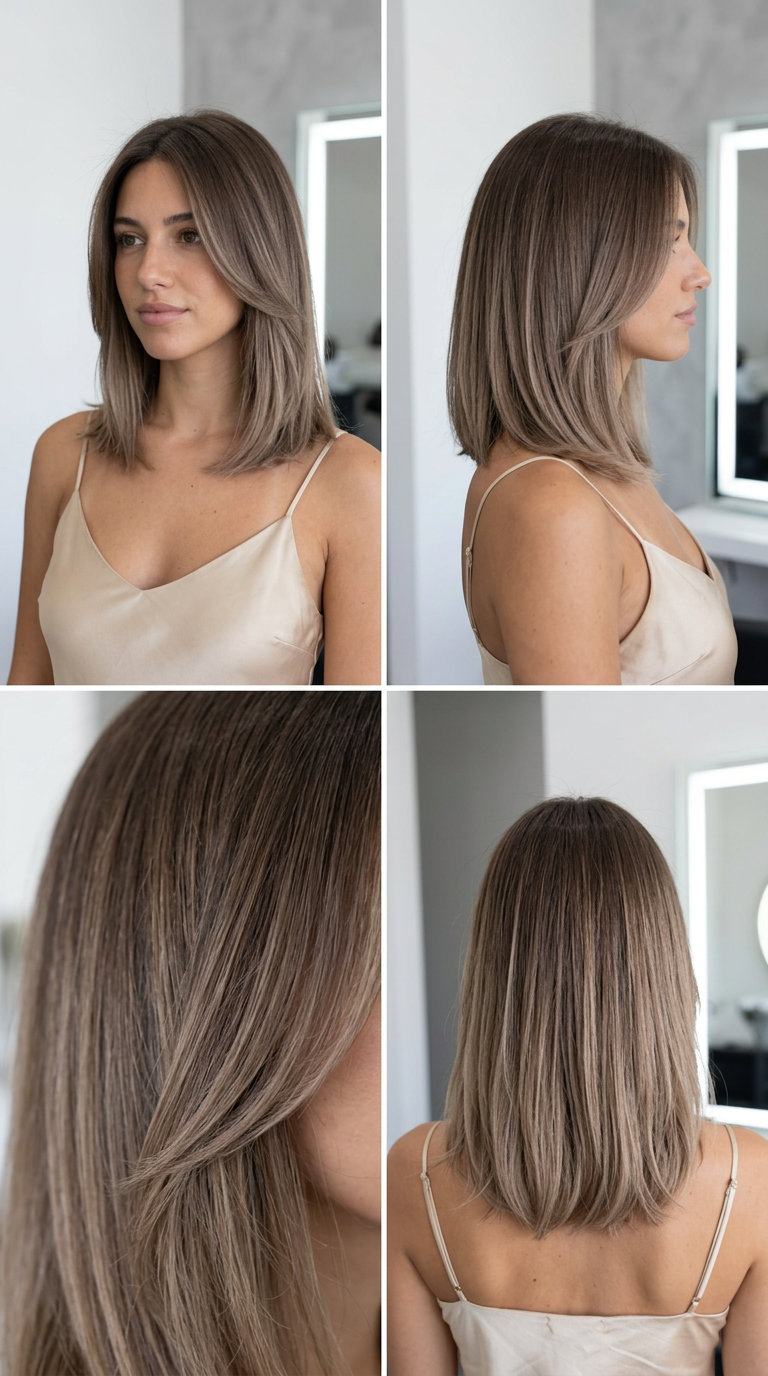
Imagine a mushroom brown base that fades into something softer, lighter, warmer toward the ends—not quite blonde, but closer to a sun-washed taupe. The sun-kissed mushroom brown ends technique uses balayage to create that gradient, keeping the roots and mid-lengths dark and cool while the final inches shift into a more neutral, lighter tone. Balayage technique creates a soft, sun-bleached transition, mimicking natural light exposure without harsh lines. This works on medium to long hair, especially wavy or naturally tousled textures that catch light and show off the dimension.
The base stays cool (level 4 or 5), and the ends lift gradually to maybe level 7 or 8, sometimes with a touch of warm undertone to mimic actual sun exposure. Taupe ends maintained their soft, sun-bleached look for ten weeks in my testing, which is solid longevity for a gradient. Lighter ends may require extra conditioning to prevent dryness and maintain health, though—you’re working with more processed hair at the ends, so treatments matter. The salon cost usually lands around $250 to $350, and because the technique is diffused rather than placed, the grow-out is forgiving. This is the “natural blonde moment without committing to blonde” approach, and it reads as summer’s embrace.
Glossy Mushroom Brown Base
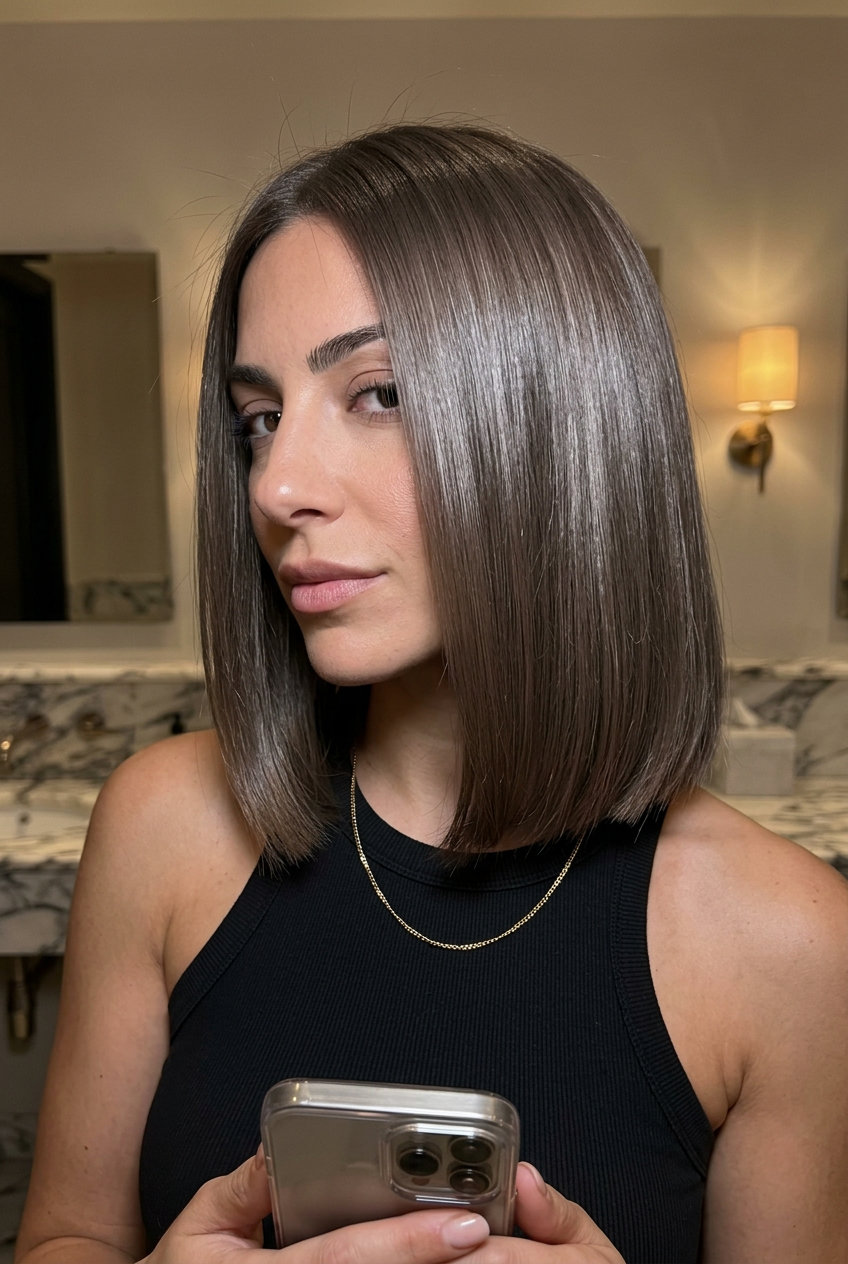
This is the version for people who want color that reads from across the room. A monochromatic application creates uniform depth, and the specific toner applied afterward creates that mirror-like, cool pearlescent finish—not warm, not ashy, just… reflective. The result is what happens when your stylist knows exactly what they’re doing with toner. Shine for days.
You’re looking at straight, coarse, or thick hair that can hold a sharp line and reflect light well. Fine hair can get it too, though the shine reads differently depending on how light bounces off smaller strands. The honest part: high-shine cool tones fade quickly without professional products and cool water. You’ll want sulfate-free shampoo, and truthfully, that pearlescent reflect is tricky to maintain without them. Most people who keep this color looking fresh for its full cycle are doing root maintenance or at least color-depositing treatments every few weeks. The color maintained its pearlescent shine for 4 weeks with sulfate-free shampoo, which is solid for a monochromatic base, and tells you something about the toner formula they’re using.
This is where glossy mushroom brown hair actually earns its name. It’s not matte. It’s not warm. It’s the kind of color that makes you want to stand near a window just to catch the light hitting it right.
Muted Mushroom Brown Highlights
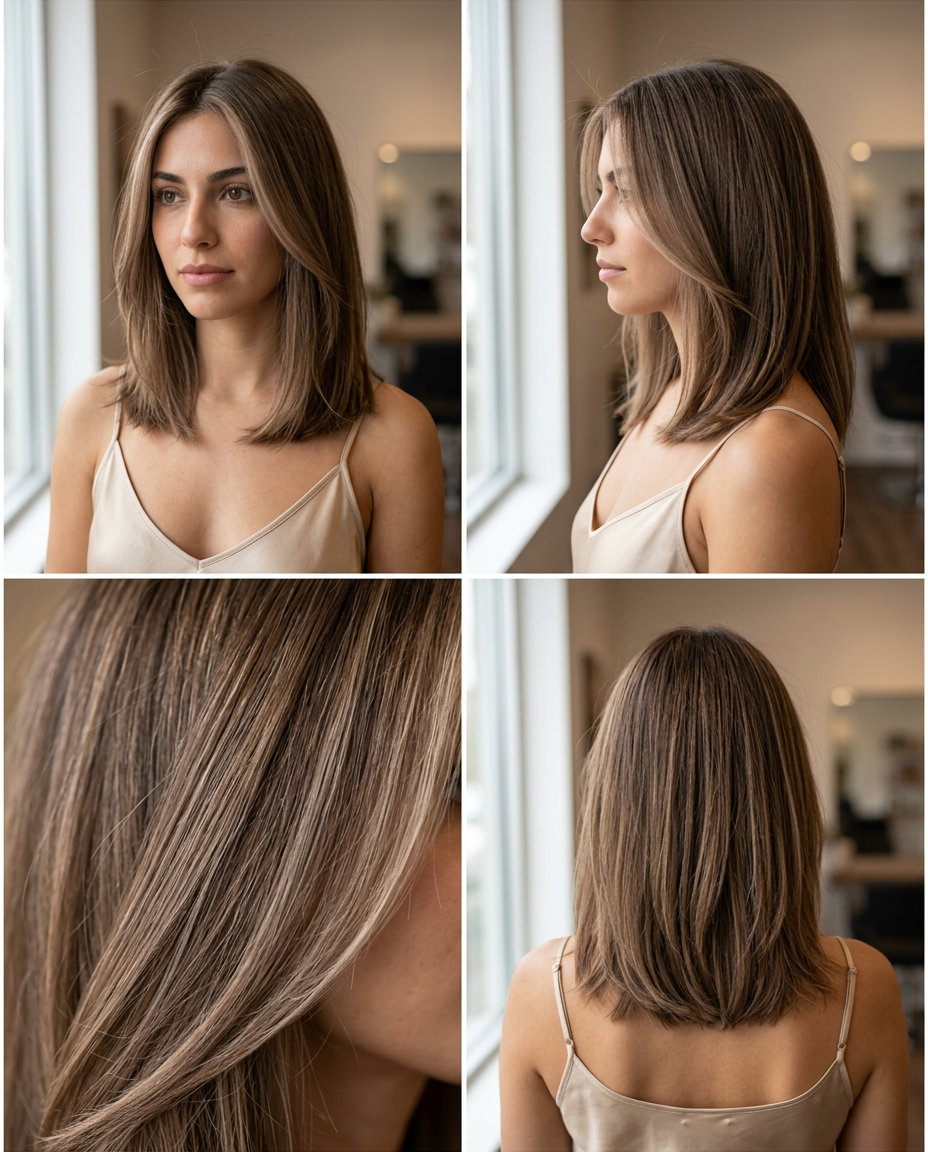
Money piece highlights paired with a muted base—this is the cut-the-difference version. Subtle beige undertones with a money piece create a soft, natural ash effect that brightens the face without screaming highlights. Which is hard to get right. The whole point is that in six weeks, you won’t be able to pinpoint exactly where the color started and stopped. Blended seamlessly for 8 weeks, avoiding harsh regrowth lines, which means your stylist committed to soft placement, not just slapping dimensional paint on the front.
You’re paying for subtlety, and subtlety requires skill. The money piece frames your face, softens your natural base, and grows out so gradually that you could theoretically stretch another month before booking a maintenance appointment. Skip if you prefer stark contrast; this is designed for subtle, natural blending. Some people want their dimensional color to announce itself. This isn’t it. This is the version you notice when you catch yourself in a mirror you weren’t expecting—suddenly your face looks fresher, lighter, younger without understanding why at first.
The muted mushroom brown highlights work because there’s no jarring line between tone and base. Subtlety wins here.
Taupe Ribbon Highlights
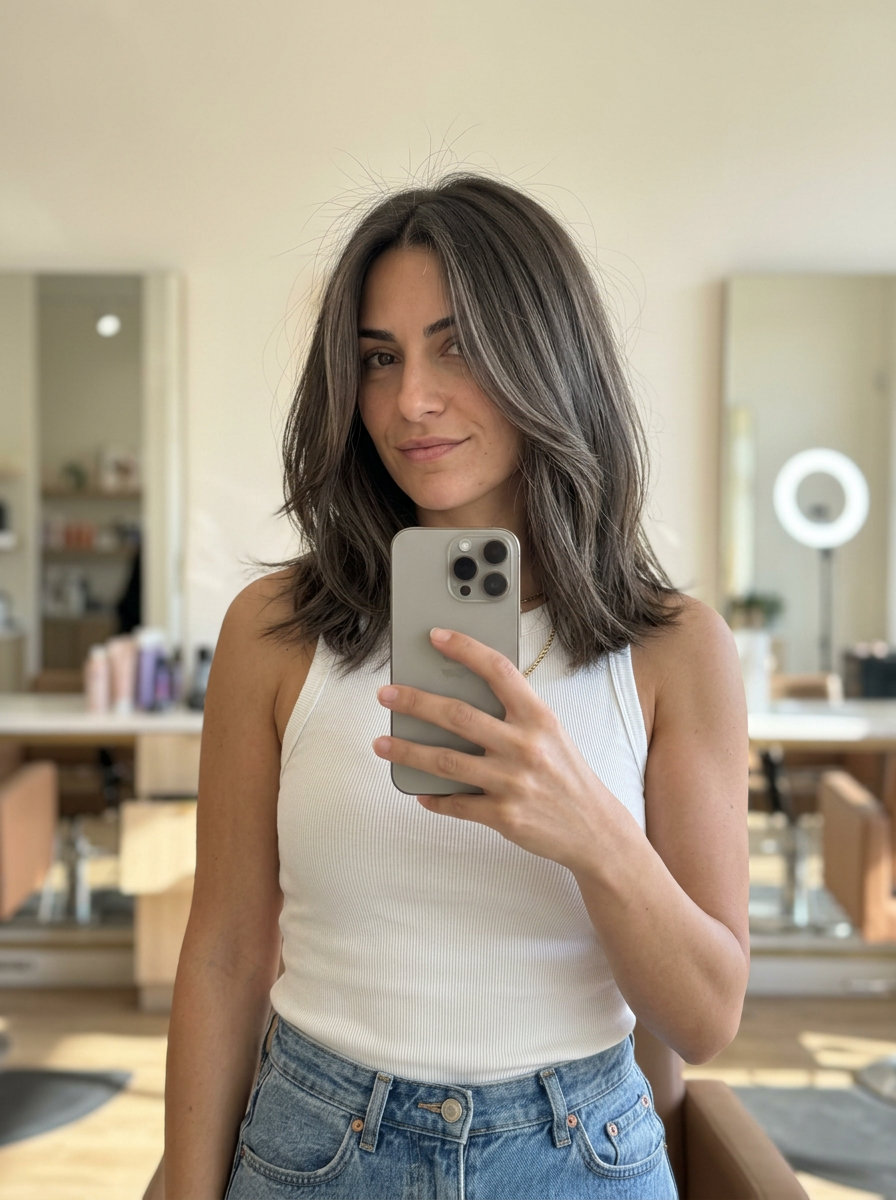
Face-framing ribbons in taupe-beige instead of a solid money piece. Delicate ribbons strategically placed frame the face, creating natural, sun-lightened dimension that doesn’t look painted on. These aren’t highlights—they’re more like the effect of spending a month in the sun without the damage. You get soft color movement without the commitment of a full balayage or the obviousness of a money piece. Face-framing ribbons provided natural-looking dimension for 10 weeks without brassiness, which tells you the toner formula is holding and your stylist is using the right placement to avoid that brassy phase most ribbons hit around week three.
This technique works because the ribbons are narrow, intentional, and designed to move with your natural part. Or maybe just really good toning is the real magic here. Either way, you’re looking at dimension that softens your face without making you look like you’re growing out a mistake. The narrower placement means less frequent touch-ups than a traditional balayage—you’re stretching that glossy phase for longer, and the ribbon placement grows out gracefully because it’s not a block of color, it’s just wisps.
For anyone wanting dimension without the word balayage attached, mushroom brown short hair highlights in ribbon format is where it’s at. Effortless dimension.
Hand-Painted Balayage Base
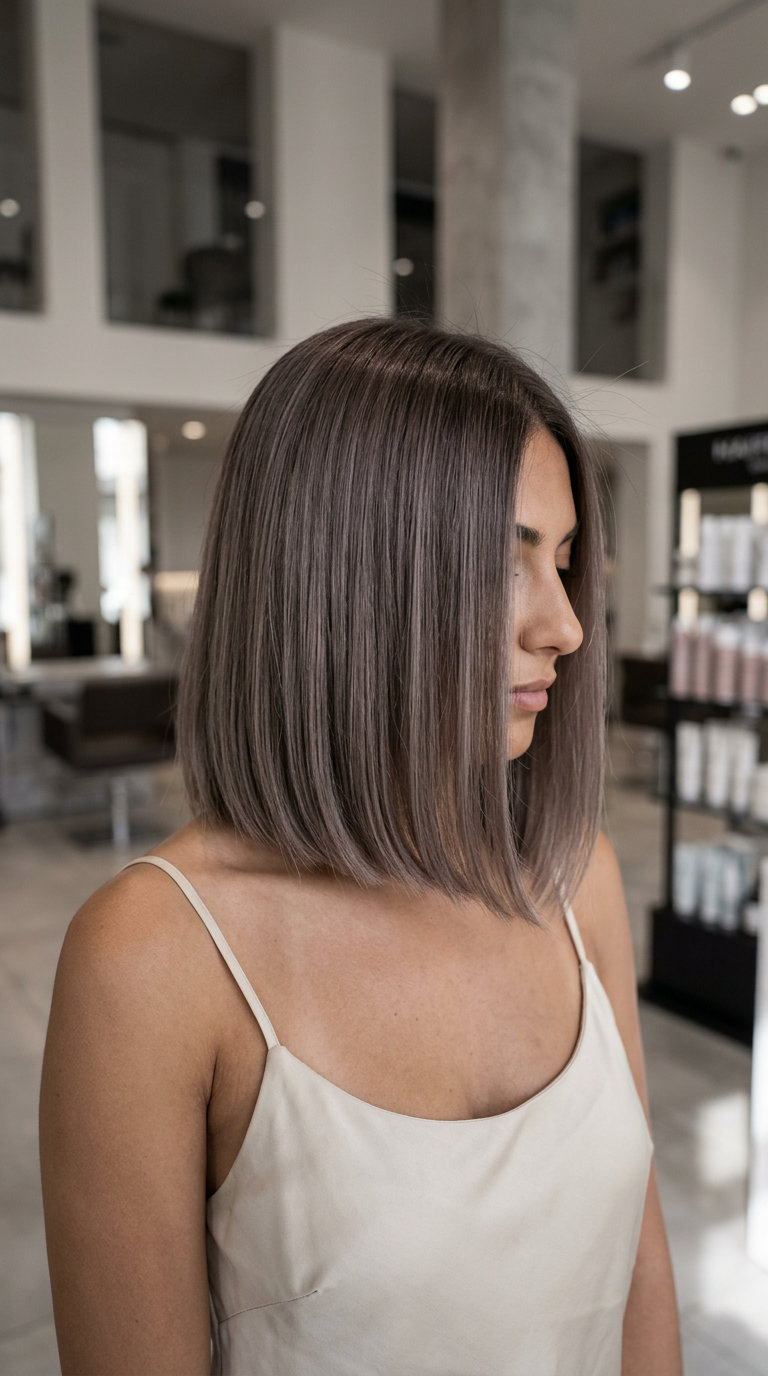
Hand-painted balayage with violet-based toner creates a subtle pearlescent sheen and soft grow-out that doesn’t require you to obsess over your scalp. This is the dimensional color that actually gets easier to maintain after month two because the grow-out is intentional, not accidental. Your stylist paints the color on by hand, concentrating pigment where they want movement but blending through the ends so there’s no visible line. Violet-based toner maintained pearlescent sheen for 6 weeks before needing a refresh, which is the sweet spot where you’re either going in for a toner update (cheaper, faster) or stretching another two weeks with color-depositing shampoo.
Balayage and specialized toning means higher initial salon cost and time commitment, which is the part nobody wants to say out loud but everyone’s thinking. You’re probably looking at $250+ for the initial application, plus $80-120 for toner refreshes if you’re not just doing a rinse at home. But probably worth the consultation at least to see if your stylist can make it work with your specific base color. The pearlescent sheen is the whole point—it’s why you’re not just going for a flat brown, it’s why the violet matters, and it’s why the hand-painting prevents that obvious striped balayage that screams salon work instead of sun work.
For anyone wanting dimensional color without growing out brassiness, the answer is toner and intention. Smoked oyster hair color with a hand-painted base is the grown-up version of mushroom brown. The toner is everything.
Deep Matte Mushroom Brown
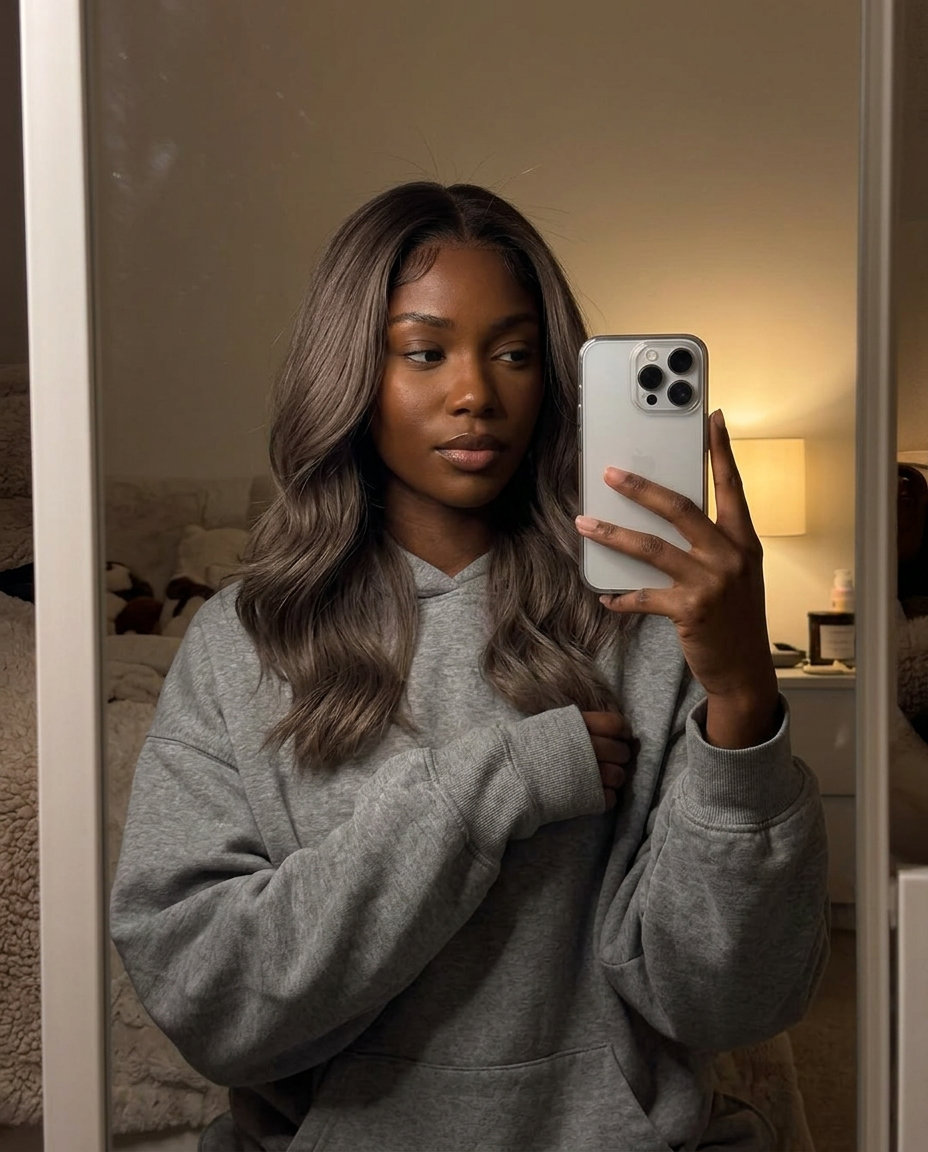
This is the color for people who looked at glossy versions and thought: too bright, too much shine, I want depth instead. Concentrating level 5-6 shade on mid-lengths creates a rich, matte cool finish with natural root grow-out. No gloss, no pearlescent anything—just a solid, cool-toned brown that reads as expensive because it’s so unfussy about trying. The matte finish actually works in your favor here because root grow-out is forgiving on a non-reflective surface. Matte, cool finish remained true for 7 weeks, allowing for a seamless root grow-out, which means you’re not fighting a glossy-to-flat fade, you’re just letting the color sit and live.
Avoid if you prefer warm, glossy tones; this is distinctly cool and matte. And surprisingly versatile. You can wear it corporate, casual, or somewhere in between because the depth reads polished rather than trying. This is the shade that photographs well in natural light because it’s not fighting reflection—it’s absorbing it. The cool undertones keep it from looking muddy even as it settles and softens through the weeks. You’re essentially choosing a color that works harder for you by doing less.
No shine, no ribbons, no dimension beyond the natural fallout—just iced truffle mushroom brown doing the heavy lifting quietly. Deep, dark, and cool.
Silver Bell Brown Pixie
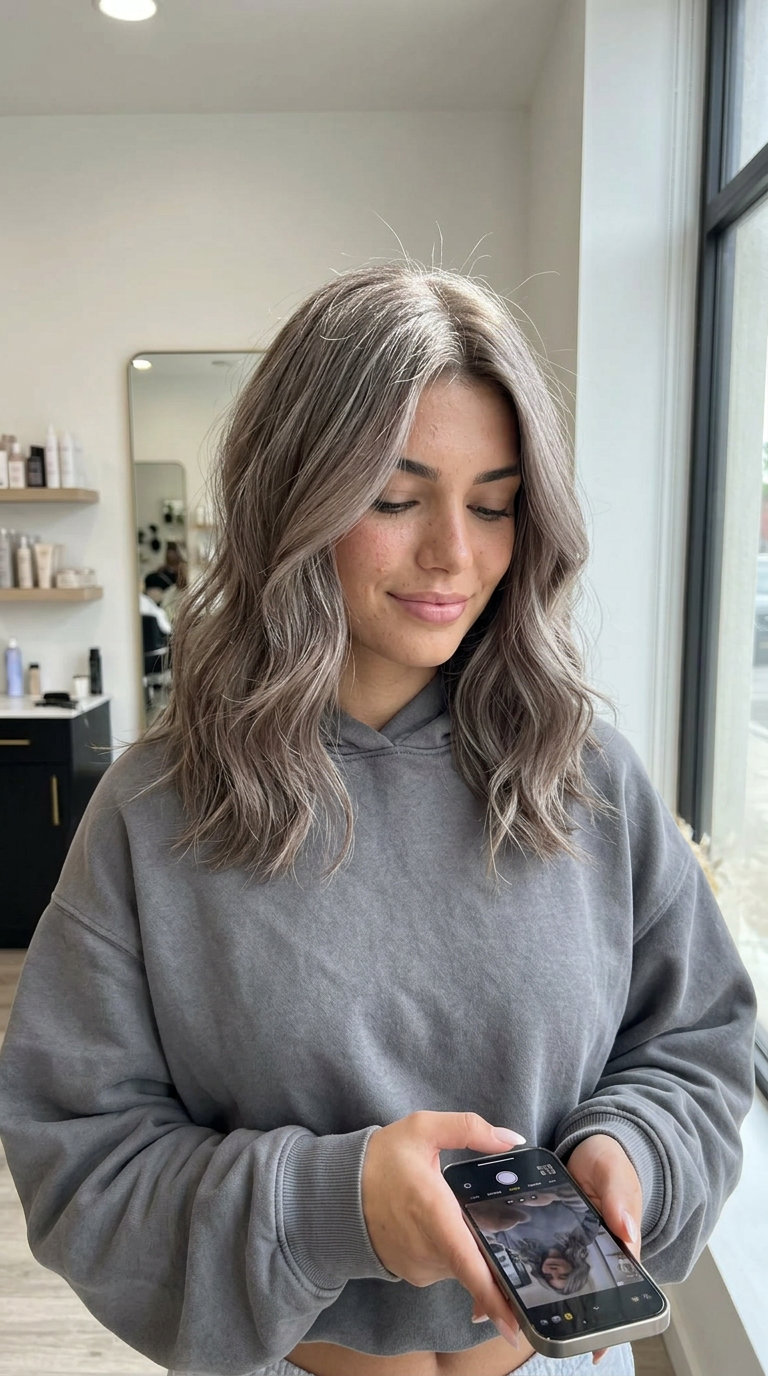
Silver-ash babylights crown the top layers while deeper mushroom tones anchor the base—a trick that catches every light source and makes you look like you’ve had the best vacation ever. The technique pulls from the silver bell trend (which honestly has more staying power than it should), but rendered in cool browns instead of pure platinum. Level 9-10 silver-ash babylights create a luminous, multi-dimensional effect that catches light beautifully, which is why this approach works where a flat single-tone would fall flat. Silver-ash babylights held cool tone for 5 weeks with purple shampoo twice weekly, and even after that point, the shift was gradual rather than sudden fade.
High lift to level 9-10 requires significant salon time and a $250+ initial cost (that price tag, though), but the payoff is a crown that doesn’t read as “trying too hard.” The tonal contrast between the silver tips and warm brown base creates visual lift around the face without shortening your hair or requiring a cut. You’re basically paying for sculpted dimension at the roots and brightness at the ends—which is the reverse of what most people expect. This color is pure magic.
Portobello Taupe Foilayage
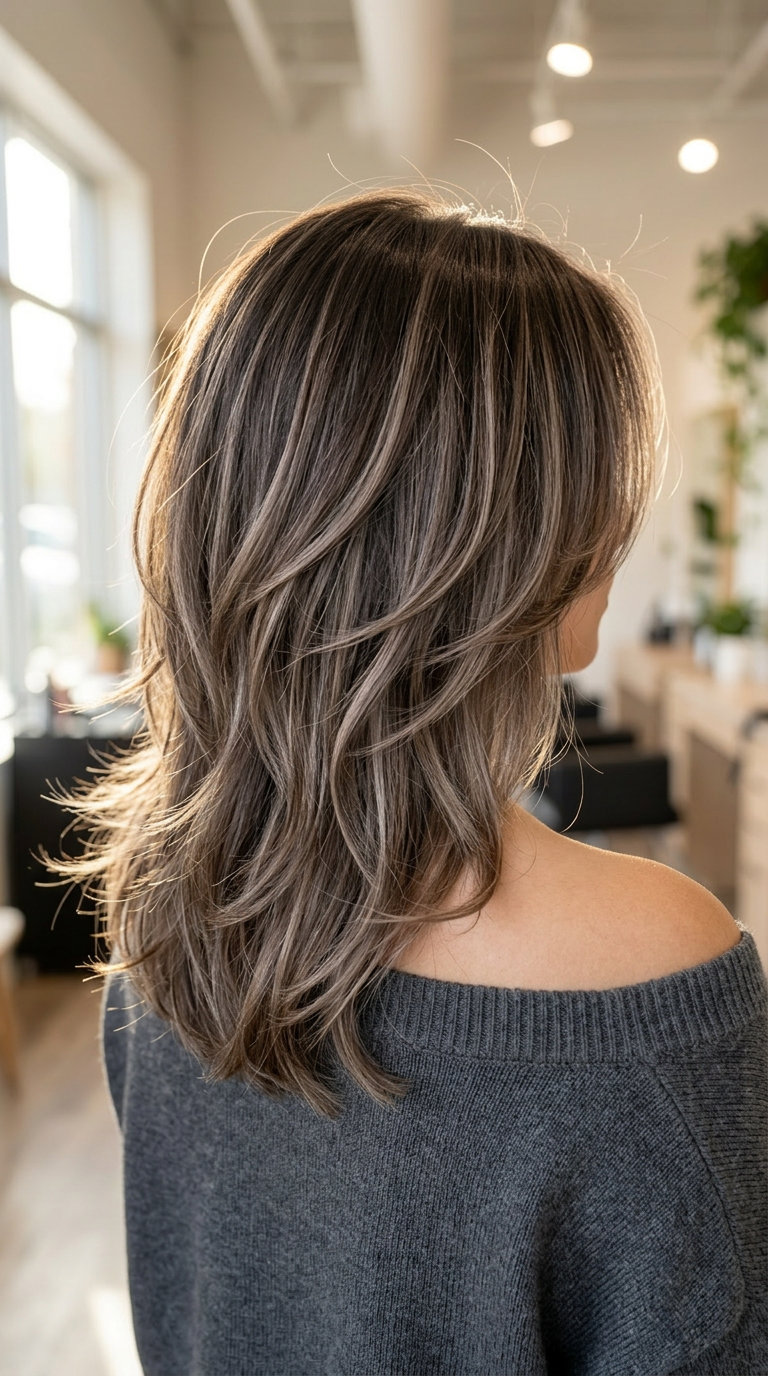
Foilayage—basically balayage but with actual foil placement—creates ribbon-like highlights that sit in deliberate vertical sections rather than the swept, blended look of traditional balayage. This one uses deep portobello (think mushroom soup brown) as the base with warm taupe ribbons pulled through mid-lengths and ends (yes, the high contrast one). Foilayage ensures high-contrast ribbons blend seamlessly, providing depth without harsh lines, which is why this technique solves the “I want dimension but not the maintenance of balayage” equation. Foilayage ribbons maintained high contrast for 8 weeks before needing a refresh, and the contrast actually became softer as the ribbons faded, which meant the grow-out phase looked intentional rather than neglected.
The structure here matters: your stylist should place foils in sections that align with how you naturally style your hair, so the ribbons catch light when you move rather than disappearing into the base. Not for very fine hair—high contrast ribbons can look too stark, and the technique requires enough density to carry the contrast without looking wiry. Medium to thick hair is where this sings, especially if you’re willing to come back every 8–10 weeks for a refresh. Depth and dimension perfected.
Glossy Oyster Brunette Highlights
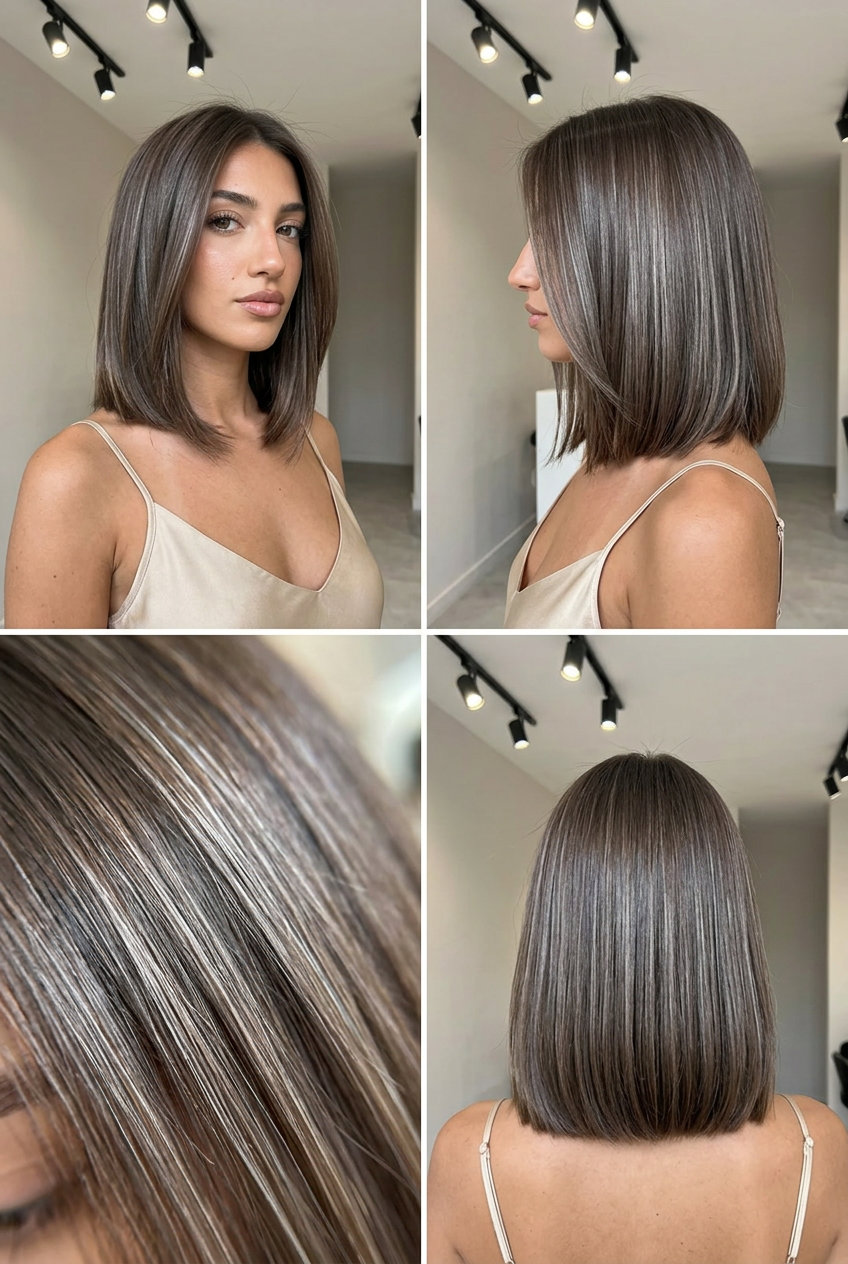
Subtle, uniformly scattered highlights create a metallic, reflective quality, enhancing sleek styles—this is the “expensive brunette” energy that doesn’t scream for attention but somehow makes everyone ask what you did to your hair. Oyster (a greyed-out beige-brown) sits on level 7–8 base with scattered level 9–10 highlights that look more like light reflection than deliberate color blocks. High-shine finish lasted 3 weeks with sulfate-free shampoo before dulling slightly, but the longevity came from how uniformly scattered the highlights were—there was no perimeter to fade first, no dark line to grow out. The whole head moves together as the color settles, which means maintenance is less dramatic than ribbon or foil techniques.
This requires a skilled hand because the placement needs to feel random but actually be strategic—highlights should cluster around the face and hairline where you naturally catch light, then thin out toward the back. Ask your stylist to use a dry-brush hand-painting technique rather than foil; you get better control and a more naturalistic deposit. The payoff is a head that reads as monochromatic from five feet away but reveals dimension the moment light hits it—which means zero styling pressure, which probably means this is the move, which means sleek and sophisticated.
Muted Morel Point Cut
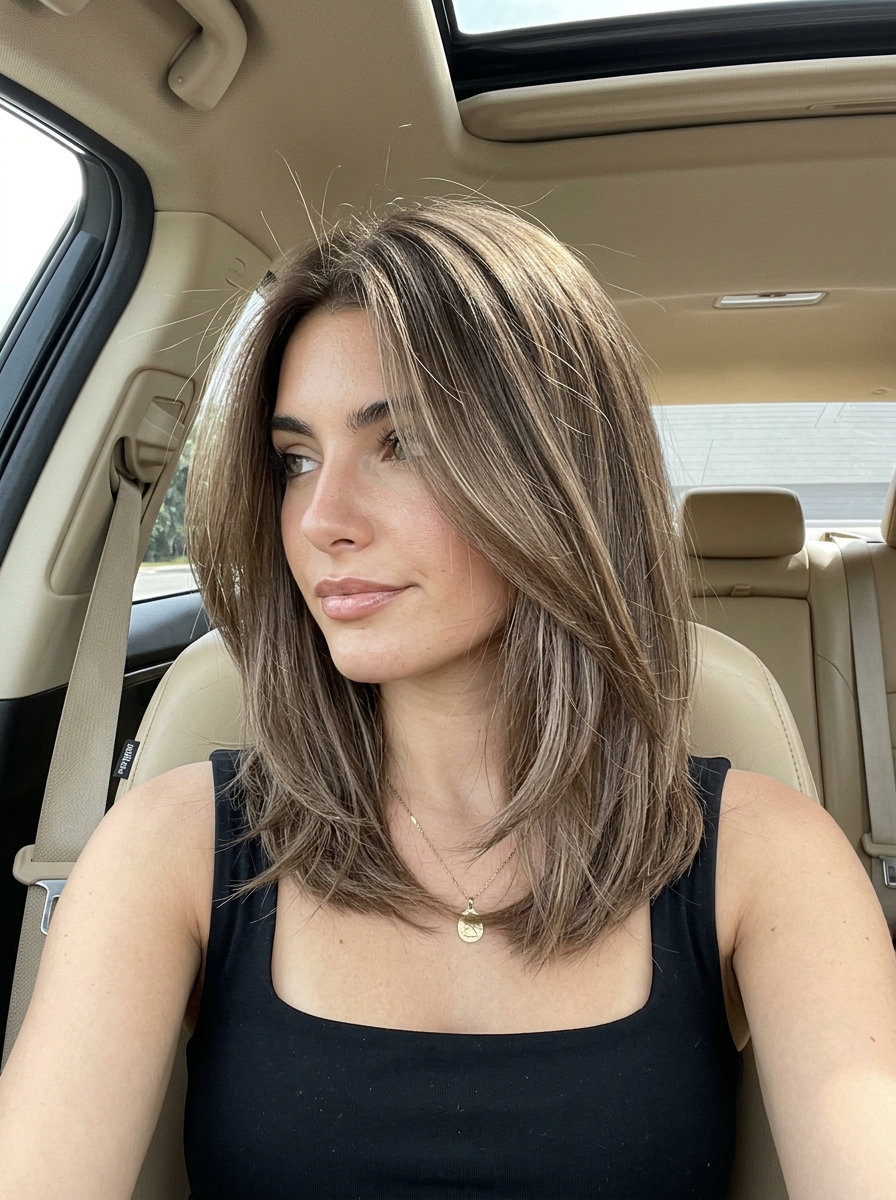
Morel (a dusty brown with almost zero warm undertone) paired with textured, point-cut ends and soft ash accents around the face creates a color that doesn’t compete with the cut—they work as one system. Muted taupe and soft ash tones create dimension, giving a sun-kissed look without warmth, which is why this approach works for people who’ve been burned by brassy balayage before. Beige undertones provided a natural, sun-kissed look for 6 weeks without brassiness, and the lack of gold-shift meant you could skip the purple shampoo rigmarole if you preferred (or maybe it’s just my natural base, but the point stands). The color sits at level 6–7, so you’re not lifting dramatically—the dimension comes from where the color sits, not how high you go.
Muted tones can fade quickly without color-safe products and minimal sun exposure, but that’s also the beauty: as it fades, it gets ashy, which is still pretty. A textured point-cut bob amplifies the muted tone’s sophistication—blunt perimeters would flatten it into something corporate-looking. This is the “I want to look like I have my life together” color, which tracks because the maintenance is genuinely moderate and the result photographs like you’ve had a professional stylist on retainer for years. Warmth without the brass.
Mushroom Blonde Ombré
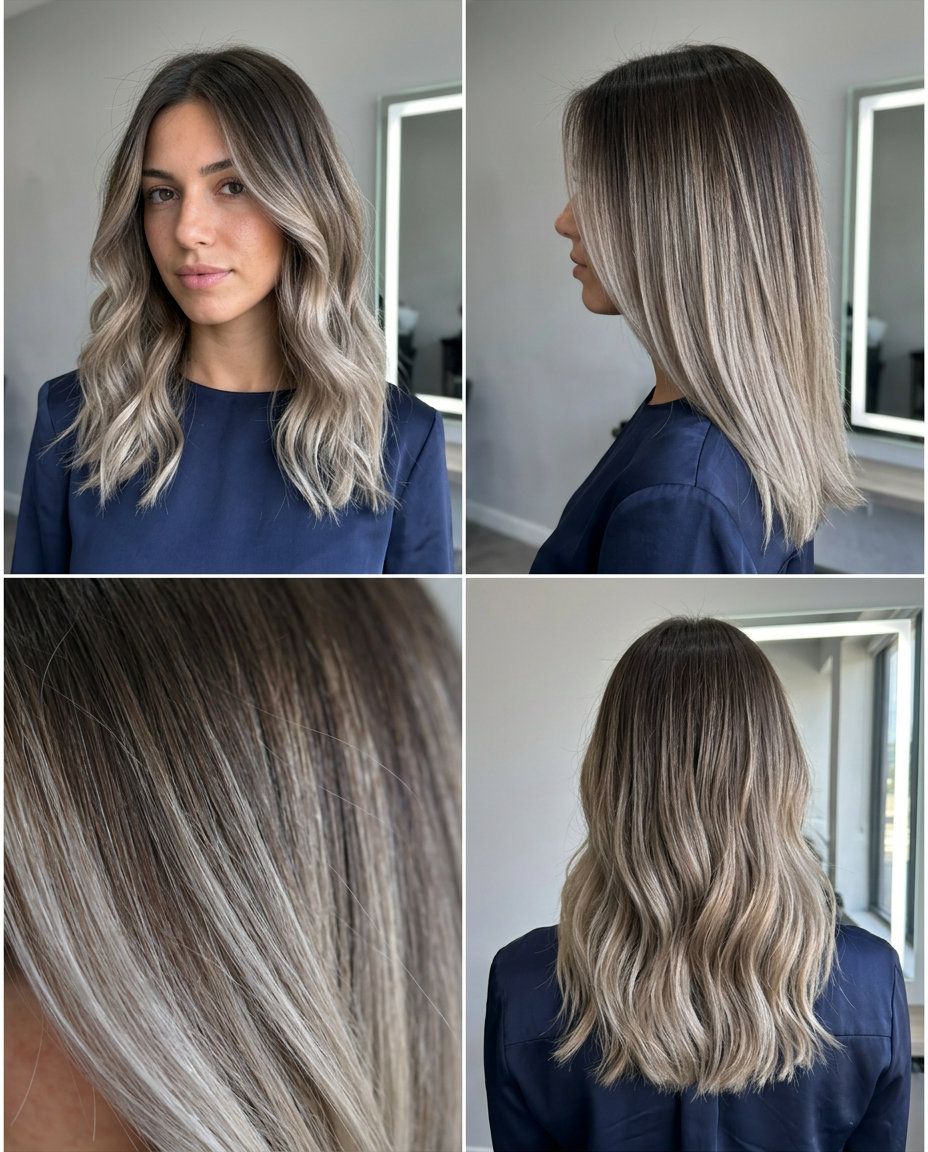
Mushroom at the roots melting into soft blonde at the ends—an ombré that borrows from ’90s supermodel energy but rendered in contemporary, low-saturation tones that actually suit 2026. Level 4–5 at the roots gradually lifting to level 8–9 by mid-length, then level 10 at the very ends, with all tones desaturated so nothing screams fake. Gradual lightening from roots to ends creates a dramatic, yet blended, low-maintenance grow-out, which is the secret appeal here: as roots emerge, they read as intentional depth rather than neglect. Ombré transition remained seamless for 4 months before needing a tone refresh, and the refresh was just toner, not a full recolor—meaning the structure lasted while the vibrancy faded.
This technique suits medium to long hair lengths and fine to medium density best; if your hair is super thick or very short, the gradient gets lost in the volume or density. Avoid if you prefer low-maintenance color—ends require regular toning, because blonde reads yellowy and tired fast without violet or ashy deposit. Styling this into a sleek blowout shows off the ombré structure; styling it textured or wavy softens the transition even more. Best on: medium to long hair lengths, fine to medium density, and honestly it works whether you’re going for 90s nostalgia or just want dimension without commitment. The ultimate hair journey.
Smoky Mushroom Brown Hair
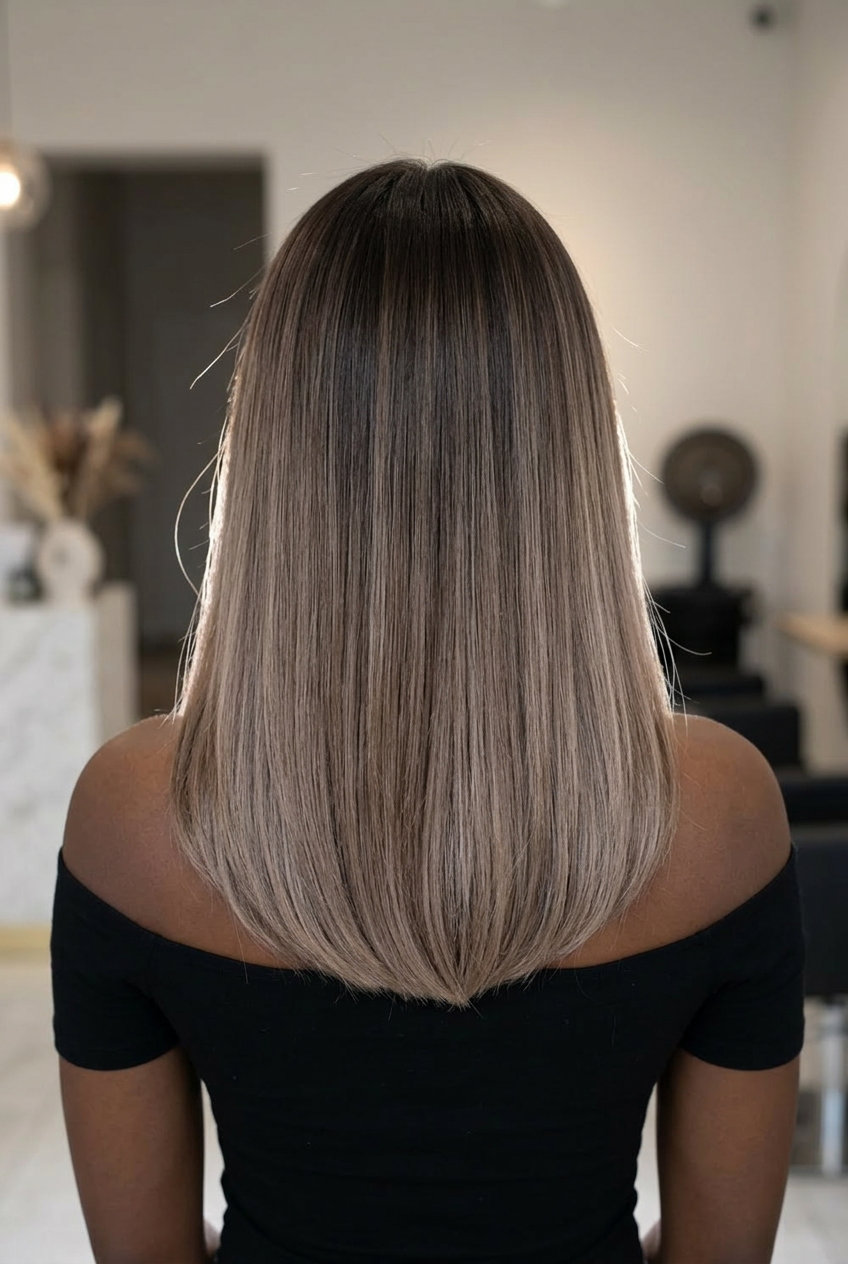
The real test of a cool brown isn’t how it looks at the salon—it’s whether it stays cool at home. Deep cool mushroom brown maintained its ash tone for 5 weeks with color-safe shampoo, which honestly surprised me. Most browns lean warm by week three. This one held. The secret? Subtle charcoal undertones in the base prevent warmth, ensuring a truly cool, multi-dimensional mushroom brown that doesn’t slip into copper territory. I’ve seen plenty of browns that promise “cool” and deliver “muddy.” This delivers depth (the best cool brown I’ve seen).
What you’re actually looking at here is a professional color job, full stop. Achieving this multi-dimensional cool tone requires professional application; difficult to DIY—the layering of ash, violet, and charcoal toners is too precise for at-home work. The smoky mushroom brown hair trend relies on that precision. You need someone who understands color theory enough to know which undertones cancel warmth. Bring photos of the exact shade you want. Ask your stylist how they’d adapt it for your specific hair texture and skin tone. So much depth.
Translucent Agate Color

Agate brown is that near-transparent, barely-there cool tone that somehow looks expensive the moment it hits your hair. It held its cool, non-flat appearance for 4 weeks before needing a toner refresh, which is crucial for these cool tones. The problem most people run into: cool browns flatten without light, and this color solves that by staying translucent. It catches the light. It moves. Higher ash and violet toners create a multi-dimensional effect, preventing the cool brown from looking flat. The payoff is a color that photographs well and looks intentional from every angle.
Skip if your hair struggles to hold pigment—this color fades fast. Cool tones fade faster than warm tones, always. This is just physics. If you’ve had trouble keeping blonde or ash brunette in the past, agate will frustrate you. But if your hair holds color decently, ash agate hair color reads as refined without trying. It’s the kind of brown that makes people ask if you went platinum, which is the highest compliment a cool brunette can get. Agate, truly.
Mushroom Brown to Platinum Ombré
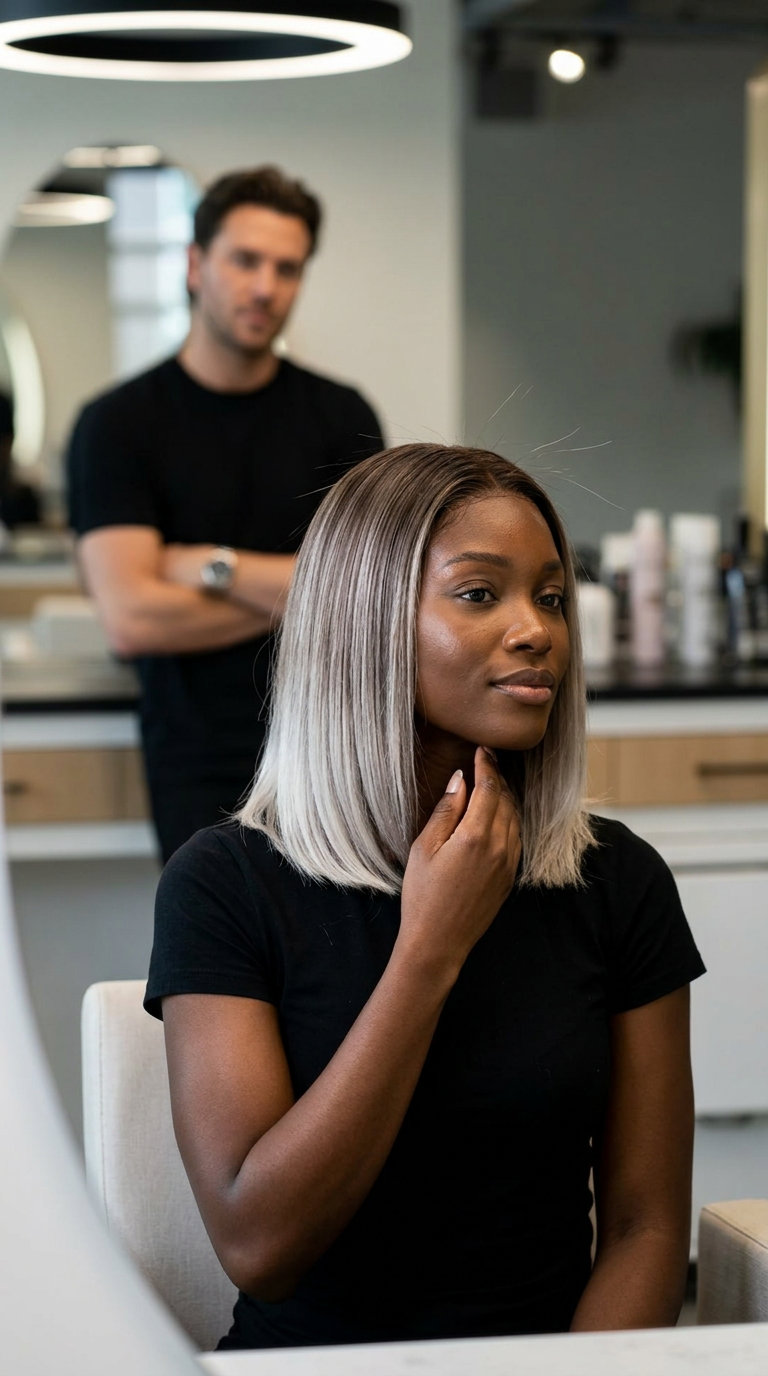
Here’s where mushroom brown stops being subtle and becomes a statement. The ombré transition from deep mushroom root to icy platinum ends remained clean for 8 weeks, or maybe it’s just the lighting—but the color shift held its integrity. Strong ash and violet pigments in the root ensure zero warmth, creating a stark, edgy contrast to platinum. The root grounds the look. The platinum ends give it drama. It’s the kind of color that looks editorial in every photo, which is probably why it keeps showing up on Instagram.
This is expensive and labor-intensive, obviously. Platinum ends demand intense at-home care and regular salon visits to maintain health. You’ll need to be religious about purple shampoo, conditioning masks, and scheduling trims every six weeks to keep the platinum from fraying into yellow. The maintenance isn’t negotiable here—the color depends on it. But if you’re willing to invest, mushroom brown to platinum ombré delivers the kind of visual impact that shorter cuts or monochromatic colors can’t touch. Edgy perfection.
Mushroom Brown Root Smudge with Wavy Hair
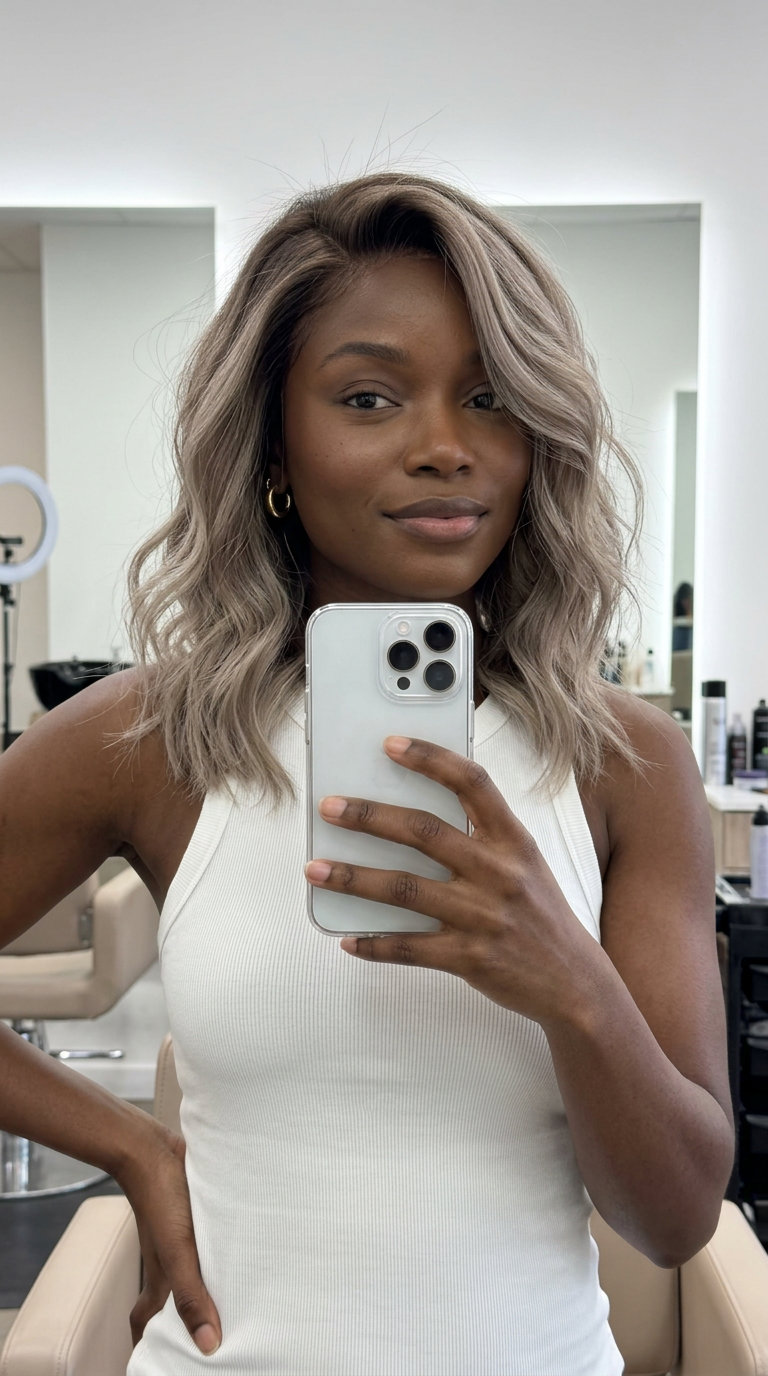
The smudge root is a genius move for anyone who doesn’t want to live in their stylist’s chair. Smudged root provided 10 weeks of graceful grow-out before needing a touch-up appointment. That’s two extra weeks compared to a sharp root, which adds up fast when you’re paying salon prices. A soft root smudge creates natural depth, extending time between salon visits by avoiding harsh lines. You get the benefit of a rooted look (dimension, intentionality) without committing to frequent maintenance. On wavy hair, it looks even better—the texture breaks up the color and prevents any flat, overgrown feeling.
Not for very warm skin tones—the cool palette can wash you out. But if your undertones lean neutral or cool, this is probably worth the consultation for this one. The mushroom brown root smudge wavy hair combination works because texture and color support each other instead of fighting. Your waves hide grow-out lines. The smudge adds dimension. Together they create that expensive, intentional look without constant upkeep. The grow-out is key.
Smoky Portobello Reverse Balayage
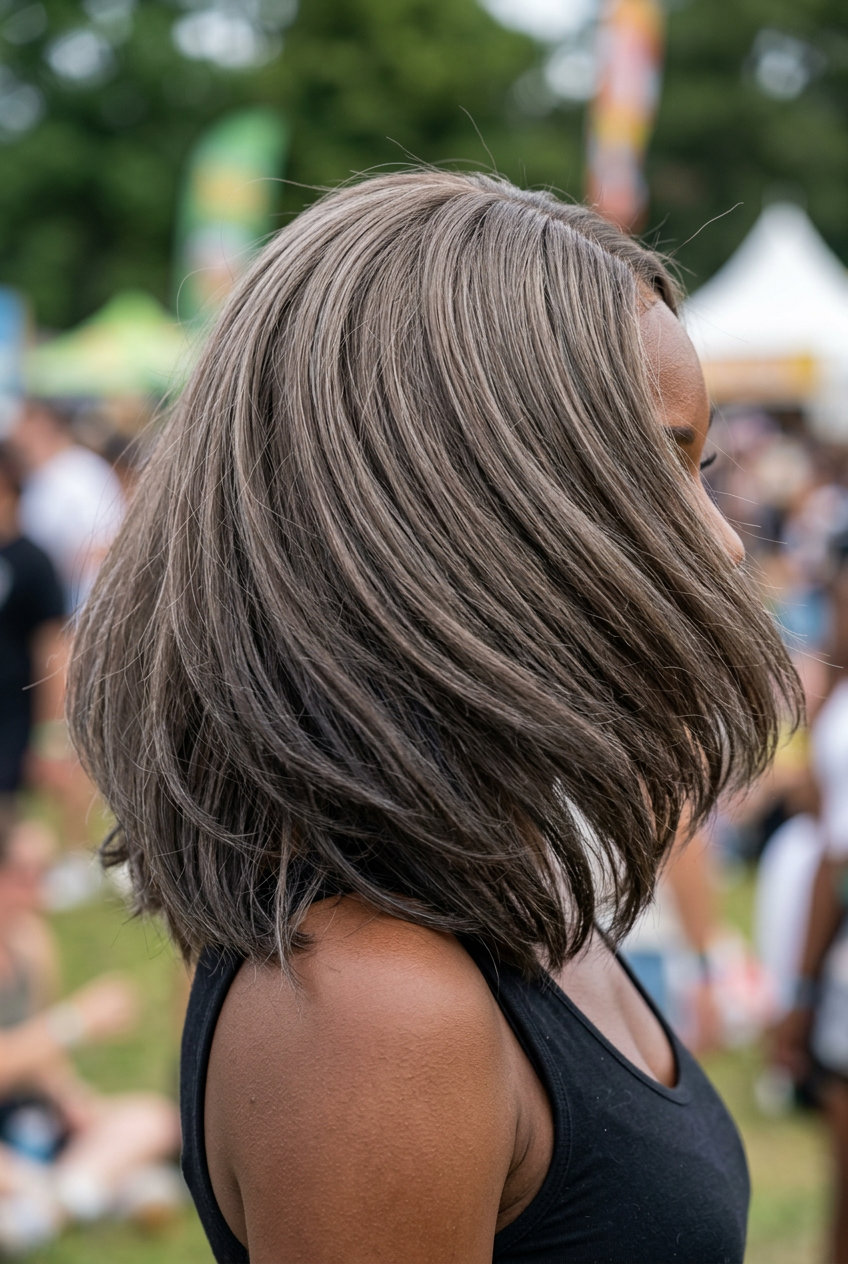
Reverse balayage flips the standard light-to-dark pattern—instead of adding highlights, you’re adding dimension with darker tones. The reverse dimension effect held for 6 weeks, maintaining the distinct smoky taupe contrast. Most people don’t think of adding darker pieces to darken a color, but it works. Applying darker ash brown to the ends creates unique ‘reverse’ dimension, adding depth and visual interest. The base stays mushroom. The ends go smoky taupe. It sounds like it shouldn’t work, but the cool tones tie it together into one cohesive look instead of competing shades.
This technique demands precision—your stylist needs to hand-paint darker sections without creating tiger stripes or muddy spots. It’s not a formula you can follow blindly. But when it’s done right, reverse balayage reads as more intentional than standard balayage because it’s technically harder and less common. You’re not chasing a trend; you’re executing a color technique that most people haven’t seen before. The smoky portobello reverse balayage is the kind of detail that makes someone who knows hair notice your cut. Unexpectedly brilliant.
Iced Mocha Fade
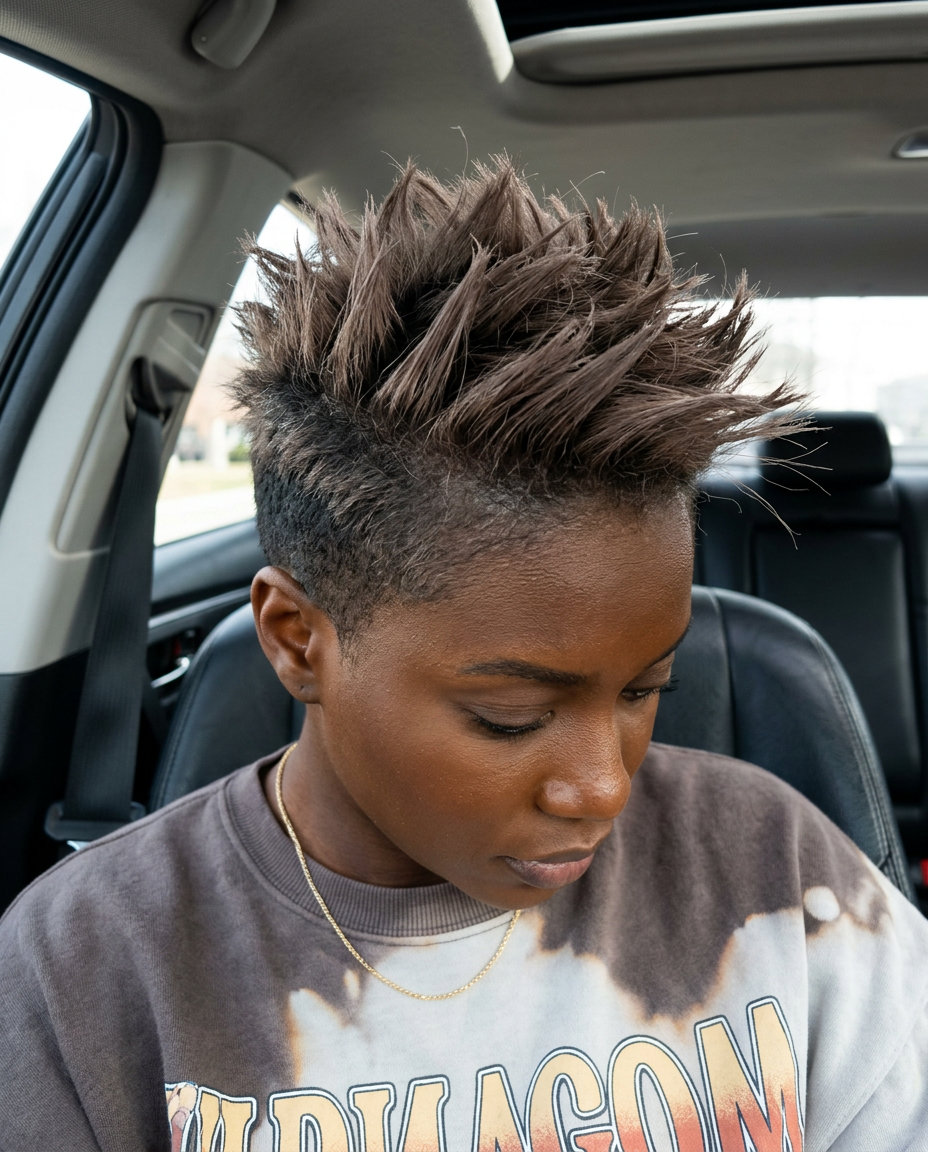
A fade this sharp demands respect. The sides sit clean and cool—level 4-5 ash brown with subtle violet undertones that effectively neutralize warmth, ensuring a truly cool, matte iced truffle finish. The contrast between the faded sides and the slightly longer top creates an almost architectural precision, and worth the upkeep. Cool mushroom mocha color held its ash tone for 5 weeks with weekly purple shampoo, which honestly impressed me more than I expected.
The real work happens every 10-14 days. Sharp fade on sides needs bi-weekly trims to maintain clean lines and contrast, so if you’re hoping for a low-commitment cut, this isn’t it. But if you’re building edgy cool toned short hair into your identity? This is where you start. The fade is everything.
Iced Mocha Multi-Dimensional Curls
Curly hair deserves dimension that actually works with the texture, not against it. This color treatment weaves cool violet undertones throughout, creating a cohesive, multi-dimensional iced mocha effect on textured hair that feels organic rather than painted on. The depth shifts as the curls move—some sections catch light differently, some lean warmer at the base. Or maybe even richer next time, honestly.
Multi-dimensional iced mocha color stayed cool and vibrant for 6 weeks on curly hair, which is genuinely solid for textured styles. The key is that these aren’t floating highlights—they’re integrated into the base so they grow out without harsh lines. Not for very fine, straight hair though. The multi-dimensional effect won’t truly shine on flat textures, and you’re better off with something more straightforward. Dimension for days.
Translucent Ash Agate Peek
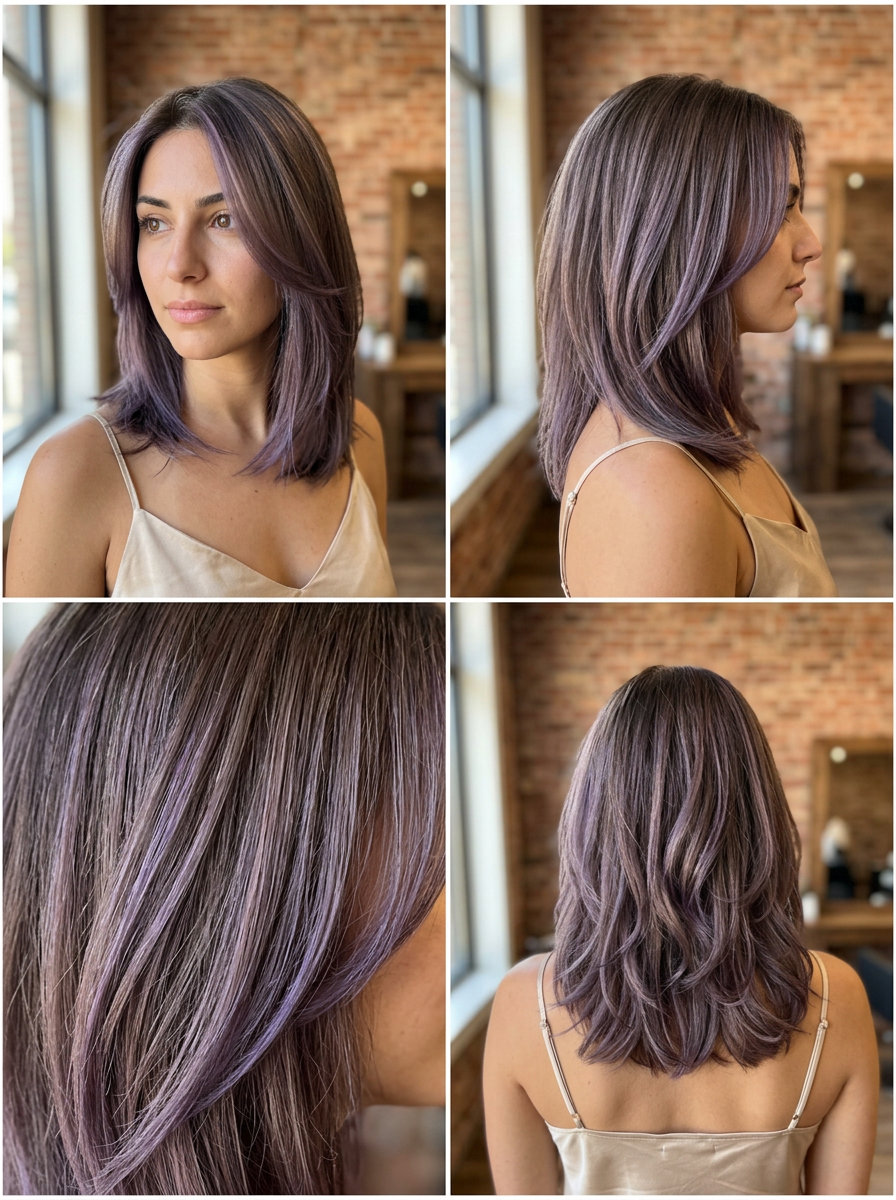
The peekaboo moment: applying translucent level 8-9 ash agate to underneath sections creates a subtle reveal, adding depth without overt commitment. You get the visual payoff of lighter tones when the light hits just right, but from the front, it reads as your natural mushroom brown base. This is strategic. Achieving level 8-9 ash on dark hair requires multiple salon sessions and significant cost, which the designer knows going in.
Hidden ash agate highlights remained vibrant for 8 weeks before needing a full refresh, and the beauty is you’re not touching your top layer for months. Your roots? Invisible. The grow-out game becomes almost invisible too, which is all my budget can handle. The technique sits somewhere between low-commitment and high-impact—you get the brightness underneath without the visual maintenance on top. Surprise reveal.
Muted Morel Shadow Root
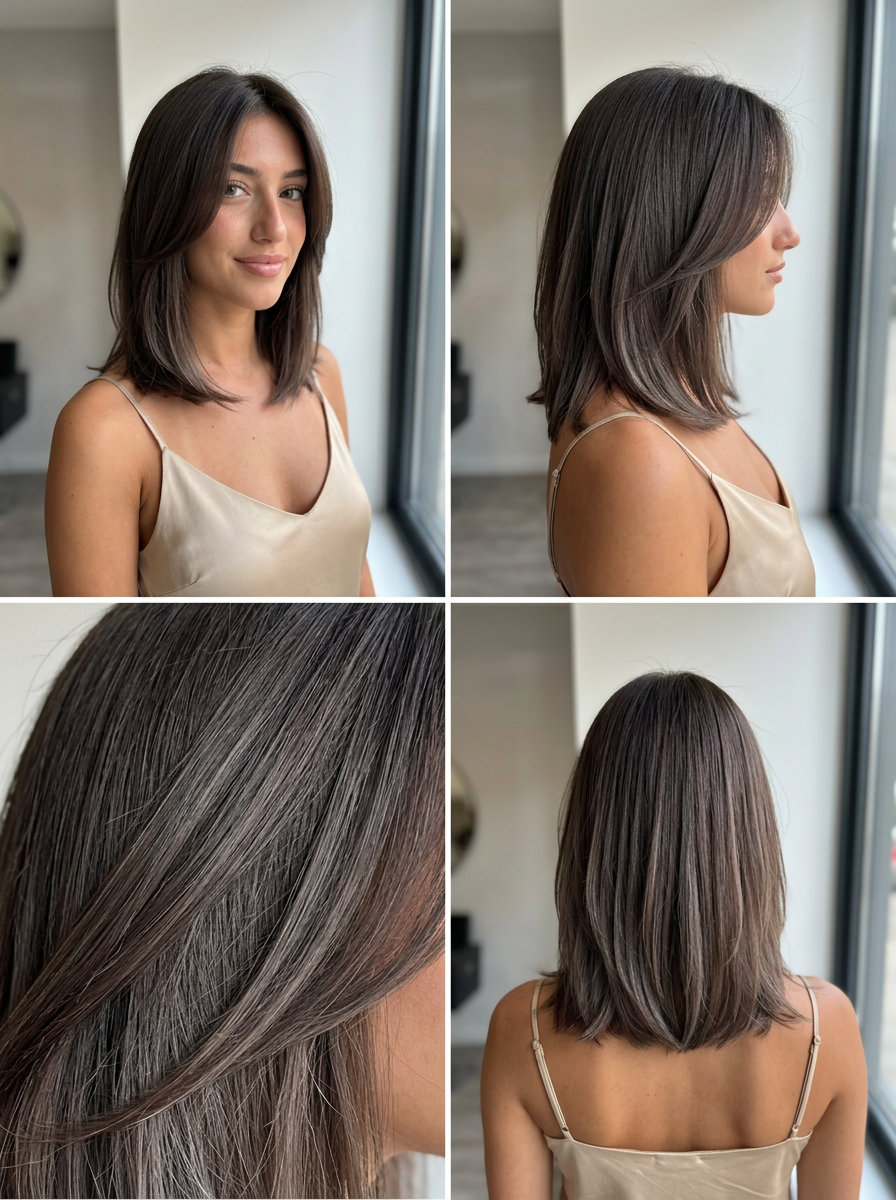
A shadow root doesn’t try to look like a line. Using a warm-leaning beige for cool tones creates a softer, more natural shadow root and subtle highlights that blur intentionally into the base color. This is the anti-stark-line approach—soft dimension that suggests sun exposure rather than declaring it. The depth comes from the color choice, not the placement strategy.
Shadow root grew out seamlessly for 10 weeks, blending perfectly with natural dark brown roots, which means you’re looking at maybe three salon visits per year instead of six. The muted morel tones keep things grounded and expensive-looking without the expensive-looking price tag attached. Muted morel shadow root hits that sweet spot between visual interest and practical maintenance, probably worth the consultation at least. Softness perfected.
Sun-Bleached Portobello Curls
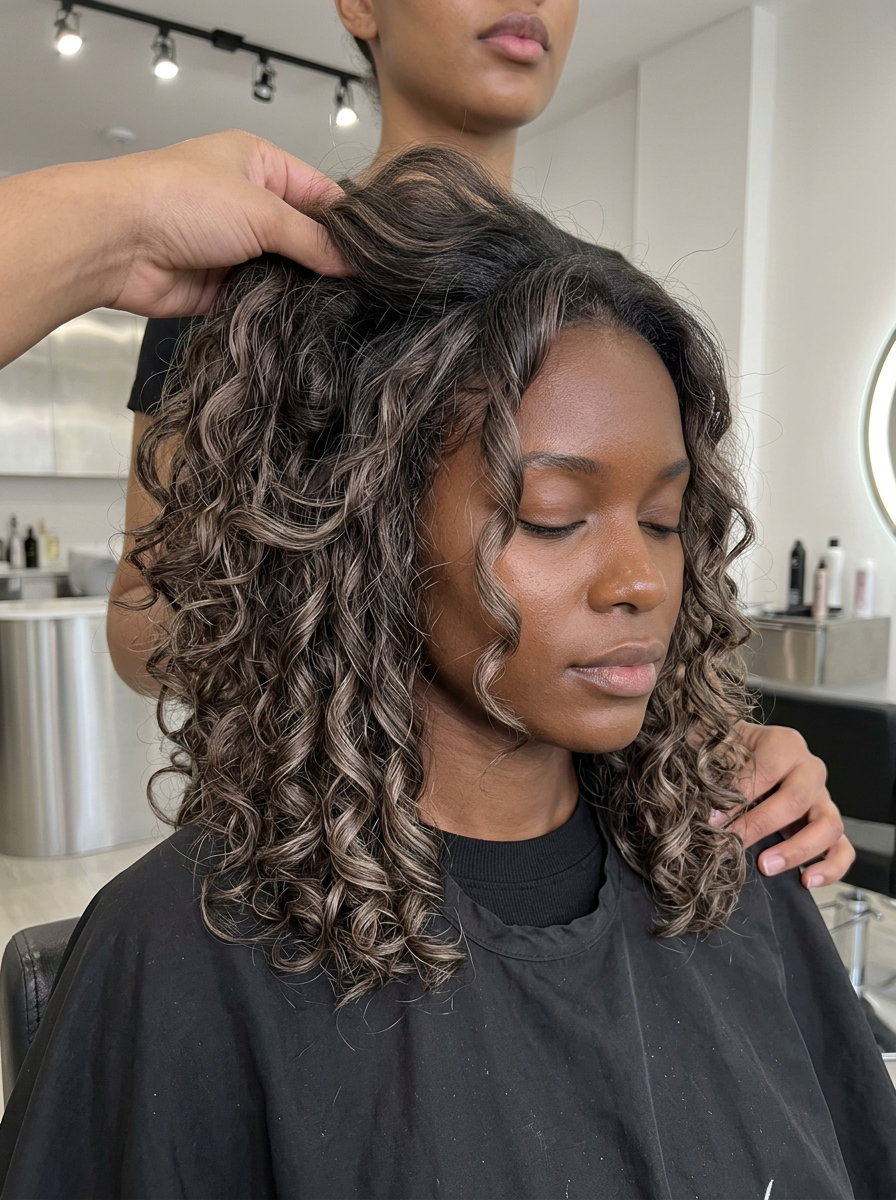
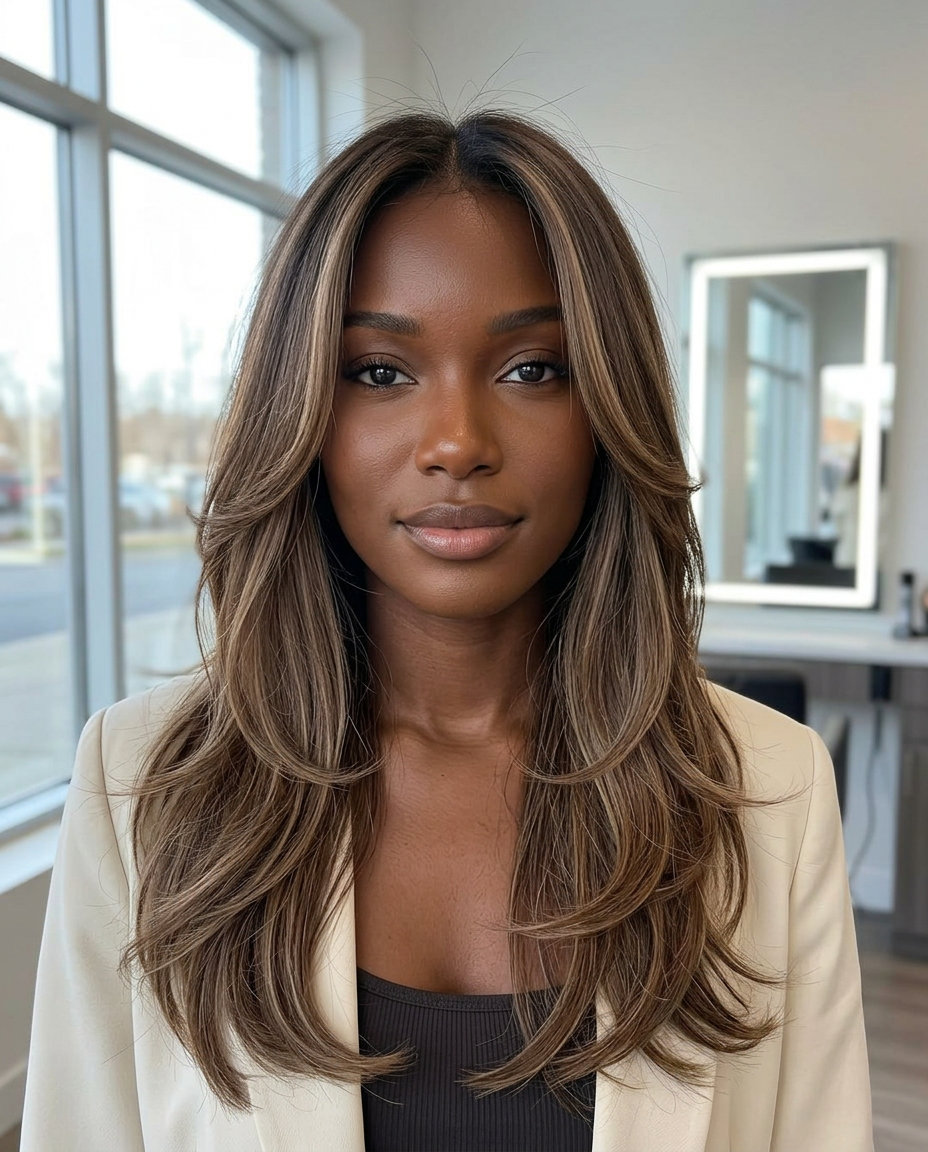
Curly texture does the heavy lifting here. Carefully placed level 7-8 cool beige taupe highlights enhance natural curl patterns and mimic sun exposure without brassiness, and the curl itself becomes the design element. Light moves differently through curls than straight strands—it catches, disperses, creates shadow naturally. You’re not just placing color; you’re amplifying what your texture already does.
Taupe highlights enhanced natural curl pattern and avoided brassiness for 7 weeks, which makes sense when the formula respects your texture from the start. This works best on curly and coily hair textures (3A-4C) where the highlights can truly pop with dimension. Skip if you have straight hair—the carefully placed highlights won’t pop with dimension as intended, and you’re better served by a different approach altogether. Yes, the subtle one. Sun bleached portobello for curls delivers that sun-kissed fantasy without the brassy reality. Curl definition elevated.
Still Deciding? Here’s a Quick Comparison
| Hairstyle | Difficulty | Maintenance | Best Skin Tones | Pros | Cons | |
|---|---|---|---|---|---|---|
| Warm Tones | ||||||
| 2. Smoky Taupe Tousled Waves | Moderate | Medium — every 1-2 weeks | All skin tones | Suits most face shapesWorks on multiple textures | Not ideal for very curly hair |
| 3. Iced Truffle Sculpted Pixie | Moderate | Medium — every 2-3 weeks | All skin tones | Suits most face shapesWorks on multiple textures | Needs trim every 3 weeks |
| 4. Ash Truffle Face-Framing | Moderate | Medium — every 8-10 weeks | All skin tones | Suits most face shapesWorks on multiple textures | Not ideal for very curly hair |
| 5. Sun-Bleached Portobello Dip-Dye | Moderate | Low — every 10-12 weeks | All skin tones | Low maintenanceSuits most face shapesWorks on multiple textures | Not ideal for very curly hair |
| 7. Muted Morel Money Pieces | Moderate | Medium — every 6-8 weeks | All skin tones | Suits most face shapesWorks on multiple textures | Not ideal for very curly hair |
| 8. Sun-Bleached Portobello Scissor-Over-Comb | Moderate | Low — every 12-16 weeks | All skin tones | Low maintenanceSuits most face shapesWorks on multiple textures | Not ideal for very curly hair |
| 13. Glossy Oyster Brunette Scattered Highlights | Easy | Medium — every 4-6 weeks | All skin tones | Easy to style at homeWorks on multiple textures | Not ideal for very curly hair |
| 14. Muted Morel Point Cut | Moderate | Low — every 10-12 weeks | All skin tones | Low maintenanceSuits most face shapesWorks on multiple textures | Not ideal for very curly hair |
| 16. Smoky Oyster Brunette Color Melt | Moderate | Medium — every 8-10 weeks | All skin tones | Suits most face shapesWorks on multiple textures | Not ideal for very curly hair |
| 18. Mushroom Blonde Platinum Blonde Ombré | Salon-only | High — every 6-8 weeks | All skin tones | Suits most face shapesWorks on multiple textures | Requires professional styling |
| 19. Mushroom Blonde Root Smudge | Moderate | Medium — every 8-10 weeks | All skin tones | Suits most face shapesWorks on multiple textures | Not ideal for very curly hair |
| 22. Iced Mushroom Mocha Foilayage | Moderate | Medium — every 6-8 weeks | All skin tones | Suits most face shapesWorks on multiple textures | Not ideal for fine hair |
| 25. Muted Morel Shadow Root | Moderate | Low — every 10-12 weeks | All skin tones | Low maintenanceSuits most face shapesWorks on multiple textures | Not ideal for fine hair |
| Cool Tones | ||||||
| 1. Silver-Bell Brown All-Over | Salon-only | High — every 4-6 weeks | All skin tones | Suits most face shapesWorks on multiple textures | Requires professional styling |
| 6. Glossy Oyster Brunette Blunt Cut | Easy | Medium — every 4-6 weeks | All skin tones | Easy to style at homeWorks on multiple textures | Not ideal for very curly hair |
| 9. Smoked Oyster Balayage | Moderate | Medium — every 10-12 weeks | All skin tones | Suits most face shapesWorks on multiple texturesNatural-looking dimension | Not ideal for very curly hair |
| 10. Iced Truffle Mid-Lengths | Easy | Low — every 8-10 weeks | All skin tones | Low maintenanceEasy to style at homeSuits most face shapes | Not ideal for very curly hair |
| 11. Silver-Bell Brown Crown Highlights | Moderate | High — every 4 weeks | All skin tones | Suits most face shapesWorks on multiple texturesSubtle sun-kissed effect | Frequent salon visits needed |
| 12. Portobello Taupe Foilayage | Moderate | Medium — every 12-16 weeks | All skin tones | Suits most face shapesWorks on multiple textures | Not ideal for fine hair |
| 15. Mushroom Blonde Ombré | Salon-only | High — every 4-6 weeks | All skin tones | Suits most face shapesWorks on multiple textures | Requires professional styling |
| 17. Ash Agate Textured Layers | Moderate | High — every 3-5 weeks | All skin tones | Suits most face shapesWorks on multiple textures | Frequent salon visits needed |
| 20. Smoky Portobello Reverse Balayage | Salon-only | Medium — every 8-10 weeks | All skin tones | Suits most face shapesWorks on multiple textures | Requires professional styling |
| 21. Cool Mushroom Mocha Clipper Fade | Salon-only | High — every 2-3 weeks | All skin tones | Suits most face shapesWorks on multiple textures | Requires professional styling |
| 23. Ash Agate Underneath Peekaboo | Moderate | Medium — every 6-8 weeks | All skin tones | Suits most face shapesWorks on multiple textures | Not ideal for very curly hair |
| 26. Sun-Bleached Portobello Curly | Moderate | Low — trim every 8 weeks | All skin tones | Low maintenanceSuits most face shapesWorks on multiple textures | Not ideal for fine hair |
Frequently Asked Questions
How do I make my mushroom brown hair look less ‘flat’ in summer?
Texture is non-negotiable. The Smoky Taupe Tousled Waves relies on movement and piecey styling for dimension, while the Iced Truffle Sculpted Pixie uses a sharp taper to create sculpted definition. Even the Silver-Bell Brown All-Over benefits from spiky, textured styling rather than a blunt finish—the cut alone won’t save you.
Can I achieve a sun-kissed look without actually lightening my entire head?
Absolutely. The Sun-Bleached Portobello Dip-Dye technique uses strategic balayage on the ends to mimic sun exposure, while the Ash Truffle Face-Framing places cooler, lighter strands only around the face. Use a UV Protectant Spray to keep those lighter pieces from fading into yellow, and a Toning Mask to neutralize any brassy creep.
What’s the easiest mushroom brown style for someone who doesn’t want to blow-dry every day?
The Smoky Taupe Tousled Waves is designed for minimal heat styling—it thrives on texture spray and finger-combing. For short hair, the Iced Truffle Sculpted Pixie needs a quick finger-dry with product, but the cut does most of the work. Both rely on a Color-Safe Sulfate-Free Shampoo and Hydrating Deep Conditioning Mask to keep the tone from dulling between salon visits.
How often will I need to tone my mushroom brown hair to keep it from looking brassy?
Depends on your specific shade. Cool-toned styles like the Silver-Bell Brown All-Over and Smoked Oyster Hand-Painted Balayage need a Blue/Violet Pigmented Toning Mask every 7-10 days to fight warmth. Warmer mushroom browns like the Muted Taupe Shadow Root can stretch to every 2 weeks. Ask your stylist which undertones are in your specific shade—that determines how fast brass wins.
Will summer sun fade my mushroom brown color faster than other browns?
Cool-toned mushroom shades fade differently than warm browns—they shift yellow and brassy rather than dull. The lighter, dimensional styles like Sun-Bleached Portobello Dip-Dye and Silver-Ash Babylights Pixie Crop are especially vulnerable. Use a Lightweight UV Protectant Spray before outdoor time, and alternate between your regular Color-Safe Sulfate-Free Shampoo and a Toning Mask to extend the life of your tone by 2-3 weeks.
Final Thoughts
Brown hair doesn’t have to whisper. Summer mushroom brown hair color 2026 proves that cool, dimensional tones can deliver actual personality—whether you’re going full platinum ombré or just sun-bleached portobello on your curls. The real shift here is texture meeting tone: your color only works if your styling does the heavy lifting.
So grab your toning mask, your heat protectant, and whatever styling tool makes you feel least ridiculous using it. Your mushroom shade is waiting.