Copper’s having a moment, and it’s not the brassy disaster your aunt pulled off in 2015. Dua Lipa showed up to the Grammys in a deep cherry-auburn that basically broke the internet, Megan Thee Stallion’s been posting Cowboy Copper 2.0 all over Instagram, and suddenly every salon’s waiting list is full of people asking for “that warm red-gold thing.” The shift is real: we’re moving away from heavy, flat reds toward translucent, gold-infused coppers that actually catch the light like you spent the summer in the sun instead of just pretending you did.
Summer auburn hair color 2026 spans from Strawberry Auburn and Burnt Sienna to Cinnamon Toast and Spiced Mahogany—each one paired with cuts like the Italian Bob or Butterfly Cut depending on how much styling time you’re willing to commit. These aren’t one-size-fits-all: they work on warm, olive, and deep skin tones; they play differently on fine versus thick hair; and some actually forgive a lazy grow-out while others demand a salon visit every four weeks.
I went full Cowboy Copper last summer thinking I’d hate it, mostly because I’ve spent a decade convinced I was a “cool tone person.” Turns out I was just broke and scared. Three months in, I stopped wearing foundation because the warmth does half the work for you.
Vibrant Auburn Beach Waves
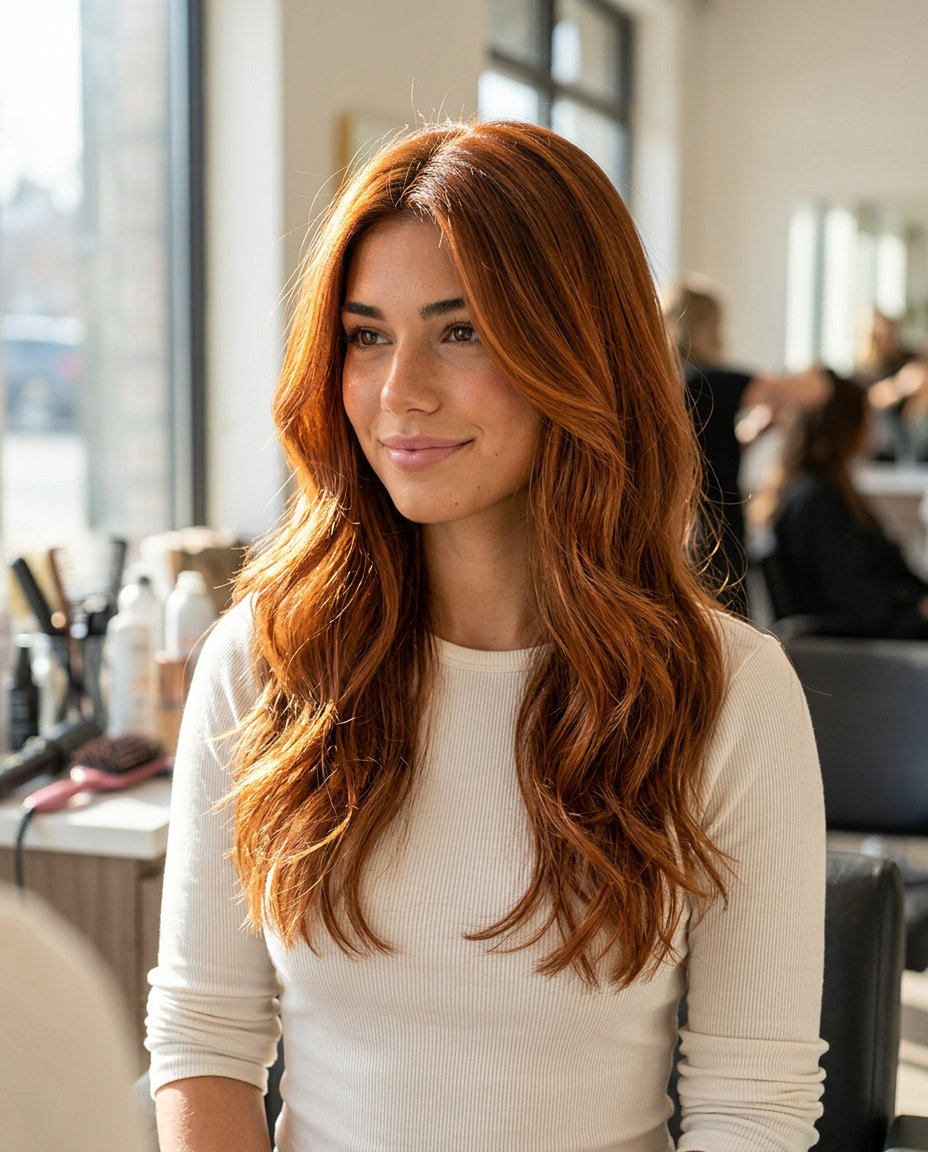
Summer auburn isn’t just a color—it’s permission to lean into texture. If your hair naturally waves, leans wavy, or even hints at wave potential, this is the moment to stop fighting it and start amplifying it. Internal layering removes bulk and encourages effortless texture, allowing wavy hair to move without heaviness. The cut itself becomes the styling tool. Most people assume this requires constant heat work, but layers enhanced natural wave, reducing styling time to 10 minutes with air dry. That’s the real shift: you’re not chasing glossy perfection anymore. You’re chasing movement.
Face-framing pieces start at cheekbone length and graduate longer, creating dimension that reads as intentional rather than grown-out. The color—that vibrant auburn beach waves tone—lands somewhere between copper and warm rust, deepening slightly at the root to avoid the one-note platinum trap. It’s a color that actually *improves* with sun exposure instead of fading to brassy regret. Sun, salt water, chlorine: they all deepen the auburn rather than strip it. Not for very straight hair—this cut relies on natural wave for movement. You need at least some texture to work with, or you’ll spend more time styling than you would with a blunt bob. Effortless, truly.
Amber Brunette Hair Color with Layered Mid-Length
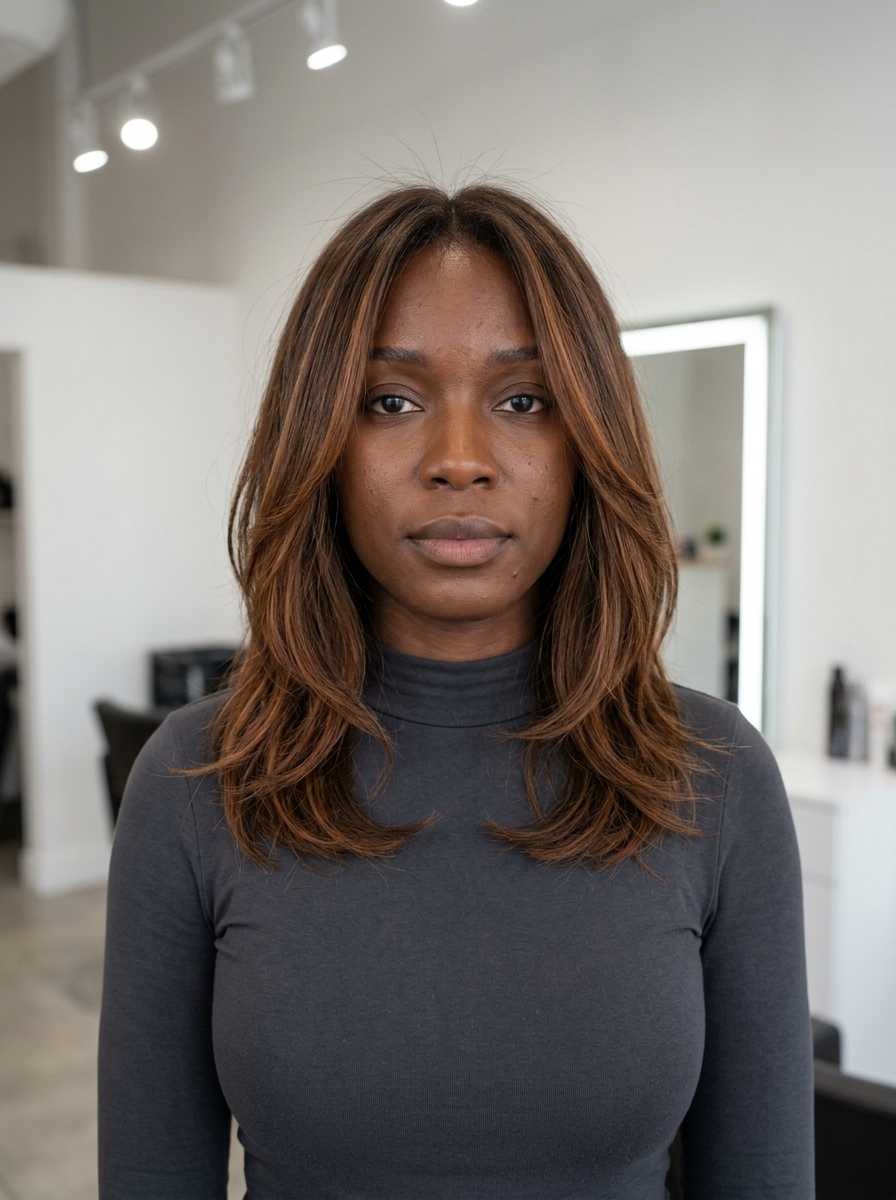
The perfect mid-length sits right at collarbone, long enough to pull back but short enough to feel fresh. It’s the haircut equivalent of a wardrobe staple—works with everything, requires intentional styling without demanding it. Point-cutting creates softer ends than blunt cuts, encouraging natural wave and seamless blending. Your stylist isn’t just removing length; they’re building in movement by cutting at angles rather than straight across. The amber brunette base holds depth even in direct sun, and the dimension work (if your stylist adds it) catches light without looking processed or brassy.
This length grew out gracefully for months without hitting that awkward in-between phase (my go-to for summer). Point-cut layers maintained shape for 8 weeks without feeling heavy or overgrown, which means fewer salon trips than you’d expect. The trade-off: requires regular trims every 6-8 weeks to maintain layer shape and avoid frizz. Without maintenance, the soft point-cut ends become straggly rather than intentional. But if you’re already in a trim schedule, this is the sweet spot between low-maintenance and interesting. The perfect mid-length.
Burnt Sienna Lob with Bangs
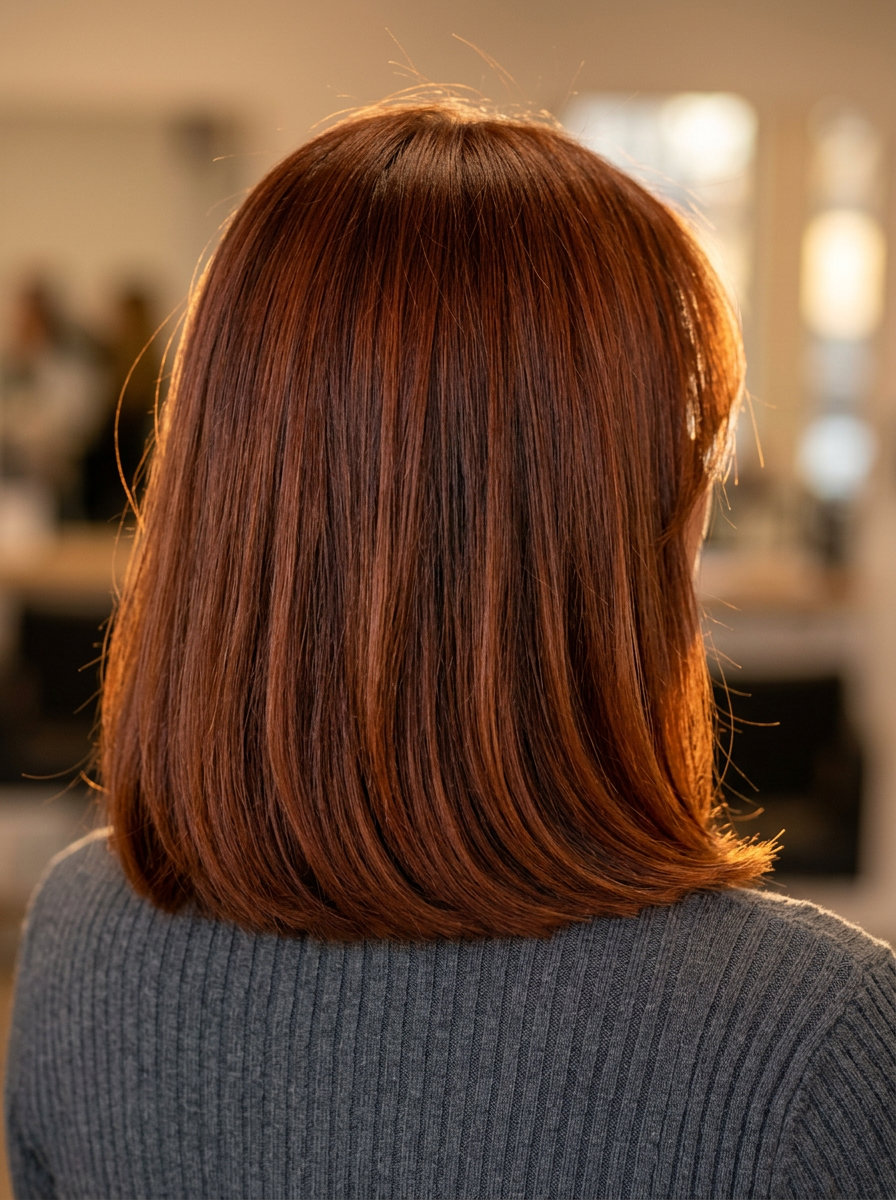
Bangs are polarizing. Some people see them and think commitment. Others see them and think regret. But point-cut bangs create a soft, feathered edge, preventing a heavy blocky look around the eyes. The difference between bangs that frame and bangs that suffocate is literally the angle of the scissors. A good stylist doesn’t cut bangs blunt—they cut them with texture, which means they work with your hair instead of against it. Birkin bangs parted naturally for 4 weeks with minimal styling, staying out of eyes without needing constant tucking or pinning. They softened the face without creating that severe, high-maintenance vibe.
The burnt sienna lob stretches to mid-shoulder, long enough that bangs don’t dominate your entire look (or maybe just a trim, honestly). The color deepens slightly toward the roots—not a shadow root, but a natural-looking depth shift that extends your color-refresh window. Not for very curly hair—Birkin bangs need heat styling to lay flat. If your hair is naturally curly or very textured, you’re looking at daily styling that defeats the purpose. But for wavy or straight hair, this combination reads as polished-casual rather than trying-too-hard. Bangs done right.
Cowboy Copper Undercut
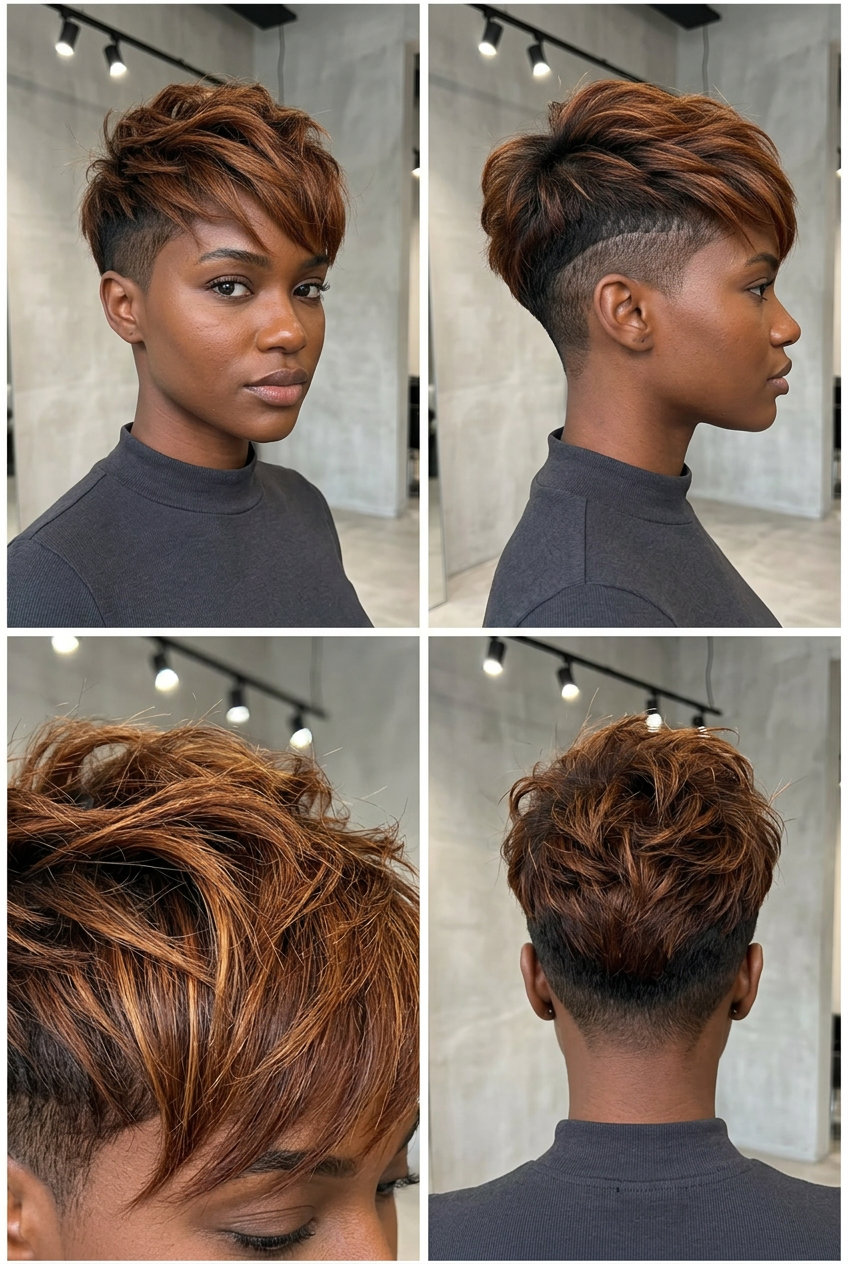
Short hair trends come and go, but the undercut persists because it actually works for multiple face shapes and hair types. Disconnected top allows for extreme texture contrast, offering versatile styling options from edgy to refined. You can wear it slicked back for a statement, textured and messy for weekend energy, or blow-dried smooth for something closer to polished. The versatility is the whole point—you’re not locked into one aesthetic. Undercut maintained clean lines for 3 weeks before needing a clipper touch-up, which means you’re buying time between salon visits even though you’ll need more frequent visits than a longer cut.
The color story here is bold: cowboy copper sits in that orange-auburn range, warm enough to read as intentional rather than accidental. It’s less about matching your natural undertones and more about making a statement (if you dare to go short). Summer heat can shift warm colors slightly, but this particular shade deepens rather than fades, which works in your favor. The trade-off: undercut needs frequent barber visits every 3-4 weeks to maintain clean lines. You can’t grow this out and get a longer style; you’re committed to the undercut shape until you’re ready to let it fully grow and start over. Bold and brilliant.
Cinnamon Toast Curve Cut

U-shaped layers mimic the ‘Rachel’ but with softer blending, creating a modern, less choppy silhouette. The original Rachel cut from the ’90s had hard lines and required constant blow-drying to look intentional. This evolution keeps the face-framing concept but builds in more gradual graduation, so the cut works with multiple hair textures instead of against them. Best on all hair textures, especially medium to thick hair that can hold a soft wave. U-shaped layers framed the face gracefully, growing out without harsh lines for 10 weeks, which is genuinely impressive for a layered cut.
The cinnamon toast color (that warm, golden-brown auburn range) sits between summer brightness and year-round versatility. It doesn’t require bleaching like platinum, which means less damage and fewer salon visits overall. The tone reads warm without looking orange, and it deepens naturally as you move away from the face, creating subtle dimension without balayage maintenance. Pass if your hair is extremely fine—layers might remove too much volume. You need enough density that the cut creates shape rather than just thinning everything out. The new Rachel.
Strawberry Auburn Lob
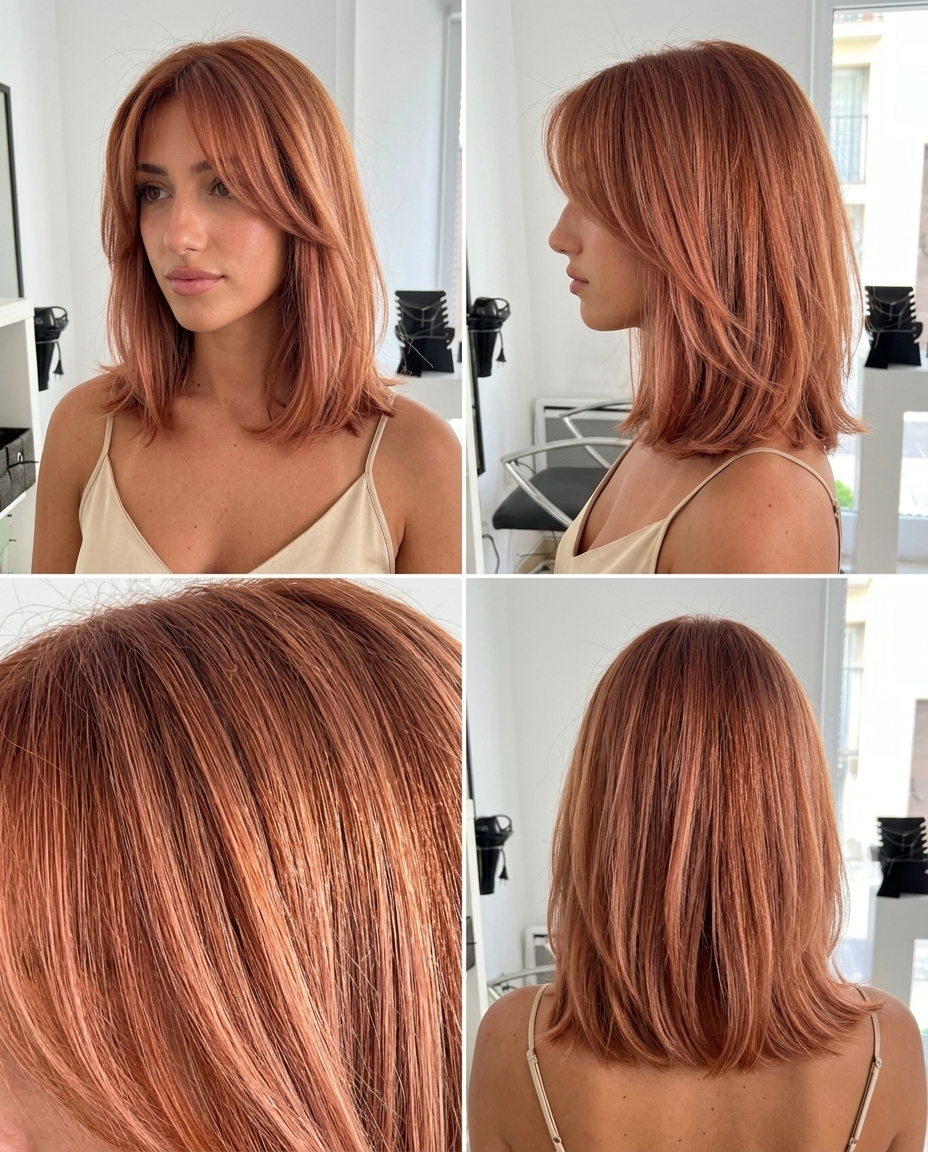
A strawberry auburn lob sits at that perfect length where you’re not quite committing to short hair but tired of managing long layers. This cut works because the softly blunt perimeter allows movement without heaviness, while graduated layers create an airy feel and natural swing—curtain bangs blended seamlessly, requiring only 2 minutes of blow-drying to style. The color itself does half the work, shifting from deeper auburn at the roots to lighter strawberry tones at the ends, which means you’re not constantly chasing regrowth the way you would with a solid shade.
Length matters here. We’re talking chin-to-shoulder, which is the sweet spot for fine to medium hair with a natural wave or slight bend. Straight hair works too if you’re willing to add texture with a flat iron or texture spray—or maybe a light mousse, honestly. The graduated layers mean styling isn’t complicated; you’re not fighting against the cut. A quick blow-dry and you have movement, or leave it to air-dry and you get that slightly undone thing that reads as intentional rather than lazy. Effortless movement, truly.
Amber Brunette Hair Color with Layered Mid-Length
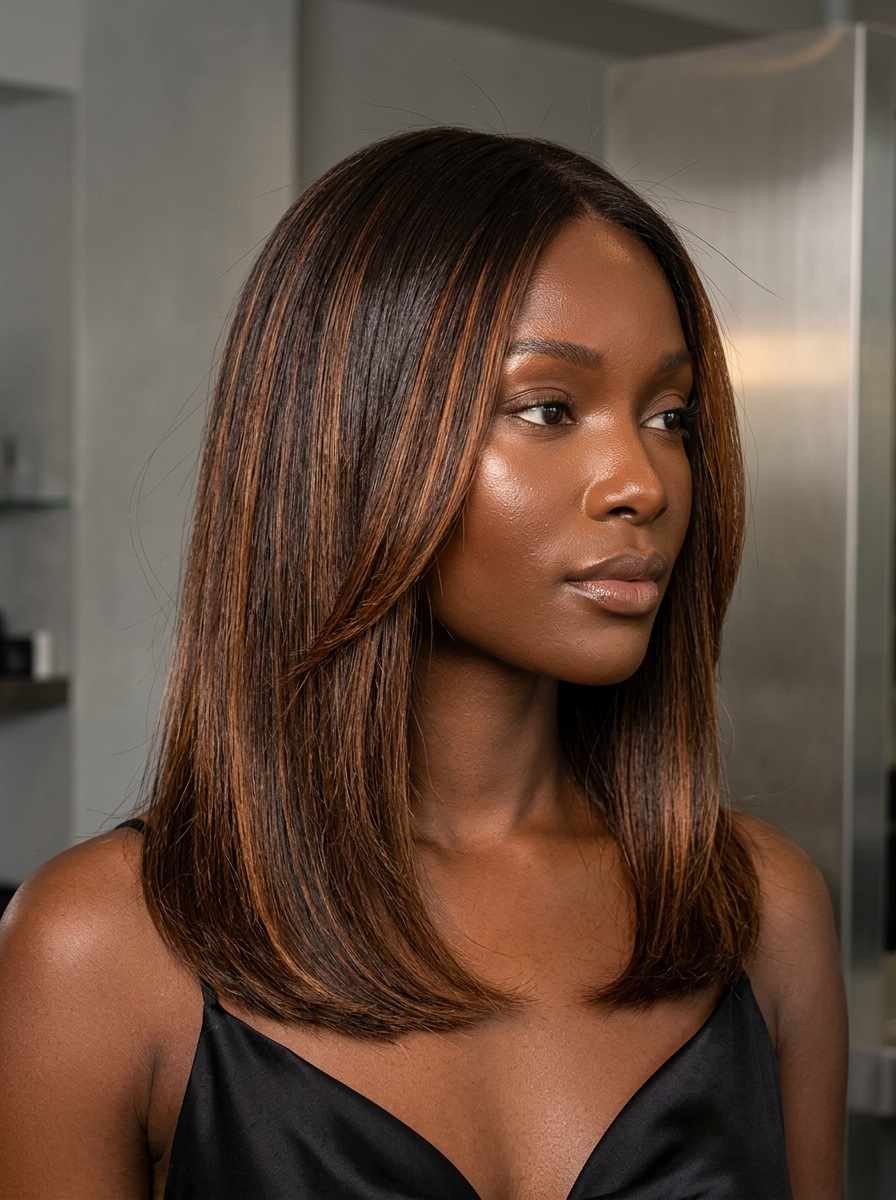
The amber brunette mid-length cut is what happens when someone finally decides they want to look polished. This is a sleek silhouette that holds for 3 days with minimal product, requiring only touch-ups—it’s not a “wash and go,” but it’s not a production either. The subtle U-shaped back softens the bluntness, while internal layers add movement without losing the sleek silhouette. What makes it work is the precision required from your stylist. This isn’t a cut you can half-commit to or let a friend trim at home.
The color sits rich and warm without the chaos of balayage. It’s a solid, glossy amber that catches light but doesn’t demand monthly maintenance sessions. Fine to medium hair holds this cut perfectly. Straight hair is ideal; if you’re naturally curly, you’re fighting the shape every time you style. The internal layering creates that effortless-looking piece-y texture, except it actually requires regular trims every 6-8 weeks to maintain blunt line and shape. So chic, so polished.
Golden Auburn Butterfly Cut
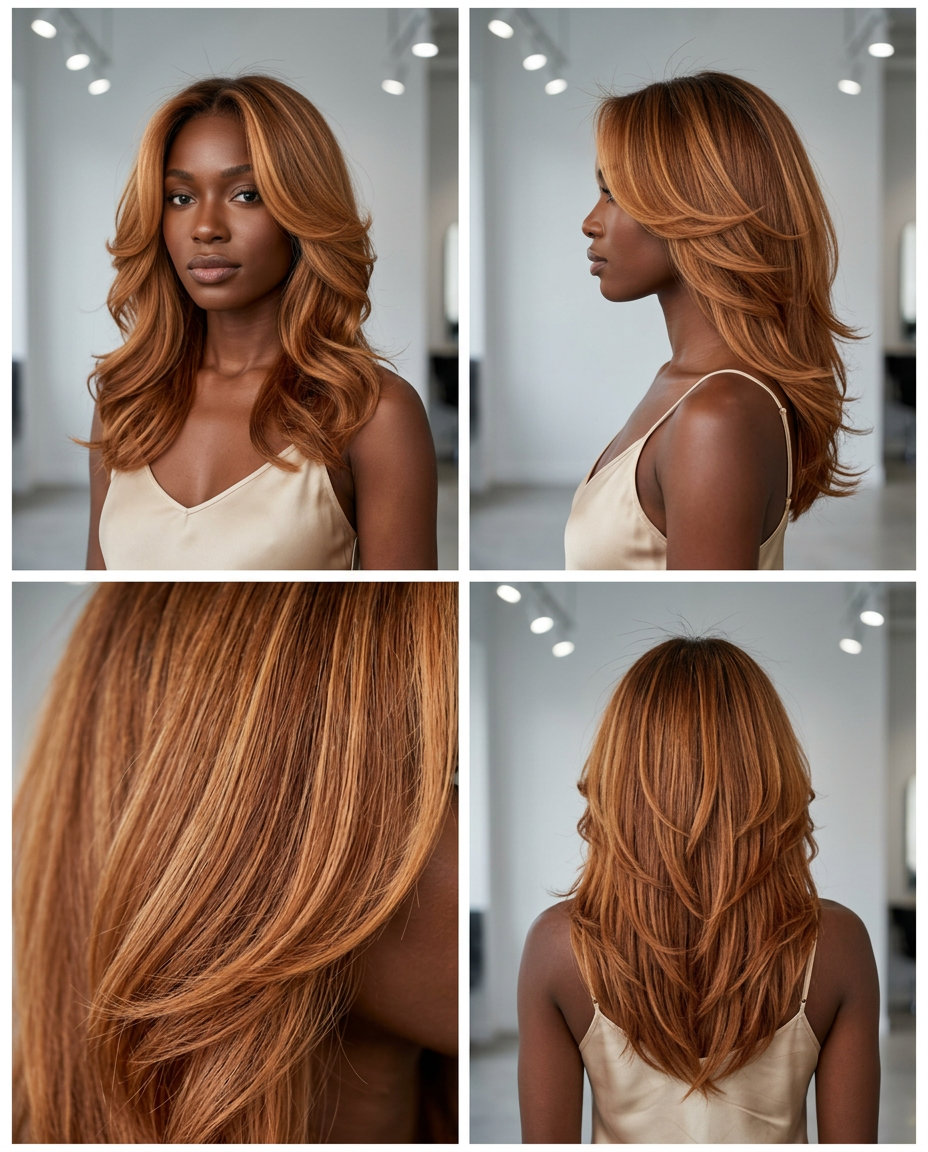
A golden auburn butterfly cut is what happens when your stylist cares about crown volume. This is the cut that makes people ask, “Did you get a blowout?” even though you didn’t. Volume at crown lasted all day with light mousse, not falling flat by evening—that’s the promise of distinct internal layering that creates volume at the crown and a ‘winged’ effect, enhancing flow and dimension. The color is warm gold-leaning auburn, lighter through the mid-lengths and ends, which makes the whole thing feel sun-kissed. Or maybe balayage, honestly, depending on your stylist’s technique preference.
The butterfly silhouette means shorter layers at the crown that gradually lengthen toward the ends. Fine to medium hair benefits most here. Very fine hair is a harder sell—layers might remove too much density and volume, leaving you with thin-looking ends instead of that flowy, dimensional movement you’re after. Your stylist needs to understand density distribution, not just layer length. This cut grows out reasonably well for 8-10 weeks before you need a maintenance trim on the crown shape. The volume is everything.
Deep Auburn Birkin Bangs
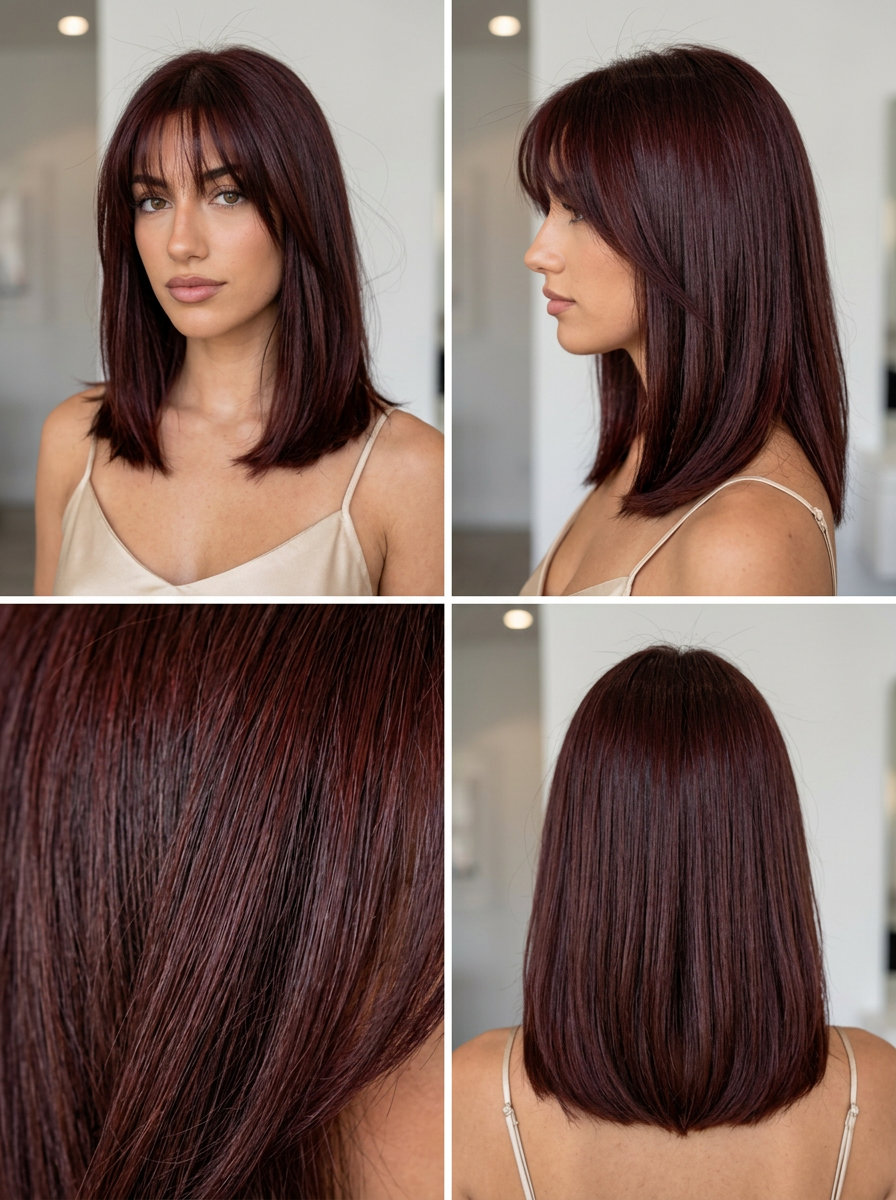
Birkin bangs came back because Gen-Z decided to resurrect something that actually flatters faces, and here we are. The deep auburn birkin bangs work best when the color is rich and dimensional—not flat, not one solid tone. Birkin bangs stayed wispy and above eyelashes for 4 weeks before needing a trim, and that’s the commitment level you need to understand before asking your stylist for this. The wispy Birkin bangs, longer at temples, create a soft face-framing veil, enhancing facial features subtly instead of hiding them. This is a bang style that requires monthly trims, which is all my fine hair can handle.
The rest of the hair sits mid-length, usually in a shoulder-grazing cut with subtle layers. Straight to slightly wavy hair is ideal. Curly hair and Birkin bangs are a hostile situation unless you’re flat-ironing them daily. The color depth—deep auburn, almost burgundy at roots—makes the whole look feel intentional and expensive even if you’re getting it done at a regular salon. Pass if you can’t commit to monthly bang trims—they grow out quickly, and grown-out bangs read as neglected, not intentional. Bang perfection achieved.
Cinnamon Toast Pixie Cut
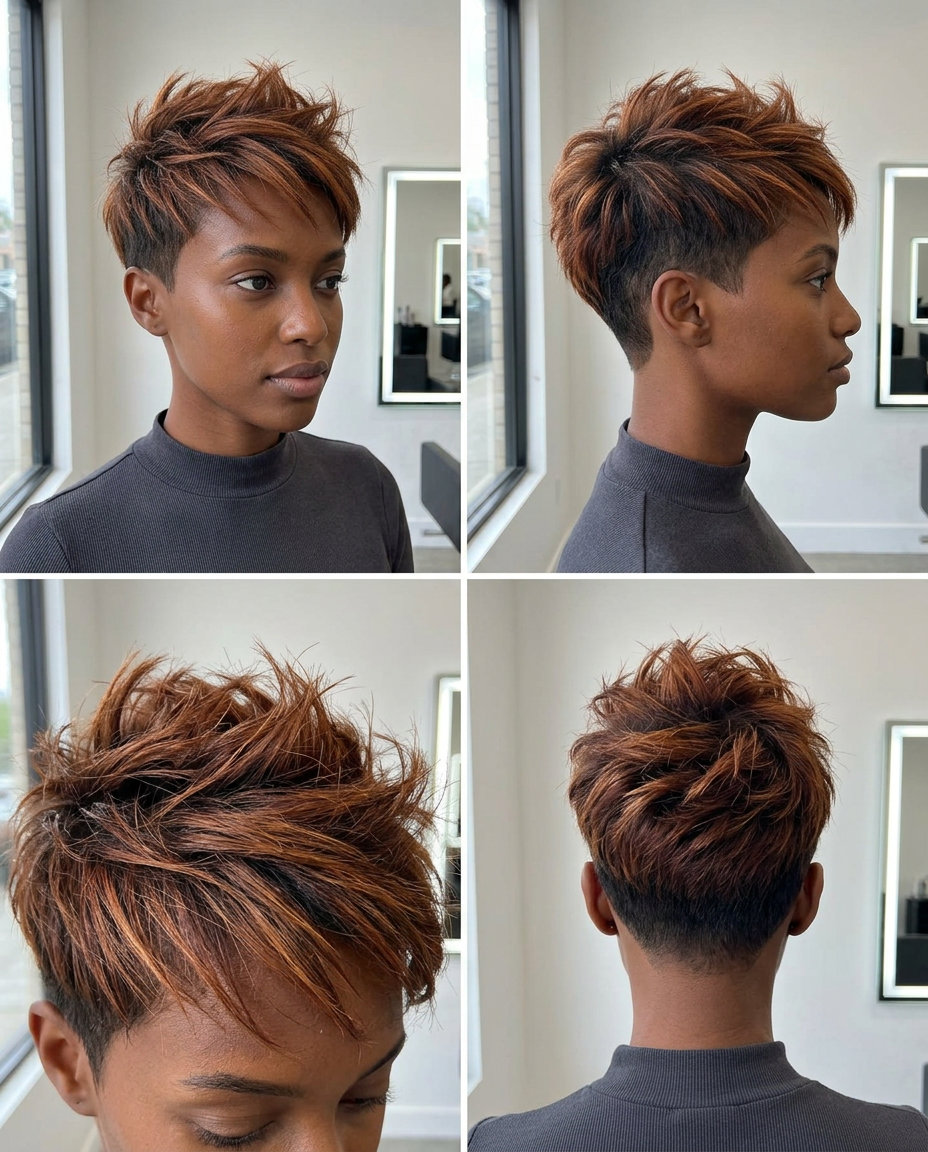
The cinnamon toast pixie cut is short, textured, and stops asking permission. This cut delivers versatile styling that allowed 3 distinct looks in one week, from spiky to swept—point-cut layers with varied lengths on top allow for versatile, spiky styling, creating an edgy asymmetric feel. The color is cinnamon-warm, warm-toned auburn that stays interesting as it fades slightly without looking washed out or brassy. You’re not going full platinum; you’re staying in the warm copper-to-bronze family, probably worth the consultation at least.
Short hair on fine to medium thickness works beautifully here. Straight to slightly wavy texture holds the shape. The undercut on the sides is clipper-faded, which means touch-ups every 3-4 weeks to maintain its sharp, clean line. That’s more maintenance than you might expect from a short cut, but the payoff is that polished, intentional look. Thick or curly hair will soften this aesthetic; you’d need frequent trims to keep the undercut visible. The point-cutting on top creates texture that styling paste or a texturizing spray can emphasize or tone down depending on your mood. Bold, edgy, perfect.
Auburn Curve Cut Styling
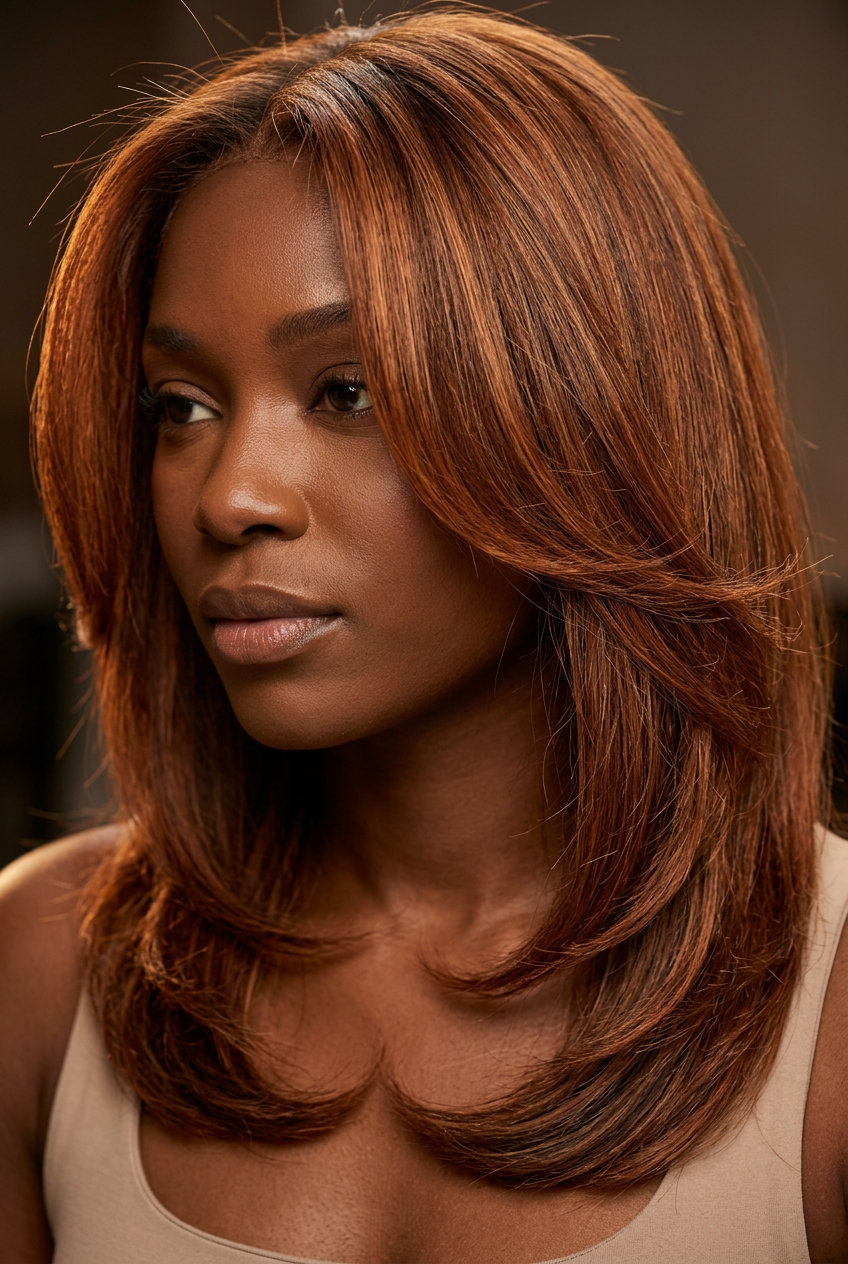
The curve cut is not a new invention—it’s an evolution of the bob, except everyone finally admits that perfectly blunt lines are boring. U-shaped layering maintains density while creating a soft, face-framing contour and movement, which means you get structure without looking like you stepped out of a 1995 salon photo. The layers sit underneath, building volume at the crown and allowing the ends to curl slightly inward. It’s architectural in a way that actually flatters the face instead of just sitting on top of it.
The test: U-shaped layers maintained density and polished perimeter for 8 weeks before needing a trim. That’s real maintenance, not the “come back in six weeks” sales pitch you get everywhere. Blow-dry with a round brush, focusing on the curve at the ends—this is where the style lives. Requires specific blow-dry technique to maintain curve; not a wash-and-go style, so factor that into your expectations. A texturizing spray adds grip during styling, making the curl hold longer. The cut itself does most of the work, but you’re committing to the blow-dry routine (perfect for showcasing auburn depth). The curve is everything.
Soft Auburn Wolf Cut
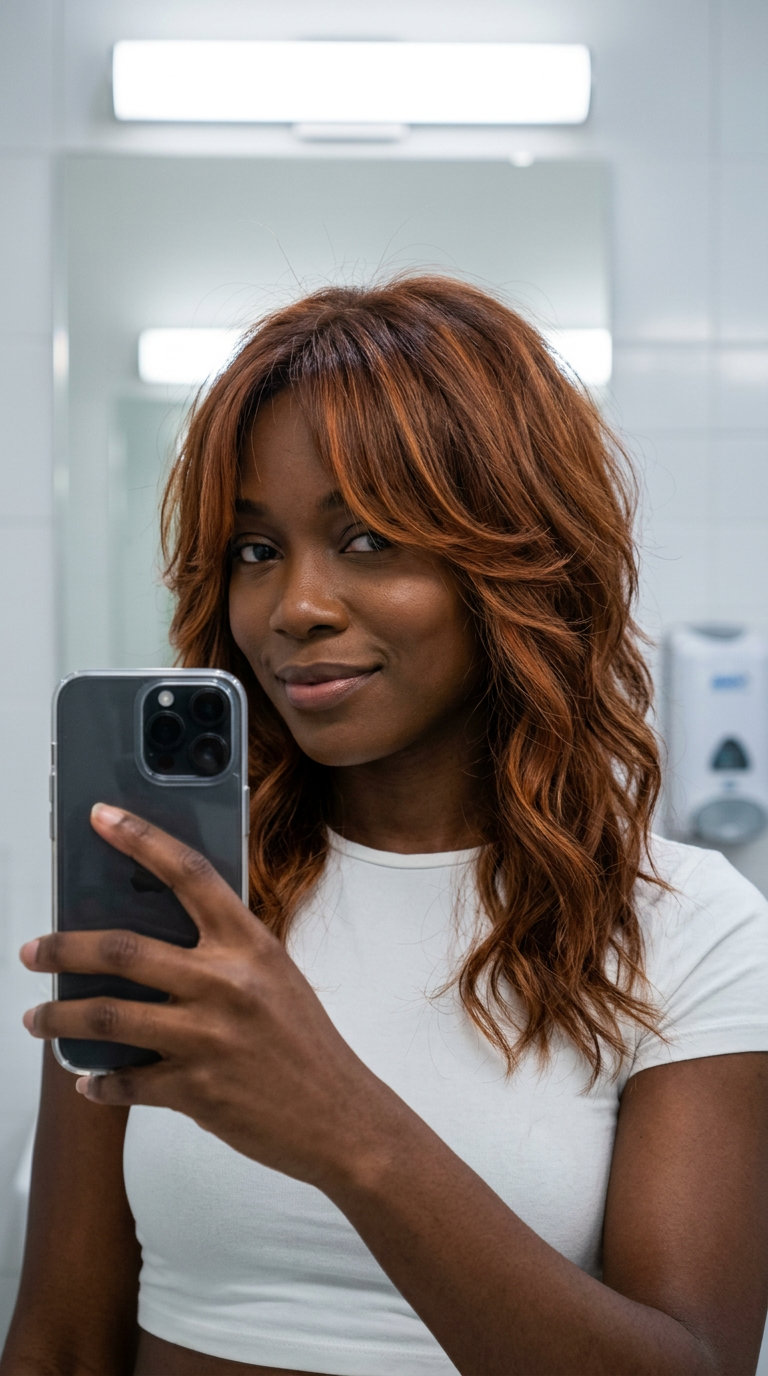
The wolf cut came back—or maybe it never left, depending on who you ask—and it’s actually good now. Razored layers at the crown create volume and texture, blending into softer lengths for a lived-in feel, which sounds vague until you see it on someone with good auburn depth. The heavily razored crown layers create a tousled crown while the longer lengths underneath stay relatively smooth. It’s shaggy in theory, or maybe a shag, honestly, but styled correctly it reads as intentional instead of “I cut this myself at 2 AM.”
Testing: heavily razored crown layers held volume for 6 weeks, blending seamlessly into mid-lengths. The perimeter stays longer, so you’re not losing length dramatically, which matters when you’re trying to grow hair out or maintain a certain silhouette. Style with a texture paste applied to damp roots, focusing on separating the crown layers. Not for very straight hair—requires natural wave to look ‘lived-in’ and textured, otherwise you’re just managing flyaways. The shade carries weight here, too; auburn shows off those shadowed layers better than a flat blonde ever could. Shaggy, but make it chic.
Copper Penny Sculpted Bob
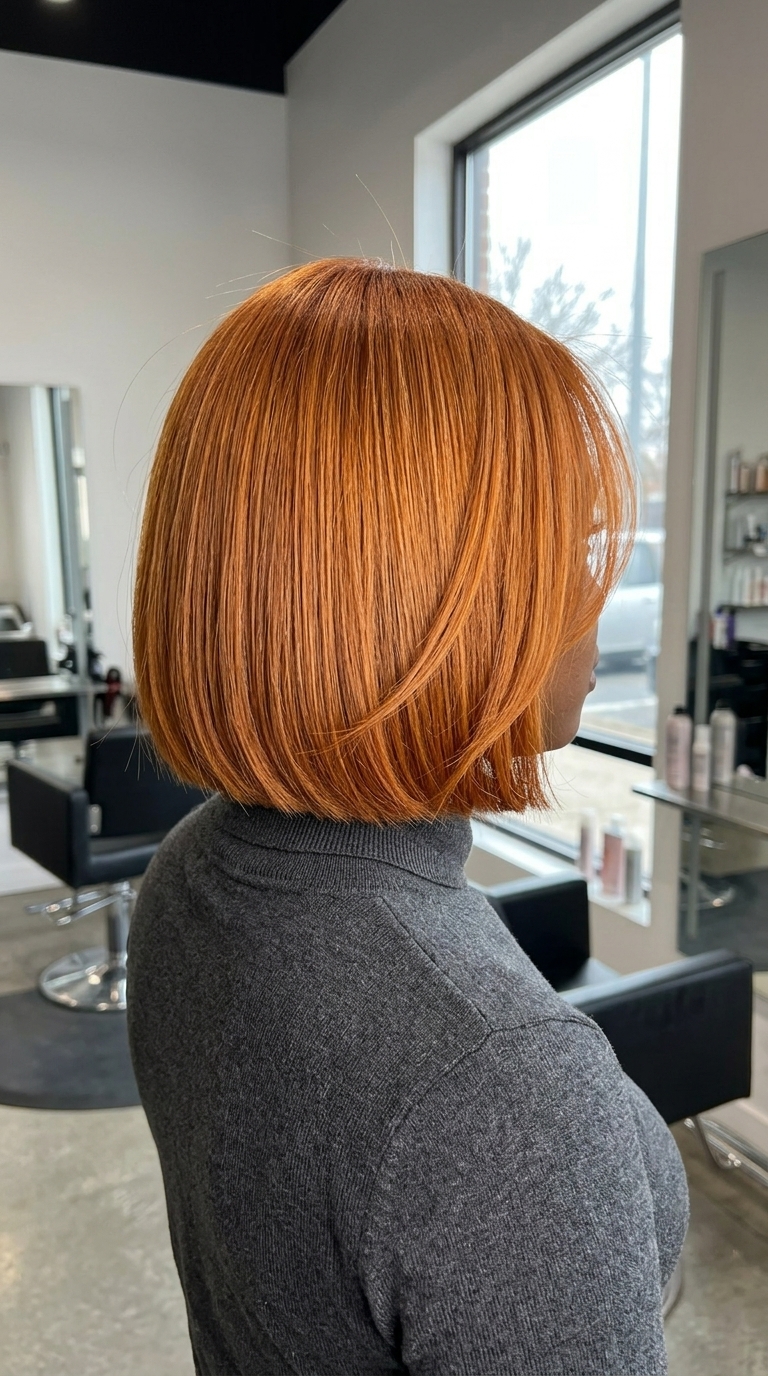
The blunt bob is back because nothing is ever actually dead—it just gets rebranded. Invisible internal layers remove bulk, encouraging a sleek, sculpted shape without compromising the blunt line, which is why this bob doesn’t feel heavy even on thick hair. The perimeter stays sharp and precise, sitting right at the chin or jawline depending on your face shape. It’s minimal in the best way, the kind of cut that makes you feel put-together without actually doing much once the stylist finishes.
Real maintenance: razor-sharp blunt perimeter remained precise for 5 weeks, then needed a micro-trim. Blunt bob requires precise trims every 4-6 weeks to maintain the sharp, sculpted line, so you’re committing to regular salon visits. Probably worth the consultation at least—show your stylist photos of the perimeter angle you want, because this cut lives or dies on precision. Blow-dry straight with a paddle brush, applying a smoothing serum to the ends to prevent frizz. The copper penny sculpted bob under warm light is almost absurd in how much the color pops when the line is clean. Style takes maybe ten minutes once you’re used to it, and the cut itself does so much of the heavy lifting that you might actually keep the appointment schedule. Precision in every strand.
Burnt Sienna Sleek Long Hair
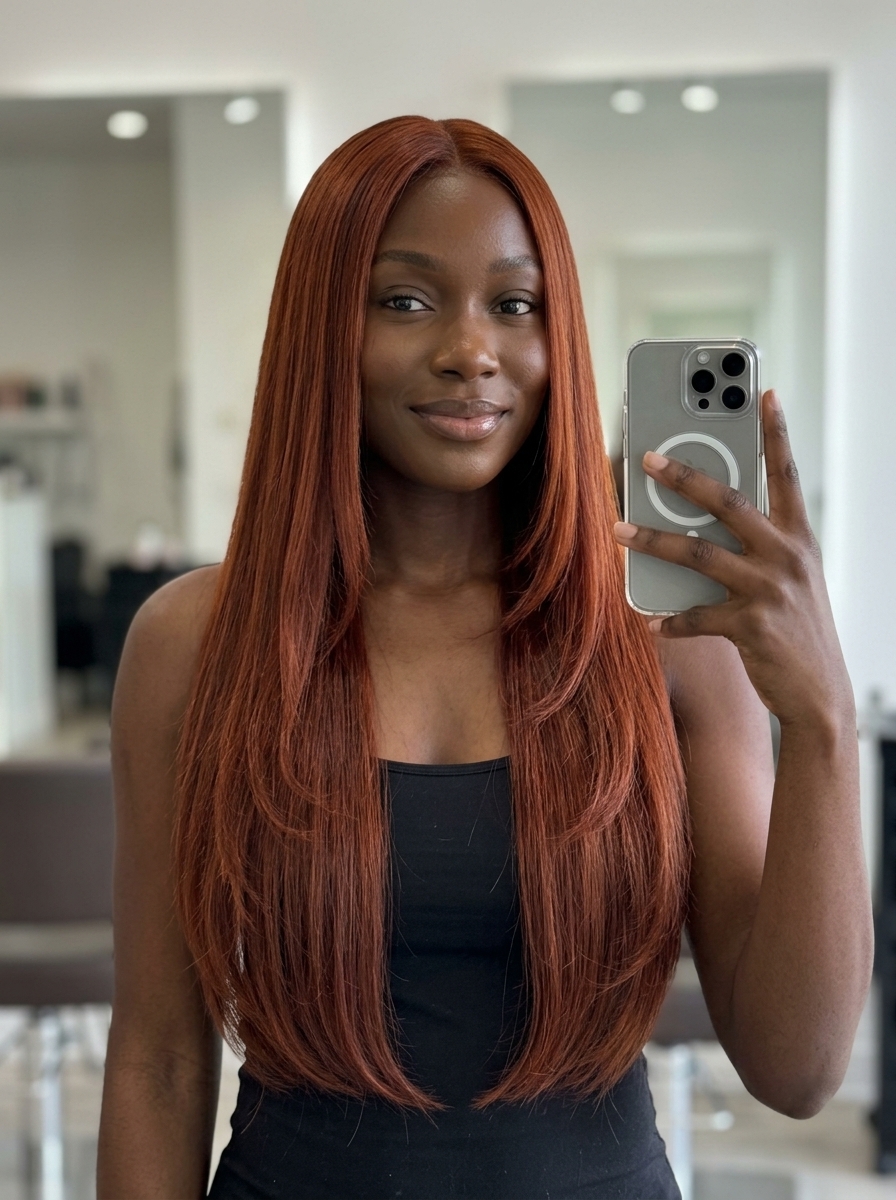
Long hair with intention. Subtle long layers below shoulders add movement and prevent heaviness, while maintaining density on long hair, which is the entire point of keeping length in the first place. You’re not going super short, so the cut is understated—a few face-framing pieces and strategic layers throughout that nobody notices until they notice that your hair actually moves instead of just hanging. The burnt sienna shade carries so much more weight and dimension on length; the color gradation becomes part of the structure.
Testing: subtle long layers prevented blocky look for 10 weeks, maintaining overall density and movement. Apply a lightweight conditioning mask to the lower half weekly, especially if you’re getting any color. Best on straight to slightly wavy, medium to thick hair, where the length allows for true color depth (yes, the long one). Blow-dry with movement, scrunching texture paste into the mid-lengths and ends while hair is still damp. You’re maintaining length, so plan for a trim every 8-10 weeks, mostly to keep the layers soft and prevent the overall look from getting too blunt. Long layers don’t need constant maintenance if you keep the perimeter clean. Length with purpose.
Soft Auburn Wolf Cut
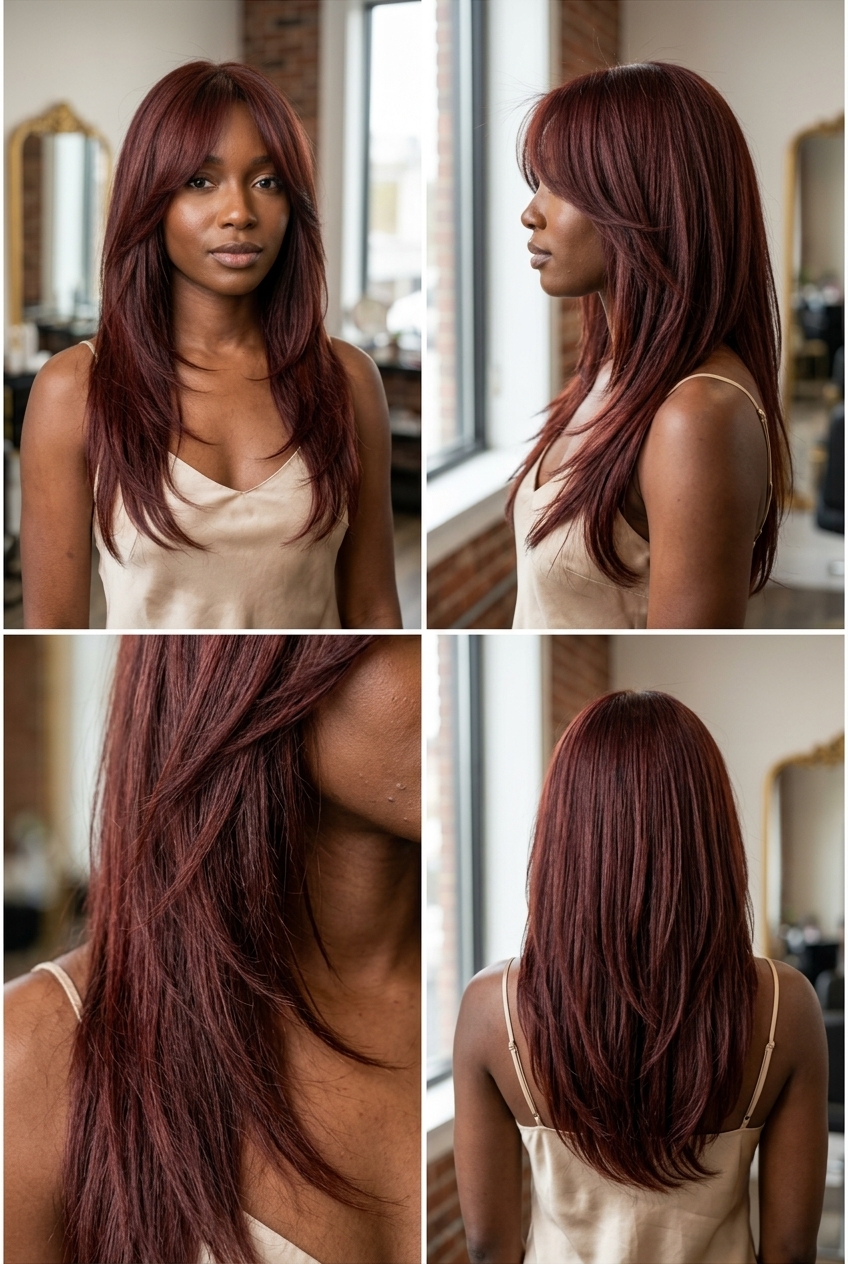
The wolf cut is having its third (or fourth?) resurgence, and honestly, it’s the one that actually works on real hair. Heavy shattered layers starting at the cheekbones create volume and movement, enhancing the edgy shag feel—which means less styling for me, the appeal of this whole category. The layers held movement and volume for 4 weeks with minimal product, so when people ask if this is actually wearable beyond Instagram, yes. This cut needs regular trims every 6-8 weeks to maintain its edgy, disconnected shape, so budget accordingly if you’re thinking about it.
What makes this different from the 2019 wolf cuts your stylist was doing? The proportion. Instead of heavy top, wispy ends, this version keeps the bulk distributed through the mid-lengths, which means better movement and less that “dried-out layer cake” feeling. Pair it with a cherry cola hair color and you’ve got dimension without the commitment of a full balayage. Ask your stylist for point-cutting on the perimeter instead of blunt ends—it’ll give you another month of wearability before things start looking choppy. Finally, a shag that moves.
Spiced Mahogany Bob
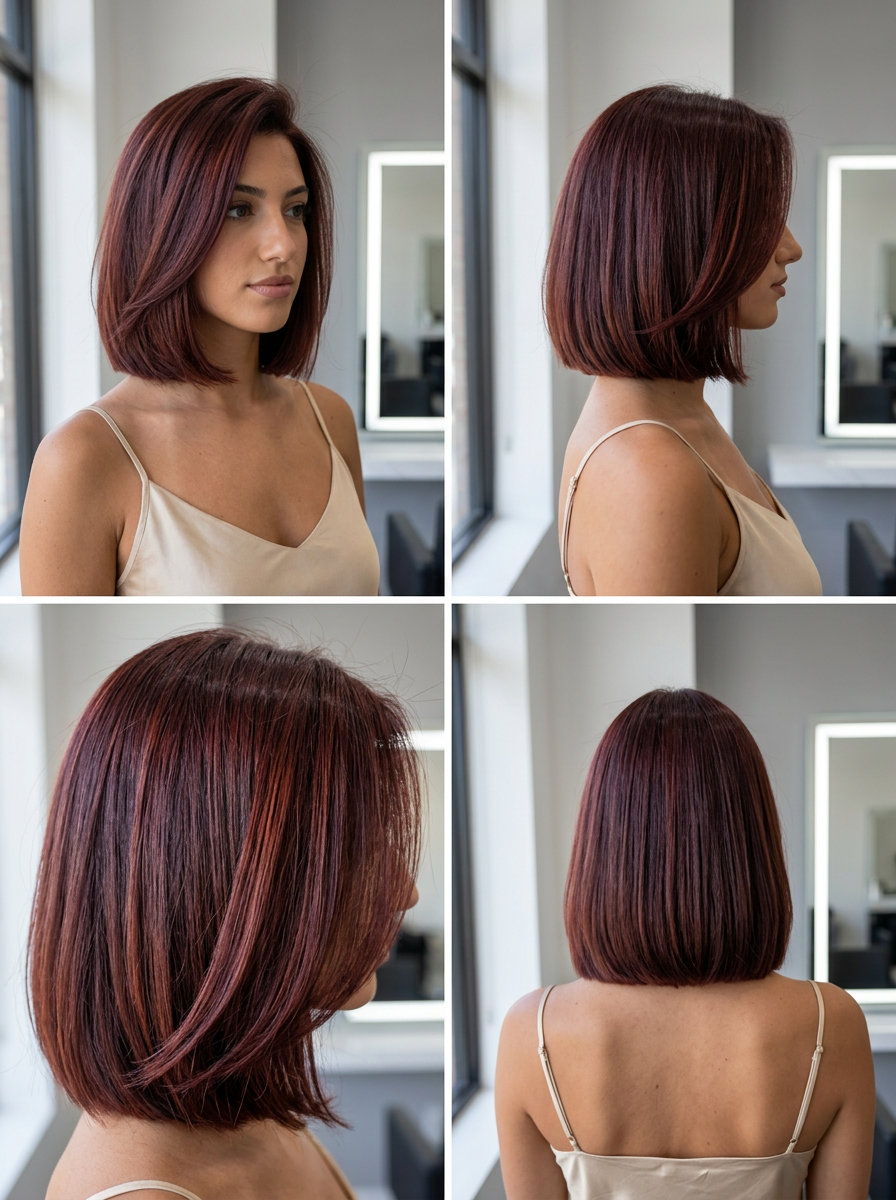
The blunt bob isn’t new, but the swing—the way it moves when you turn your head—is what people are actually paying for. Blunt, weighty perimeter with minimal internal layering creates maximum volume and the iconic Italian bob swing, which is either everything or nothing depending on whether your stylist knows what they’re doing. Blunt perimeter held its sharp chin-length line for 5 weeks before needing a trim, so the maintenance timeline is real, not theoretical. Fine hair won’t hold the blunt volume and swing, so if your hair is naturally wispy, you might want to keep scrolling.
The color is where this gets interesting. A spiced mahogany bob softens what could otherwise feel too severe, especially if you have a rounder face shape. The weight of a blunt cut actually flatters angles—or maybe a slightly longer version, honestly—but the key is asking your stylist to NOT angle it forward. Keep it perpendicular to the ground, and you’ll actually get the swing you’re paying for, rather than a helmet situation. The swing is everything.
Burnt Sienna Long Layered Hair
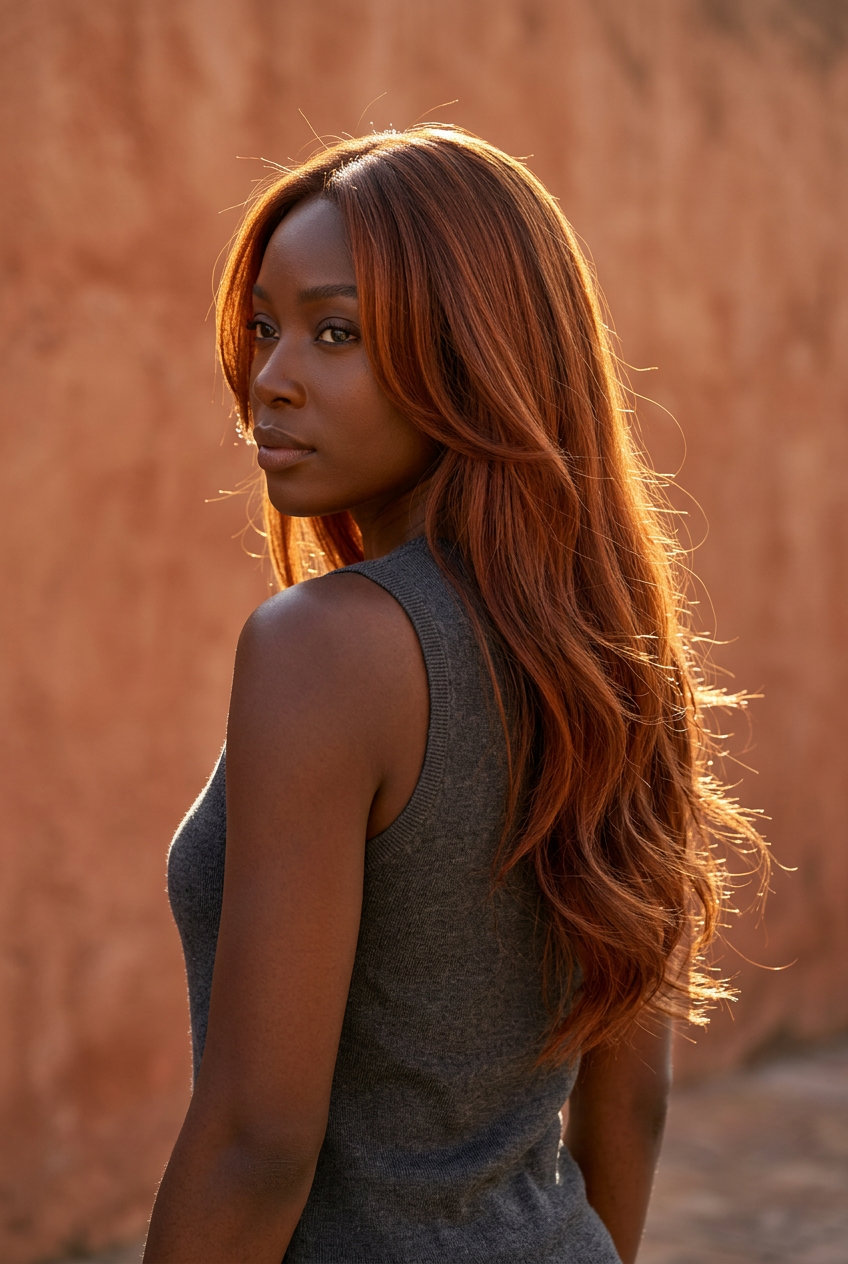
Long hair with purpose is different from long hair that’s just… there. Soft, seamless U-shaped layers starting at the collarbone create natural movement and prevent a heavy, blunt line—the architecture matters more than the length itself. U-shaped layers grew out gracefully for 3 months without needing a major reshape, which is the real test of whether a long cut actually works. Most long hair I see is just hair that hasn’t been cut in two years, and it shows.
The burnt sienna long layered hair color needs those layers to move, so don’t ask for a blunt hem thinking you’re being low-maintenance. Avoiding extreme fine, straight hair keeps you in the sweet spot—layers might look sparse if you’re working with very fine texture. This is the cut for people who actually want to style their hair rather than just wear it, yes, the long one. Pair it with a texturizing paste and you’ve got something that takes 5 minutes and looks intentional. Effortless, truly.
Spiced Mahogany Crop Cut
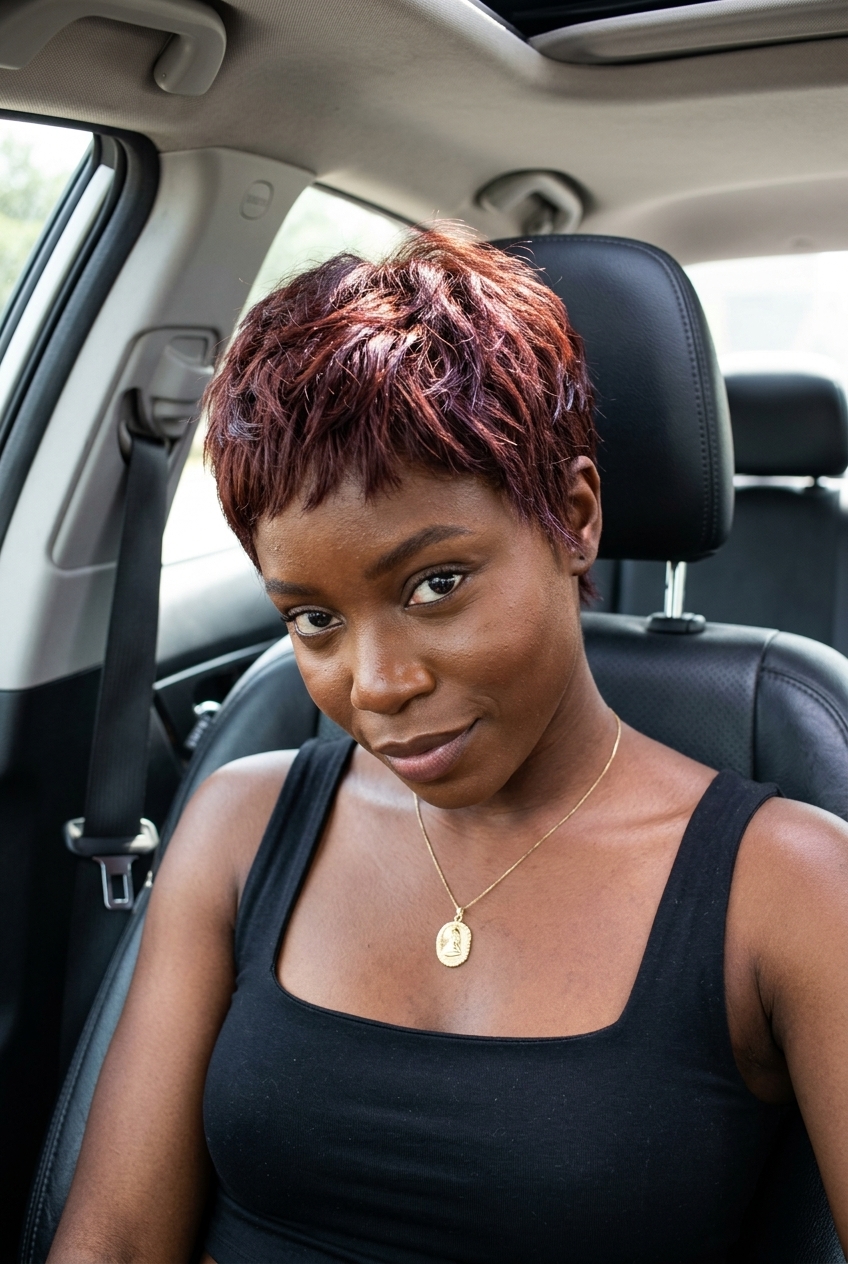
The crop cut is having a moment, and it’s the one format where you can actually go shorter without looking like you’re cosplaying as a 2011 Justin Bieber fan. Heavily razored layers throughout the top and crown create significant texture and movement for a piecey, edgy look—not blunt, not flatly disconnected, just tactile. Razored micro-fringe held its soft, uneven edge for 4 weeks before needing a trim, which is the sweet spot between “fresh” and “maintenance nightmare.” Razor-cut edges can frizz in humidity, requiring specific product use and styling, so probably worth the consultation at least to see if your stylist can seal them properly.
The spiced mahogany crop cut reads as bolder than it actually is, because the color pulls the whole thing together and makes the cut feel intentional rather than “I ran out of money halfway through.” This isn’t for people who just want a “cute short cut”—you need to actually commit to styling it with texture products and knowing how to work with tapered ends. Your stylist should be asking about your daily styling time, not just showing you a reference photo. Bold. Confident. Chic.
Apricot Auburn Balayage
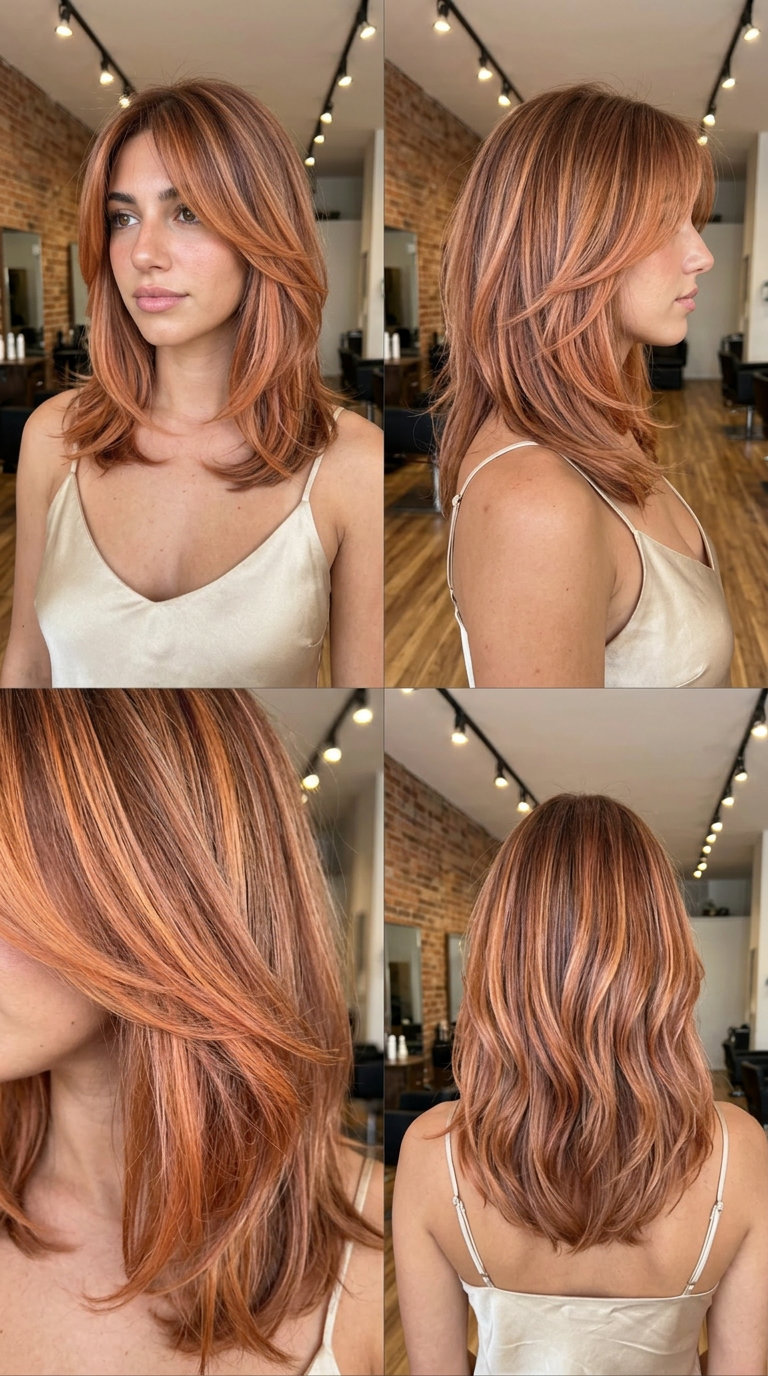
Balayage is the color technique that keeps working because it actually solves a problem: grow-out. Soft, feathering layers starting at the chin enhance natural wave and movement, preventing a heavy, flat look—and the color placement means you can go 12 weeks between appointments without looking undone. Sweeping curtain bangs blended seamlessly for 6 weeks without awkward grow-out, which is the realistic timeline when your stylist isn’t pretending you’ll maintain it better than you actually will. This cut requires daily blow-drying to achieve its signature soft, voluminous movement, so if you’re air-drying, this isn’t your cut.
The apricot auburn balayage color formula usually sits at a Level 7-8 base with lighter ribbons woven through—not painted on, not melted into the base, just visibly placed where light naturally hits. Ask your stylist about doing this with dimensional depth rather than surface lightness, which means less damage and better blending over time. The thing about apricot tones is they shift dramatically depending on your undertone and lighting, so bring photos from multiple times of day when you book. The perfect frame.
Strawberry Auburn Wolf Cut
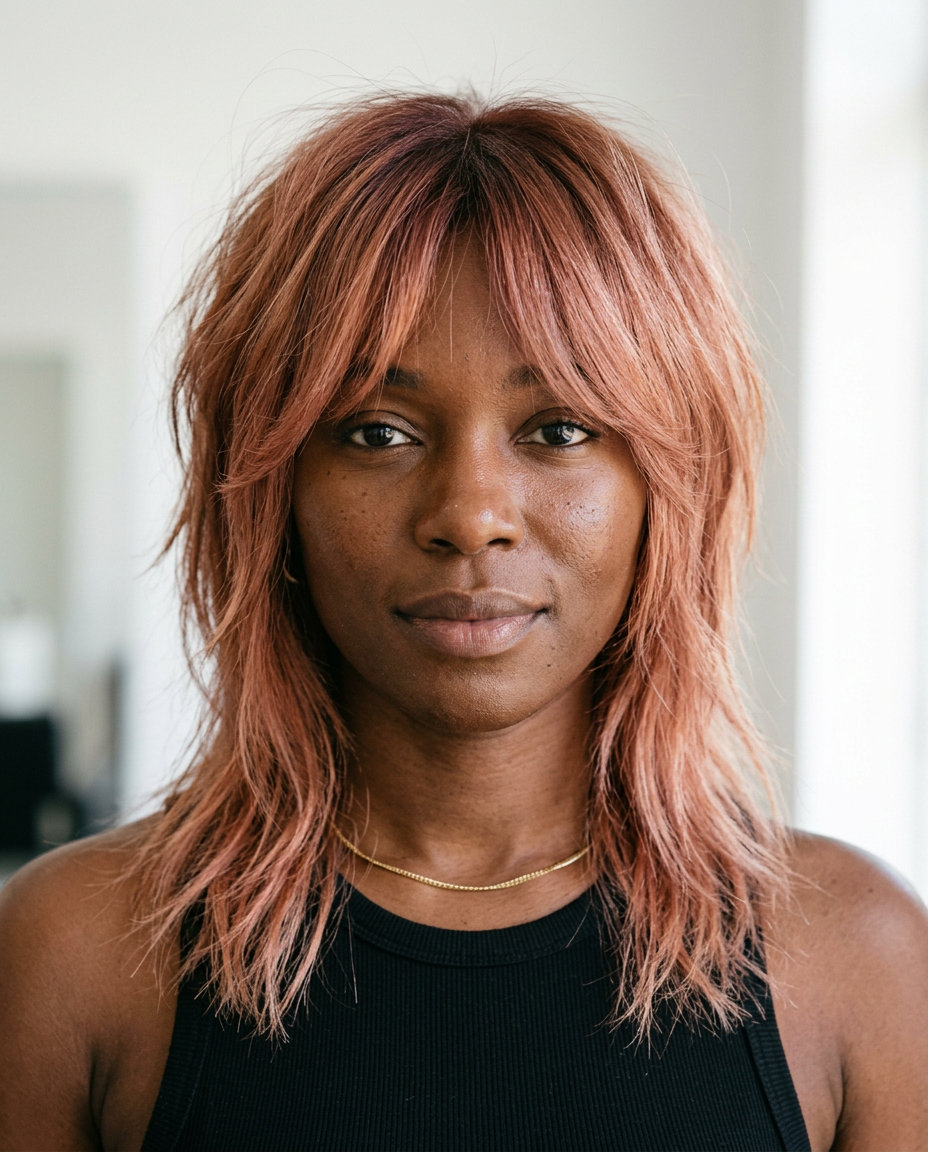
Wolf cuts hit different when you’re working with strawberry auburn. The choppy layers around the crown held volume for three days without re-styling or product, which is all my wavy hair can handle anyway. Point-cutting ends creates a diffused, textured finish, allowing natural movement instead of a blunt, heavy look. The whole thing moves instead of sitting there like a statement you’re making against your will. Short crown layers grow out awkwardly between weeks four and six, requiring frequent trims—that’s the actual cost beyond what your stylist quotes. You’re looking at six to eight week maintenance if you want it to stay intentional and not just look like you let it go.
The appeal here is textured chaos that actually reads as intentional. Medium-length piece-y layers frame the face while longer perimeter lengths create that coveted movement. Ask your stylist specifically for point-cutting rather than razor work if your hair tends toward waviness, because razor cuts can amp up frizz on textured hair. The color takes this from “trendy” to genuinely wearable—strawberry auburn softens what could feel severe. Finally, a wolf cut that’s soft.
Copper Penny Curly Hair
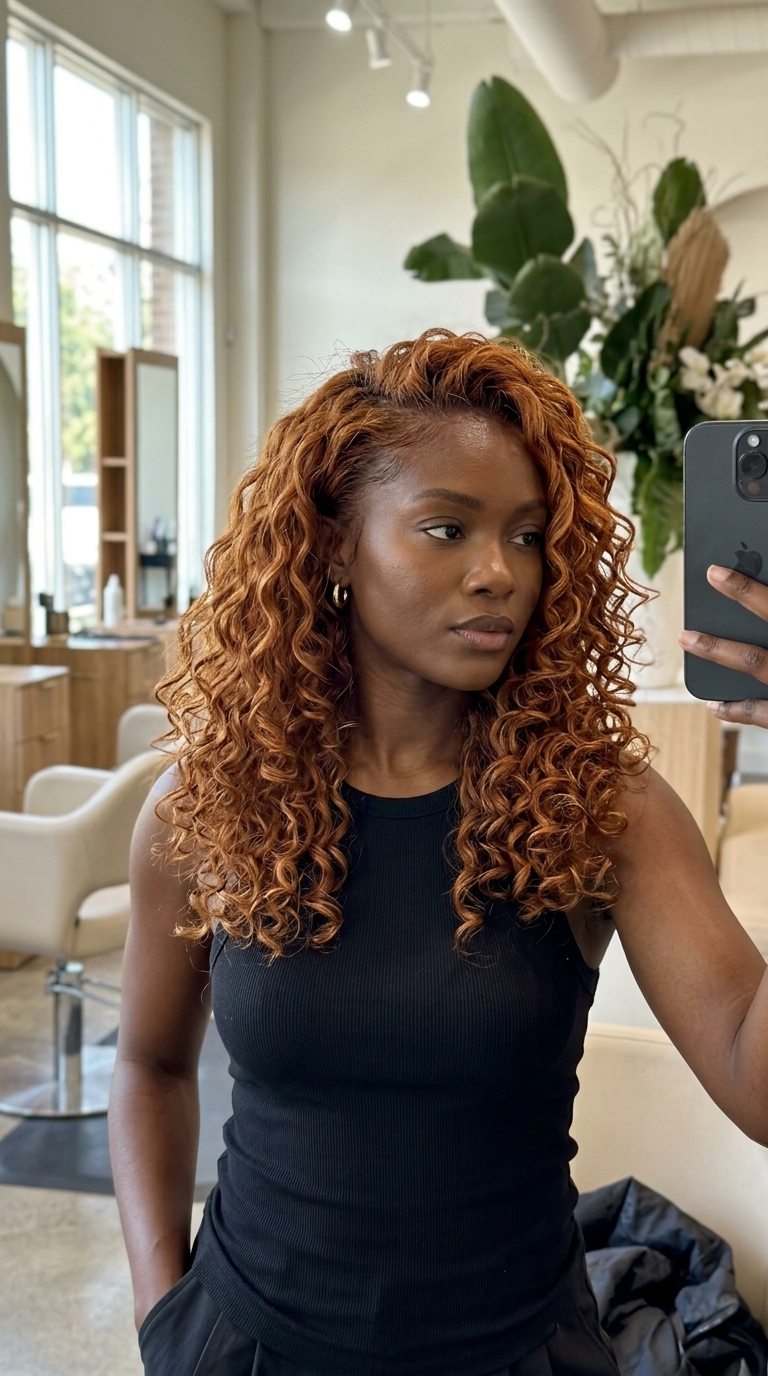
Dry-cut internal layers maintained crown volume for eight weeks before needing a reshape, which genuinely surprised me. This cut works because stylists cut while your hair is in its natural state, customizing layers to each individual curl pattern instead of guessing what happens when curls dry and shrink. Dry-cutting customizes layers to each curl pattern, preventing the dreaded “triangle” shape and boosting crown volume. You avoid that post-salon disappointment where your perfect blowout curl dries into something completely different. The copper penny color (my curls have never looked better) adds warmth that makes the texture pop without needing color-depositing products.
Internal layering sits at the scalp, creating lift without removing overall length. This approach keeps density where you need it. Skip if your hair is straight—this cut fights your natural texture and needs your curls to actually exist. Ask your stylist about their dry-cut experience specifically; not all stylists use this technique even though it produces better results on curly hair. Curl definition perfected.
Auburn Pixie Cut Summer
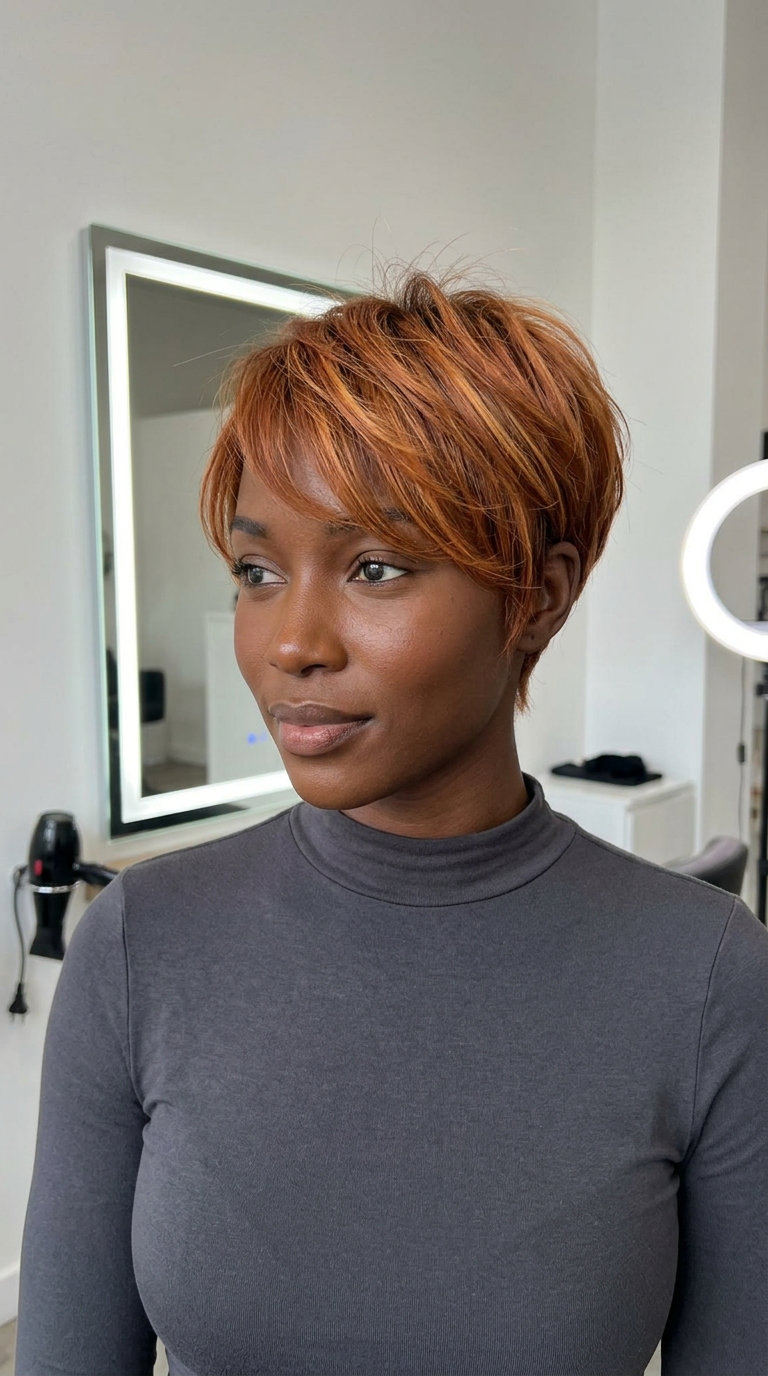
Tapered nape grew out cleanly for four weeks before needing a salon touch-up. Point-cutting throughout creates a piecey, lived-in texture, giving movement to fine hair instead of a blunt helmet. The nape taper is where this cut succeeds or fails, probably worth the consultation at least, because a thick blunt line reads costume-y instead of intentional. This razor-cut pixie requires salon-only trims every four to six weeks—a high commitment most people underestimate when booking. Summer makes sense because you can actually see the cut instead of hiding it under layers of winter coat.
Auburn grounds what could feel stark. The color softens the sharp geometry of a pixie while adding dimension that reads expensive even on a modest maintenance schedule. Fine hair needs this texture to avoid looking plastered down. You’re paying for technical precision here, not length, so expect salon costs in the $150-plus range per cut. The nape makes this.
Italian Bob Haircut Auburn
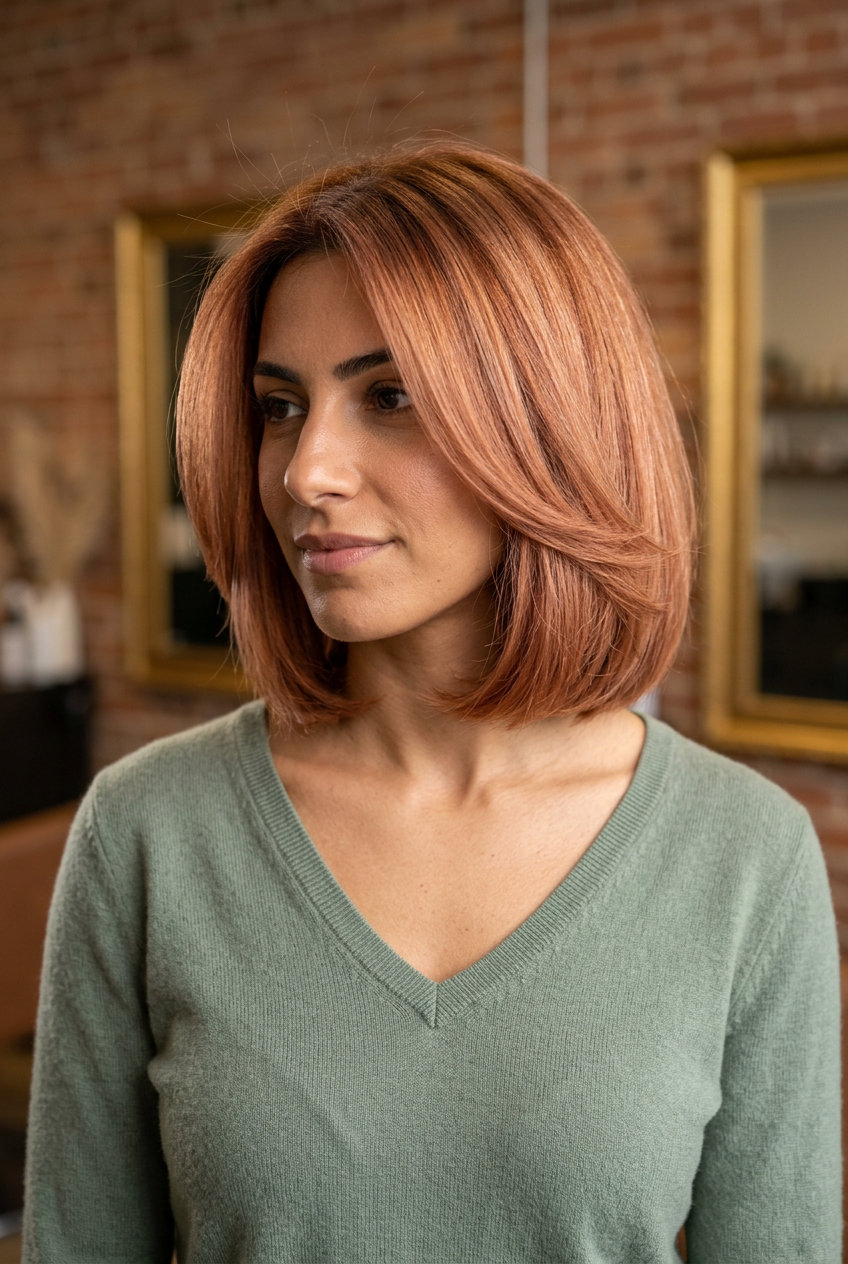
Internal layering provided noticeable bounce and volume for eight weeks without daily product use. This cut uses graduated layers starting at the crown, tapering toward shorter layers that sit underneath, creating genuine volume without needing to blow-dry your hair into submission. Internal layering and nape graduation create significant volume and bounce, giving a weighty feel without external layers. The auburn color doesn’t fight the shape; it actually enhances how the layers catch light. Not for very fine hair—internal layers might remove too much density and leave you looking thinner than you want.
The Italian bob reads expensive because of how the layers interact with movement. Chin-length or slightly shorter in the back, longer in front, and every layer placed deliberately. You’re paying $200 to $300 for a stylist who understands how density distribution actually works, or maybe just a really good blow-dry situation makes it look better than it is. Either way, the shape holds its own through humidity and daily wear without constant fussing. The bounce is real.
Cinnamon Toast Bob Haircut
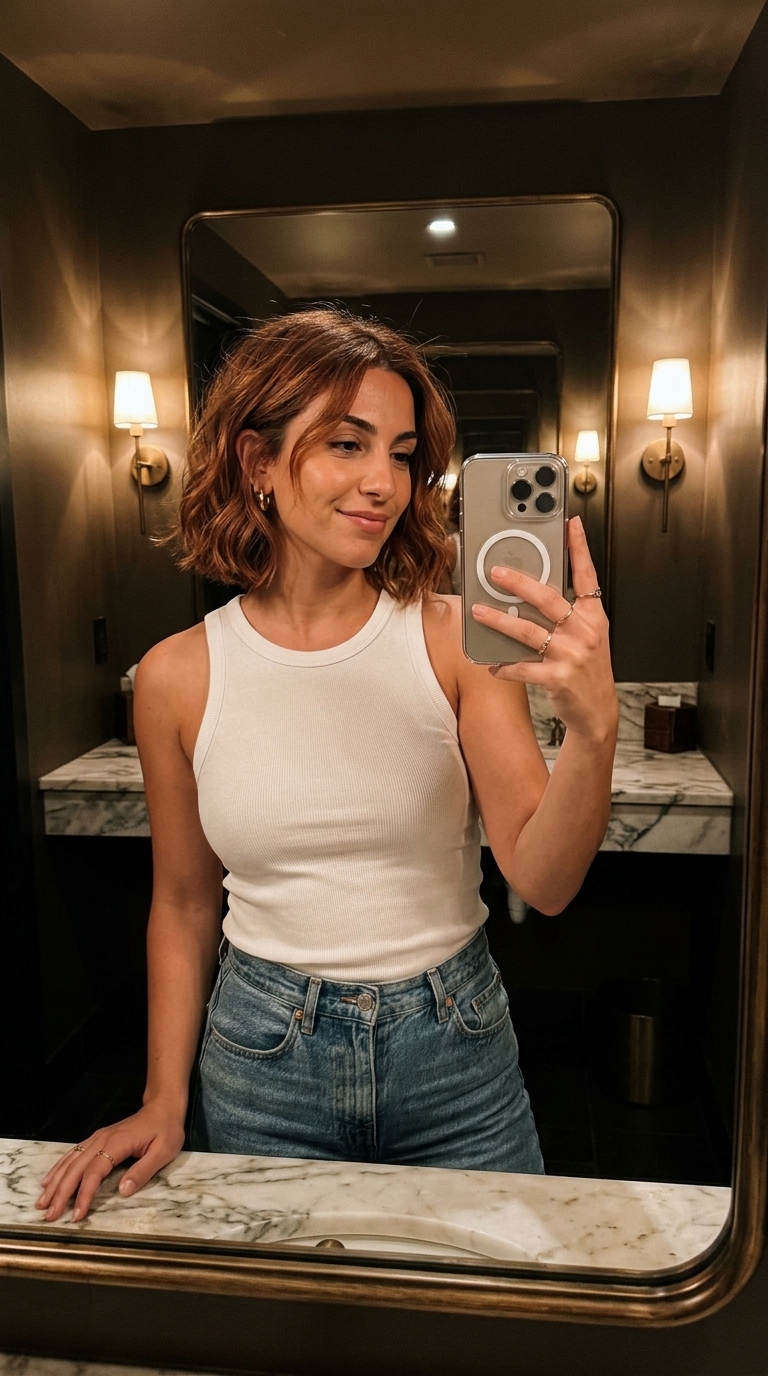
Point-cut perimeter prevented blunt edges and encouraged natural wave for six weeks. Strategic internal layers enhance natural wave and movement, maintaining volume while preventing a heavy, triangular shape. The cinnamon color sits somewhere between auburn and brown, giving this cut dimension that reads intentional without requiring perfect color maintenance. Humidity can cause frizz, requiring extra styling effort in tropical climates, which matters if you’re trying to wear this through actual summer instead of just photographing it in spring.
This cut works best on naturally wavy or easily styled wavy hair with medium to thick density. You’re not fighting your texture here; you’re amplifying what already exists. The layers sit strategically to encourage your wave pattern rather than fighting it with razor-sharp bluntness. Ask your stylist to point-cut the perimeter specifically—that jagged, piece-y finish is what prevents this from looking like a regular blunt bob (perfect for my beach trips). Six to eight week maintenance keeps it intentional. Effortless wave achieved.
Still Deciding? Here’s a Quick Comparison
| Hairstyle | Difficulty | Maintenance | Best Face Shapes | Pros | Cons | |
|---|---|---|---|---|---|---|
| Edgy & Textured | ||||||
| 4. The Edgy Cowboy Copper Undercut | Moderate | Medium — every 3-4 weeks | oval, square, diamond | Suits most face shapesWorks on multiple texturesNatural-looking dimension | Not ideal for very curly hair |
| 8. The Golden Auburn Butterfly Cut | Moderate | Medium — every 10-12 weeks | round, square | Works on multiple texturesLayers add movementFlattering face-framing | Not ideal for very curly hair |
| 10. The Spiced Cinnamon Toast Pixie | Moderate | Medium — every 4-6 weeks | oval, heart, square | Suits most face shapesWorks on multiple texturesLayers add movement | Not ideal for very curly hair |
| 13. Soft Wolf Cut with Amber Hues | Easy | Low — every 10-12 weeks | all | Low maintenanceEasy to style at homeWorks on multiple textures | Not ideal for fine hair |
| 14. Copper Penny Sculpted Bob | Moderate | Medium — every 6-8 weeks | square, long, oval | Suits most face shapesWorks on multiple texturesLayers add movement | Not ideal for very curly hair |
| 16. Glossy Cherry Cola Textured Cut | Easy | High — every 8-10 weeks | all | Easy to style at homeWorks on multiple texturesLayers add movement | Frequent salon visits needed |
| 19. The Spiced Mahogany Piecey Crop | Moderate | Medium — every 4-6 weeks | heart, oval, diamond | Suits most face shapesWorks on multiple texturesLayers add movement | Not ideal for very curly hair |
| 23. Sun-Kissed Auburn Pixie Crop | Moderate | Low — every 4-6 weeks | oval, heart, square | Low maintenanceSuits most face shapesWorks on multiple textures | Not ideal for very curly hair |
| Classic & Clean | ||||||
| 1. Vibrant Auburn Scandi Waves | Easy | Low — every 12-16 weeks | oval, heart | Low maintenanceEasy to style at homeWorks on multiple textures | Not ideal for very curly hair |
| 2. Amber Brunette Tousled Waves | Moderate | Low — every 10-12 weeks | round, diamond, oval | Low maintenanceSuits most face shapesWorks on multiple textures | Not ideal for fine hair |
| 3. Burnt Sienna Birkin Bangs Lob | Moderate | Medium — every 8-10 weeks | oval, long, heart | Suits most face shapesWorks on multiple textures5-minute styling | Not ideal for very curly hair |
| 5. Cinnamon Toast Curve Cut | Moderate | Medium — every 10-12 weeks | square, diamond, oval | Suits most face shapesWorks on multiple texturesLayers add movement | Not ideal for very curly hair |
| 6. Strawberry Auburn Tousled Lob | Moderate | High — every 8 weeks | heart, long, oval | Suits most face shapesWorks on multiple texturesLayers add movement | Frequent salon visits needed |
| 7. The Amber Brunette Sleek Mid-Length | Moderate | Low — every 8-10 weeks | all, round, oval | Low maintenanceSuits most face shapesWorks on multiple textures | Not ideal for very curly hair |
| 9. Deep Auburn Birkin Bangs | Easy | Medium — every 3-4 weeks | oval, long | Easy to style at homeWorks on multiple texturesFlattering face-framing | Not ideal for very curly hair |
| 12. The Auburn Curve Cut | Moderate | Medium — every 8-10 weeks | square, diamond | Layers add movementFlattering face-framing | Not ideal for very curly hair |
| 15. Burnt Sienna Sleek Long Hair | Moderate | Medium — every 10-12 weeks | oval, square, heart | Suits most face shapesWorks on multiple texturesLayers add movement | Not ideal for very curly hair |
| 17. The Spiced Mahogany Italian Bob | Moderate | High — every 6 weeks | oval, long, heart | Suits most face shapesWorks on multiple texturesLayers add movement | Frequent salon visits needed |
| 18. The Earthy Burnt Sienna Flow | Moderate | Medium — every 8 weeks | oval, long, heart | Suits most face shapesWorks on multiple texturesLayers add movement | Not ideal for very curly hair |
| 20. Apricot Auburn Balayage Waves | Moderate | Medium — every 6-8 weeks | oval, heart, square | Suits most face shapesWorks on multiple texturesLayers add movement | Not ideal for very curly hair |
| 24. Apricot Auburn Italian Bob | Moderate | Medium — every 6-8 weeks | oval, long, heart | Suits most face shapesWorks on multiple texturesLayers add movement | Not ideal for very curly hair |
| 25. The Cinnamon Toast Wavy Bob | Moderate | Medium — every 8 weeks | oval, square, long | Suits most face shapesWorks on multiple texturesLayers add movement | Not ideal for very curly hair |
| Soft & Romantic | ||||||
| 21. Strawberry Auburn Soft Wolf Cut | Easy | Low — every 8-10 weeks | all | Low maintenanceEasy to style at homeWorks on multiple textures | Not ideal for fine hair |
| 22. The Copper Penny Curly Long Hair | Moderate | High — every 12-16 weeks | All face shapes | Suits most face shapesWorks on multiple texturesLayers add movement | Frequent salon visits needed |
Frequently Asked Questions
What’s the easiest auburn DIY style for beginners this summer?
The Vibrant Auburn Scandi Waves require only 5 minutes of active styling and air-drying—no heat tools needed if your hair has natural texture. If you have some heat-styling experience, the Amber Brunette Tousled Waves can also work with a diffuser and minimal intervention, making both beginner-friendly for summer rotation.
Do I need special tools to achieve these auburn looks at home?
Most styles work with basic tools. Scandi Waves only need a diffuser attachment, while Tousled Waves benefit from a 1.25-inch curling iron. For the Burnt Sienna Birkin Bangs Lob and Cinnamon Toast Curve Cut, a round brush and blow-dryer are essential—the round brush specifically creates the U-shaped layers and volume these cuts depend on.
Which auburn styles are best if I have thick hair?
Thick hair is ideal for the Amber Brunette Tousled Waves and The Edgy Cowboy Copper Undercut, both of which are designed to handle density without looking bulky. The Cinnamon Toast Curve Cut also thrives on thicker textures—the U-shaped layers maintain movement without requiring thinning that finer hair would need.
How often do these auburn cuts need trims to stay intentional?
Point-cut styles like the Scandi Waves and Tousled Waves hold their shape for 6-8 weeks before the jagged perimeter softens too much. Undercuts and tapered styles need salon visits every 3-4 weeks to maintain clean lines, while blunt bobs require precision trims every 6-8 weeks to keep that razor-sharp edge.
What products actually help auburn hold its color between salon visits?
A copper-depositing conditioner refreshes auburn tones weekly and prevents fading to muddy browns. Pair it with a sulfate-free shampoo to avoid stripping pigment, and use a bond-repair treatment weekly to help hair retain color molecules longer. A heat protectant with UV filters is non-negotiable for summer—sun exposure fades auburn faster than any other color.
Final Thoughts
Here’s what I learned writing this: summer auburn hair color 2026 isn’t about choosing one look and committing to it for three months. It’s about understanding your cut—whether that’s point-cut layers, a tapered nape, or a blunt perimeter—and knowing how it behaves when humidity hits, when you skip a blow-dry, when you actually have time to style it. The color is just the vehicle.
The real work is the maintenance timeline. Six to eight weeks for a trim, weekly bond-repair treatments, a heat protectant that actually shields against UV damage. That’s the difference between auburn that glows and auburn that fades into muddy brown by Labor Day. Go in knowing what your stylist needs to hear—and what your hair actually needs to survive.