Starter locs are the raw, unfolding stage of a loc journey, and the styling choices you make now set the rhythm for everything that follows. The current shift leans into glossy natural texture and soft face-framing movement, even in the earliest stages.
This collection of 20 Simple Starter Locs ideas covers the full range, from short coily parts to mid-back waves, with practical details on hold, length, and upkeep. Whether your fine hair needs structure or you want to manage a visible grow-out line, each look is built for real wear, not just the first day.
20 looks in this post
- Mid-Back Black Locs With Natural Wavy Texture
- Collarbone Length Locs With Side Part
- Chin Length Wavy Locs Styled Neatly
- Short Dark Brown Locs With Blonde Tips
- Short Black Locs With Undercut Styling
- Short Coily Starter Locs With Neat Parts
- Back View Short Locs With Blonde Highlights
- Thick Curly Starter Locs With Middle Part
- Chin Length Coily Locs With Blonde Tips
- Collarbone Black Locs Styled Loosely
- Short Black Locs Updo With Face Framing
- Thick Black Locs In A High Bun
- Fine Density Micro Locs Partially Up
- Shoulder Length Starter Locs With Curled Ends
- Shoulder Length Half-Up Half-Down Locs
- Shoulder Length Coily Starter Locs With Clips
- Chin Length Coily Starter Locs Retwisting
- Chin Length Thick Wavy Locs With Geometric Parts
- Stylish Types of Dreadlocks
- DIY Shoulder Length Coily Locs Ponytail
01. Mid-Back Black Locs With Natural Wavy Texture
Mid-back locs with a natural wave pattern add volume without adding bulk, so the shape stays full without looking heavy. That middle part and loose styling let the wave travel from root to tip, giving the texture a deliberate look. Medium to thick wavy or curly hair works best here, and you want at least shoulder-length starting hair so the locs land at mid-back. Ask your stylist for: mid-back length wavy locs, middle part. A light oil on the ends keeps the shine even and the frizz manageable, and a trim every 12 to 16 weeks maintains the length without losing the shape.
Oval and long faces handle the vertical line of a middle part without looking stretched, which is the main reason this parting works. The hold comes from the locs themselves, so there is no daily wrestling with pins or clips. Just a quick shake and go, assuming the retwist schedule is on track.
02. Collarbone Length Locs With Side Part
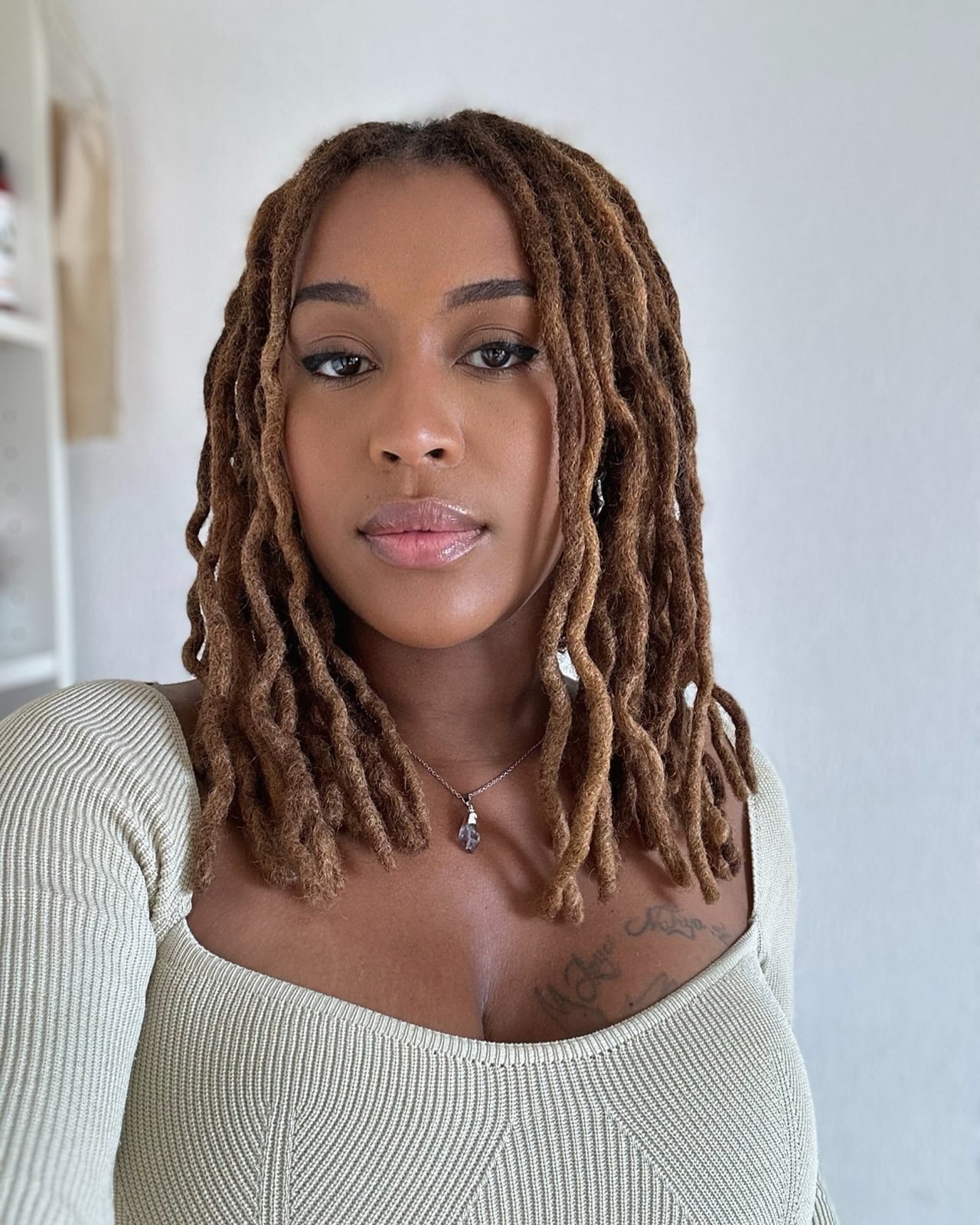
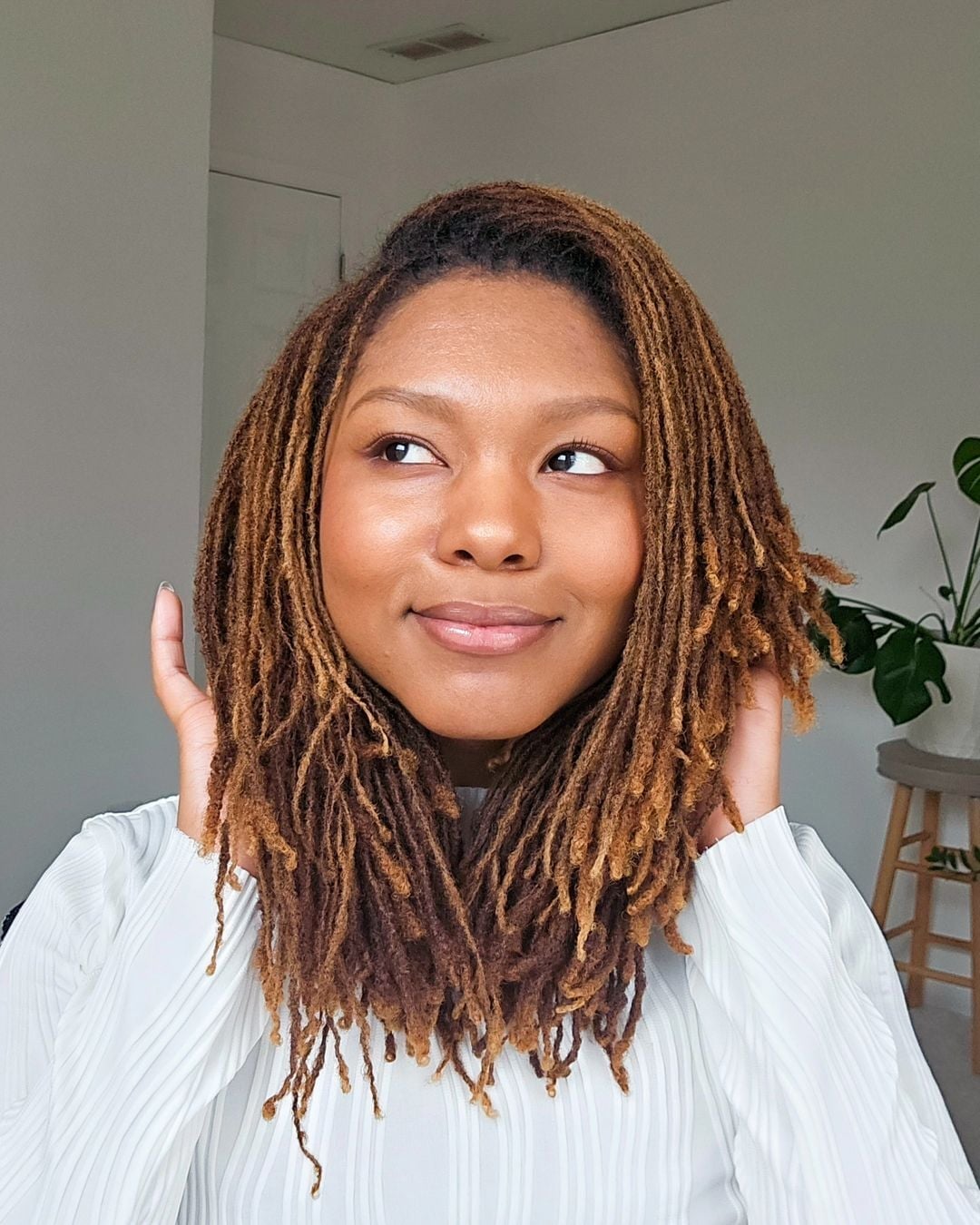
Subtle, blended highlights woven through a medium brown base give a sun-kissed look without a full bleach. Collarbone length locs with a side part create asymmetry that softens round and square faces, and the medium density keeps the shape from feeling too thin or too heavy. Ask your stylist for: collarbone length locs, side part, subtle highlights. The highlights sit close to the natural shade, so the grow-out line is vague rather than a hard stripe. Medium density wavy or curly hair starting at the collarbone takes this placement best, and the side part does the work of framing without bangs.
03. Chin Length Wavy Locs Styled Neatly
Chin-length locs that look deliberate require a decision: air-dry and accept the chaos, or style and own the finish. This version picks the latter, with a side part and a smooth surface that reads as put-together rather than undone. Medium to thick wavy hair starting at the chin holds the shape without collapsing, and oval and heart faces get the most out of the shorter length. Ask your stylist for: chin length wavy locs, side part. A smoothing serum on the palms tames the flyaways that shorter locs love to throw, and a baseline trim every 6 to 8 weeks keeps the ends blunt and the silhouette clean. The hold is in the retwist, so a weekly refresh of the part with a fine-tooth comb keeps the polish.
04. Short Dark Brown Locs With Blonde Tips
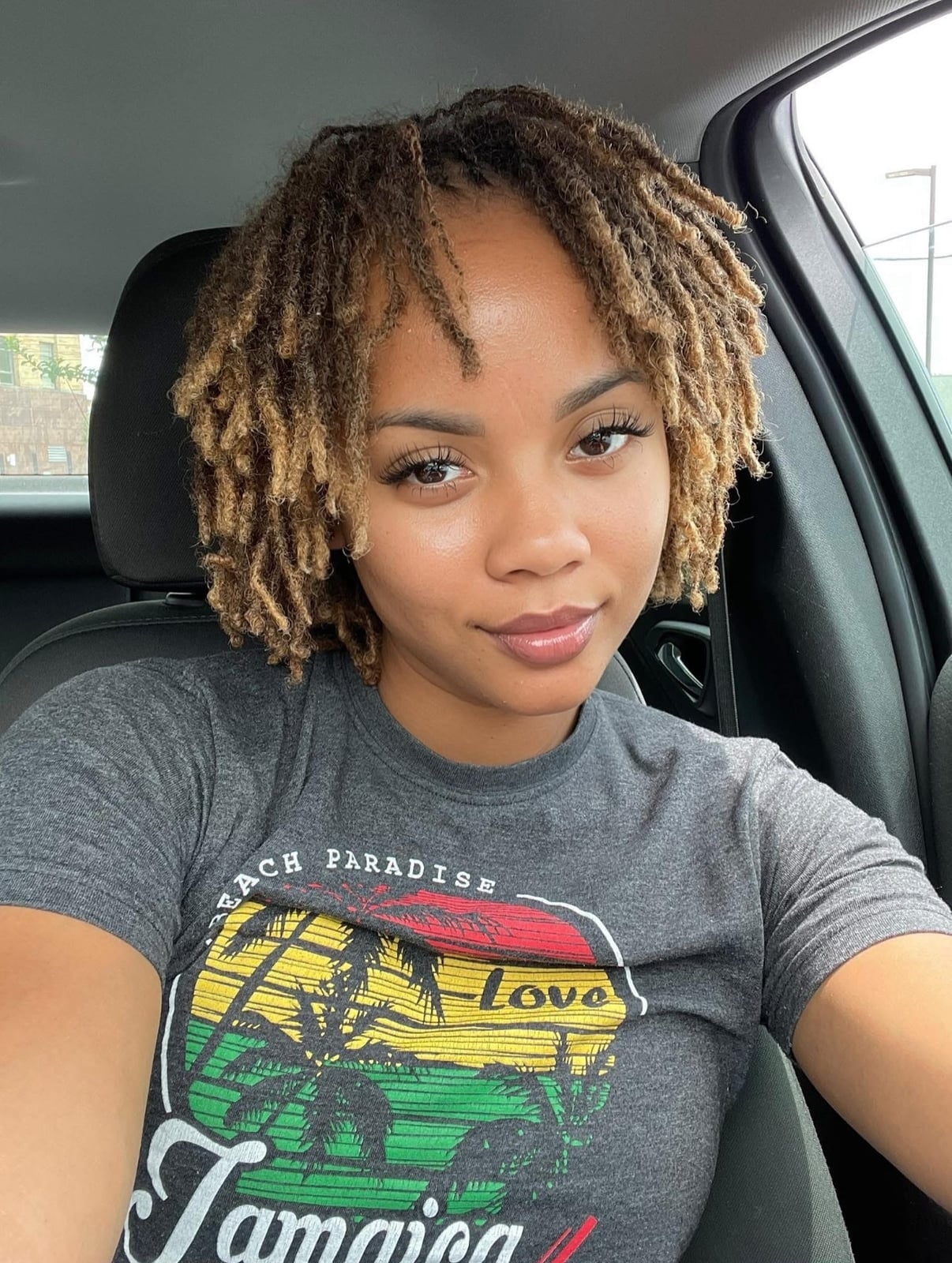
Blonde tips on dark brown locs versus highlights scattered from root to end: which placement keeps the base intact and the grow out subtle? The tips only placement keeps the base intact and the grow out subtle, because the lightest part is already at the ends and the dark root stays dark. Short locs with a middle parting and ear length hit right at the jaw, which suits round and square faces by adding a vertical line. Ask your colorist for: short locs, dark brown with blonde tips, middle part. Medium density hair starting at the ear carries the color contrast without looking sparse. The blonde is concentrated at the tips, so a color safe shampoo is the main upkeep, and a trim every 6 to 8 weeks removes any fading ends before they turn brassy.
05. Short Black Locs With Undercut Styling
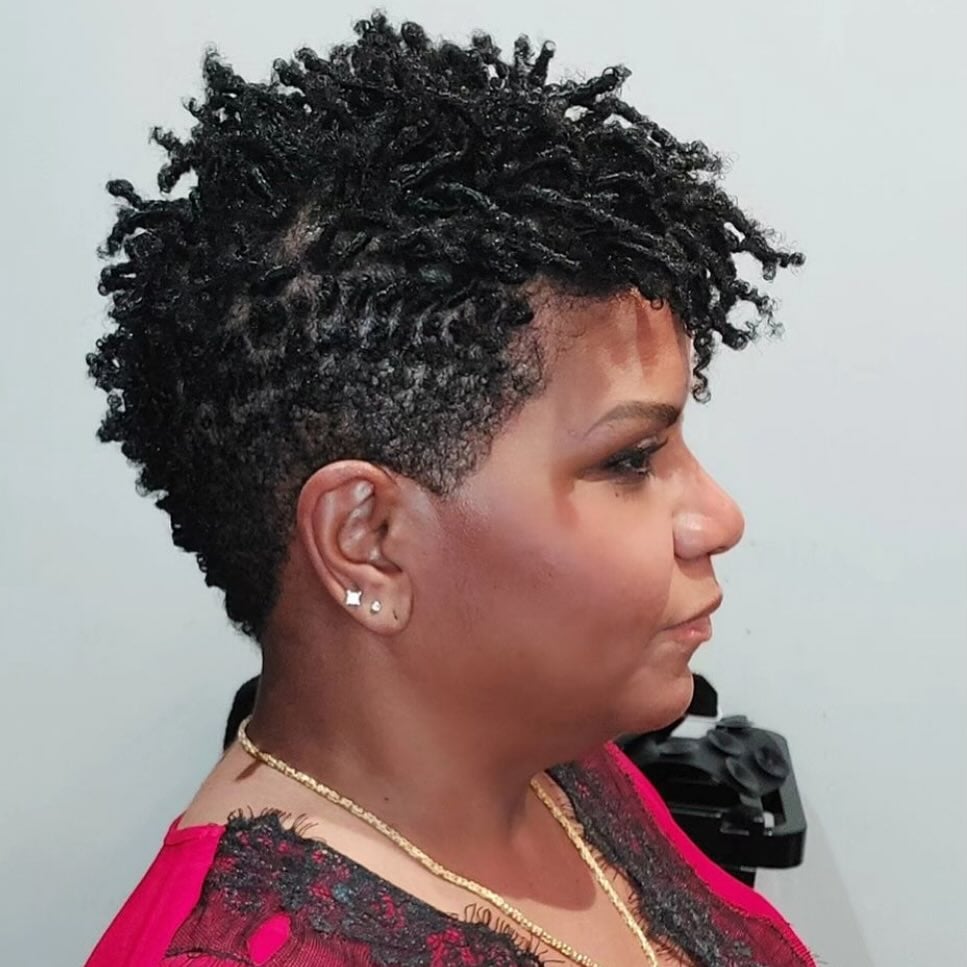
An undercut on short locs is a technical decision as much as a stylistic one: the shaved sides create a clean frame that makes the top locs look taller and more sculpted. Upward styling emphasizes the contrast between the fine-textured locs and the bare skin, which works on most face shapes because the undercut itself provides the structure. Ask your stylist for: short locs, styled up, undercut, middle part. Fine textured hair starting at the ear benefits from the reduced weight on the sides, but the shave maintenance requires a razor every 4 weeks to stay crisp. A light pomade on the locs gives them enough hold to stay upright without looking stiff, and the black color keeps the contrast stark and graphic.
06. Short Coily Starter Locs With Neat Parts
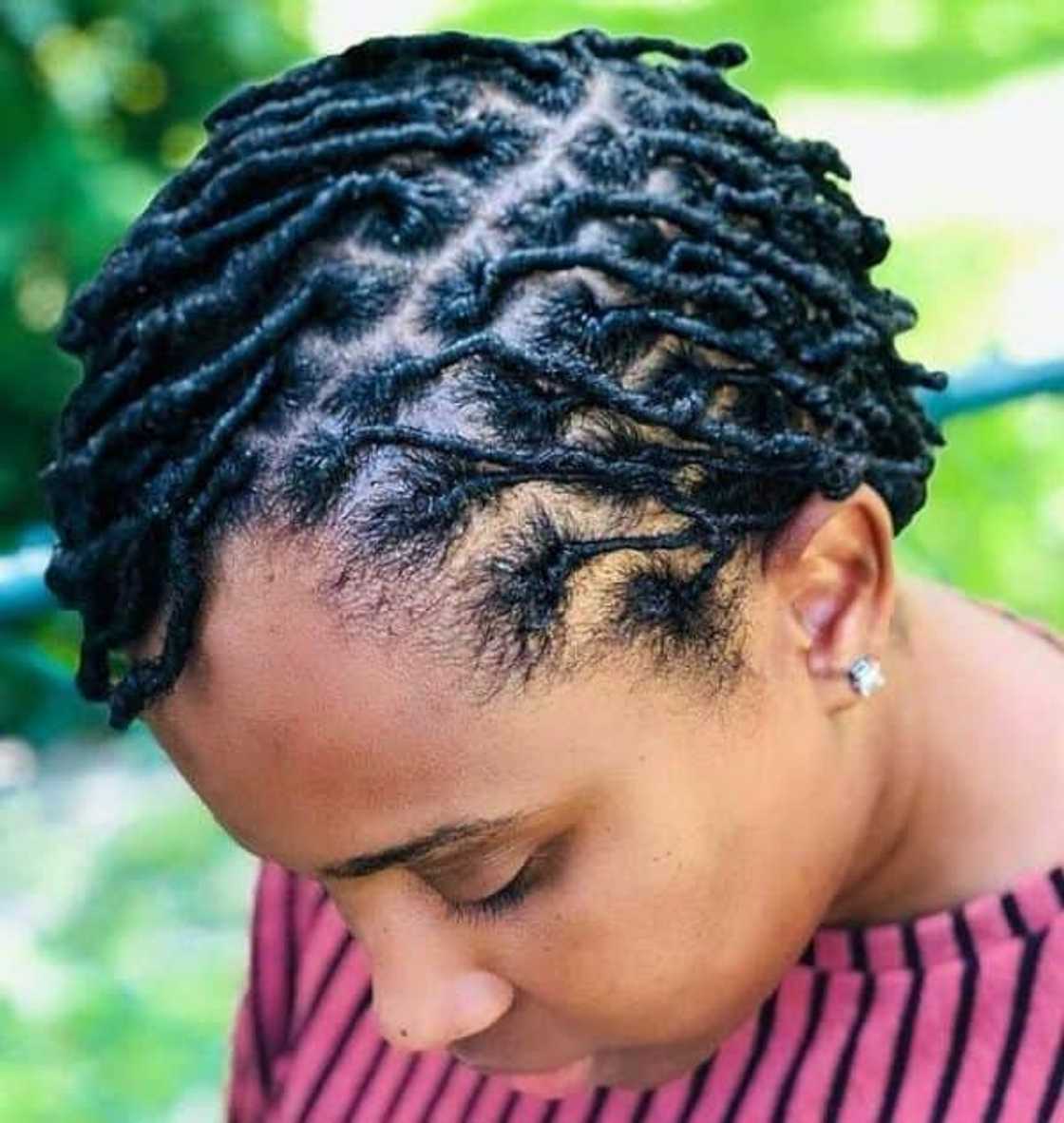
Wondering if your coily texture will hold up as starter locs? It does, especially when the parts are this clean. The neat middle parting and individual sections give short, black coily locs a defined shape. This suits all face shapes, since the short length keeps things balanced. Ask your stylist for: short coily starter locs, neat middle part. A sparing touch of locking gel maintains the definition, and a trim every six to eight weeks keeps the ends tidy.
07. Back View Short Locs With Blonde Highlights
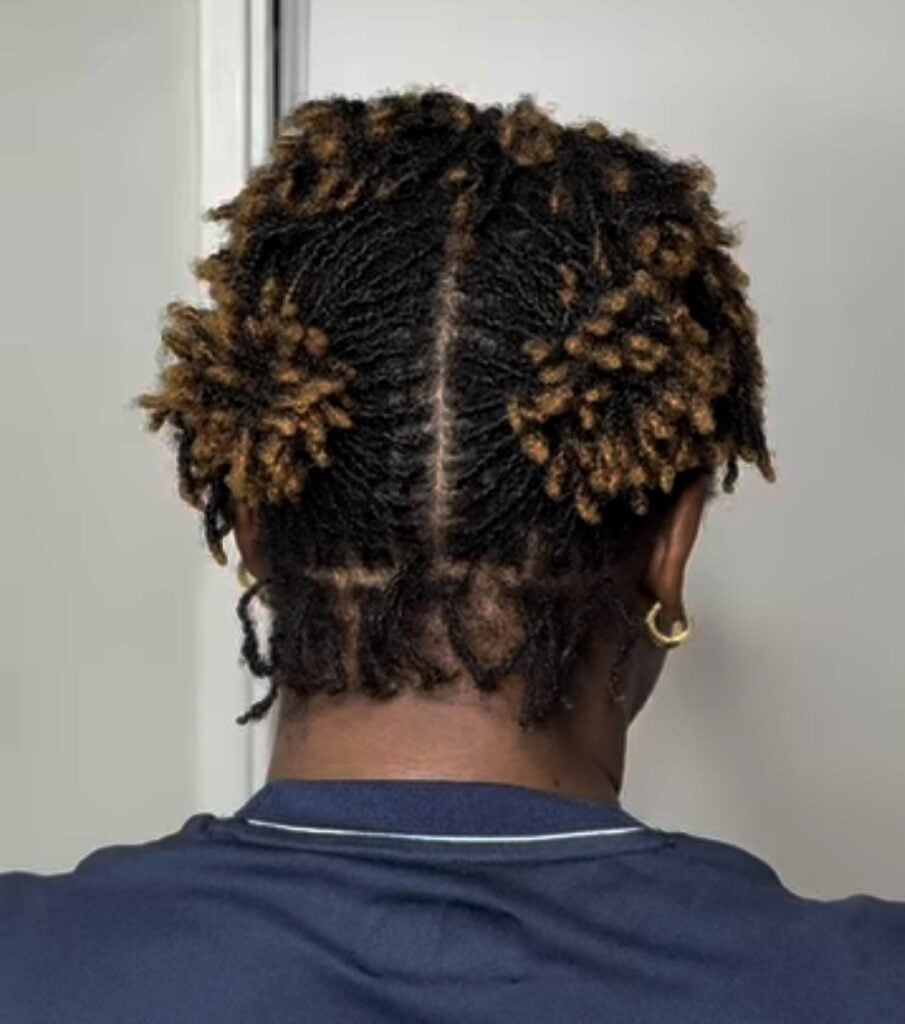
Blonde tips on dark, coily starter locs are a commitment, and the back view tells the real story. The black base with blonde highlights, especially towards the tips, needs a color-safe shampoo to keep the lighter pieces from turning brassy. The middle part and short length make the coily texture read clearly from behind. Ask your colorist for: short starter locs, black with blonde highlights. Plan on a toner every six to eight weeks, and a trim on the same schedule to keep the ends looking sharp.
08. Thick Curly Starter Locs With Middle Part
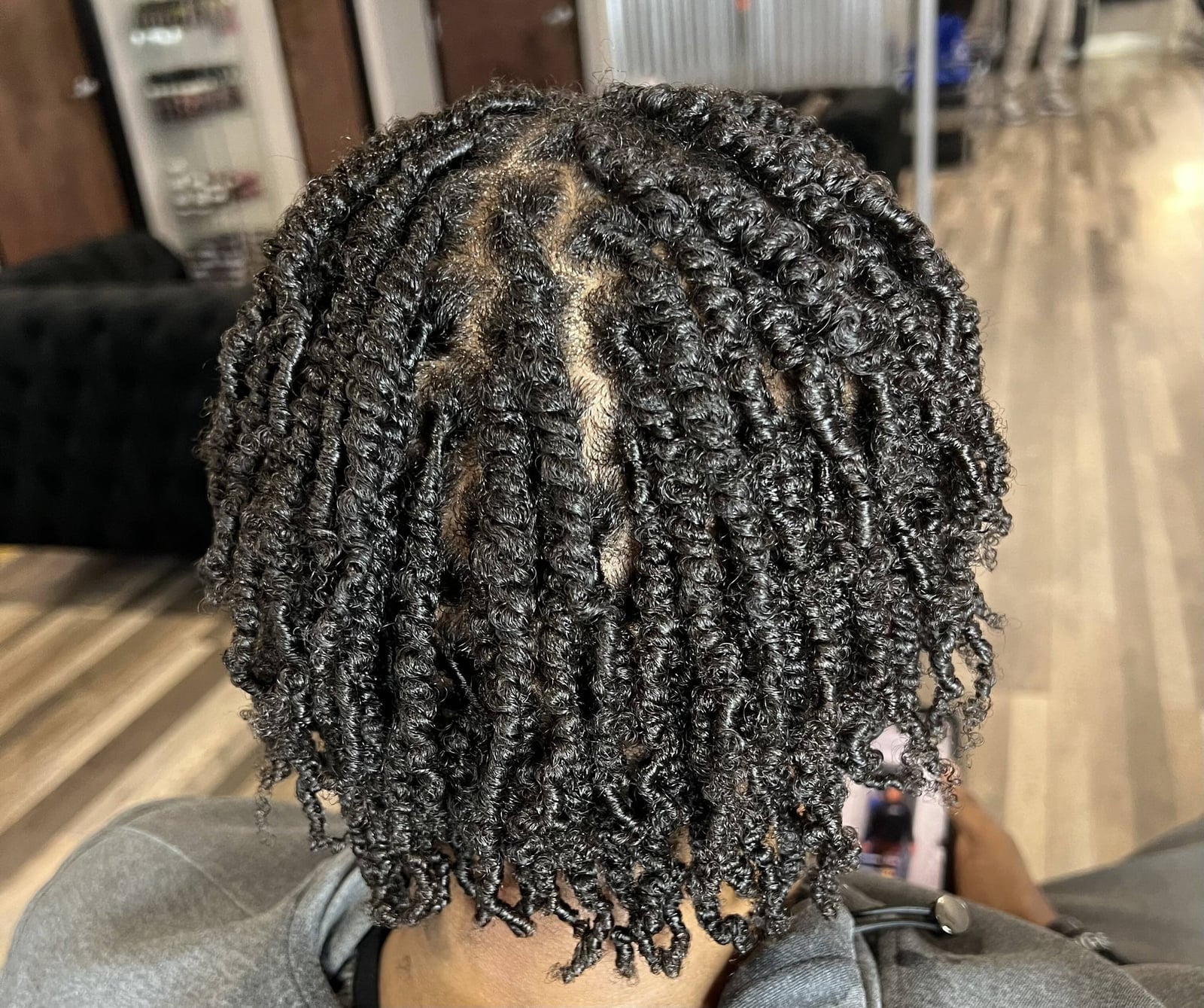
To get tight, uniform starter locs with thick curly hair, request twists as the starting method. This back view shows tightly coiled locs in black with subtle brown undertones, neatly parted down the middle. Bring reference photos and be specific about the part, since that geometry defines the style. The right parting keeps the locs from merging as they mature, and the thick texture gives each one body. A moisturizing butter keeps the curls defined between visits.
Ask your stylist for: short thick curly starter locs, middle part.
09. Chin Length Coily Locs With Blonde Tips
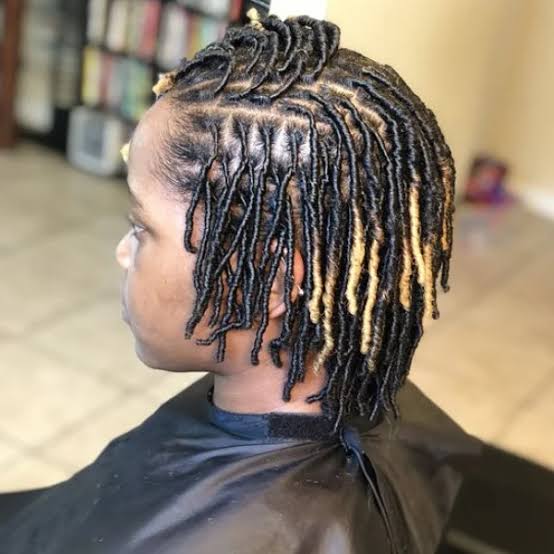
Blonde tips on coily locs have a habit of fading unevenly, and that is the mistake most people discover too late. This chin length style, with a side part and slight blowout, shows the payoff when it goes right: the black base grounds the look while the lighter ends add contrast. Ask your colorist for: chin length coily locs, side part, blonde tips. The drawback is brassiness, so a purple shampoo is essential. Low heat sets the blowout, and a trim every six to eight weeks keeps the blonde ends from looking ragged.
10. Collarbone Black Locs Styled Loosely
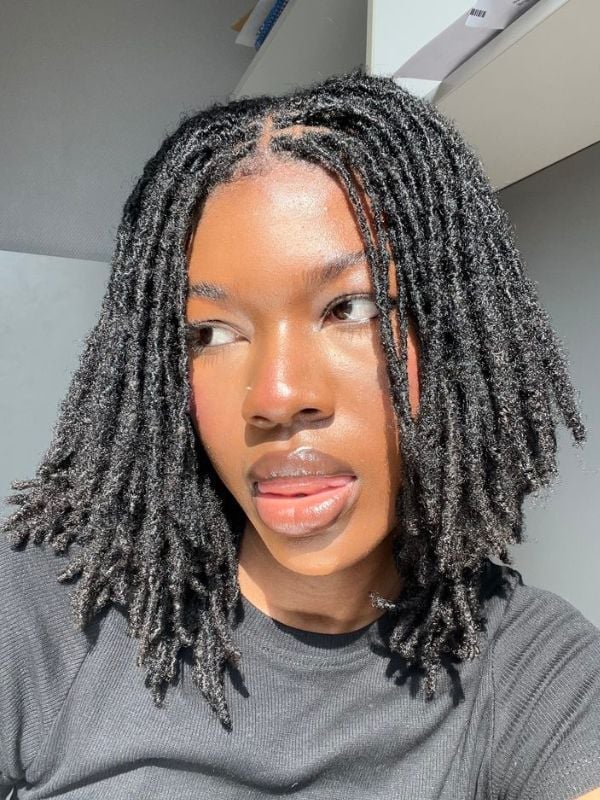
Loose styling on collarbone length locs is about letting the weight do the work. Thick, black locs with a middle part hold their shape without tight manipulation, and the defined texture shows through the natural sheen. This approach suits round and square faces, since the length falls below the jaw and softens the line. Ask your stylist for: collarbone length thick locs, middle part, loose style. A lightweight serum adds shine without weighing the locs down, and a trim every six to eight weeks keeps the ends from splitting.
11. Short Black Locs Updo With Face Framing
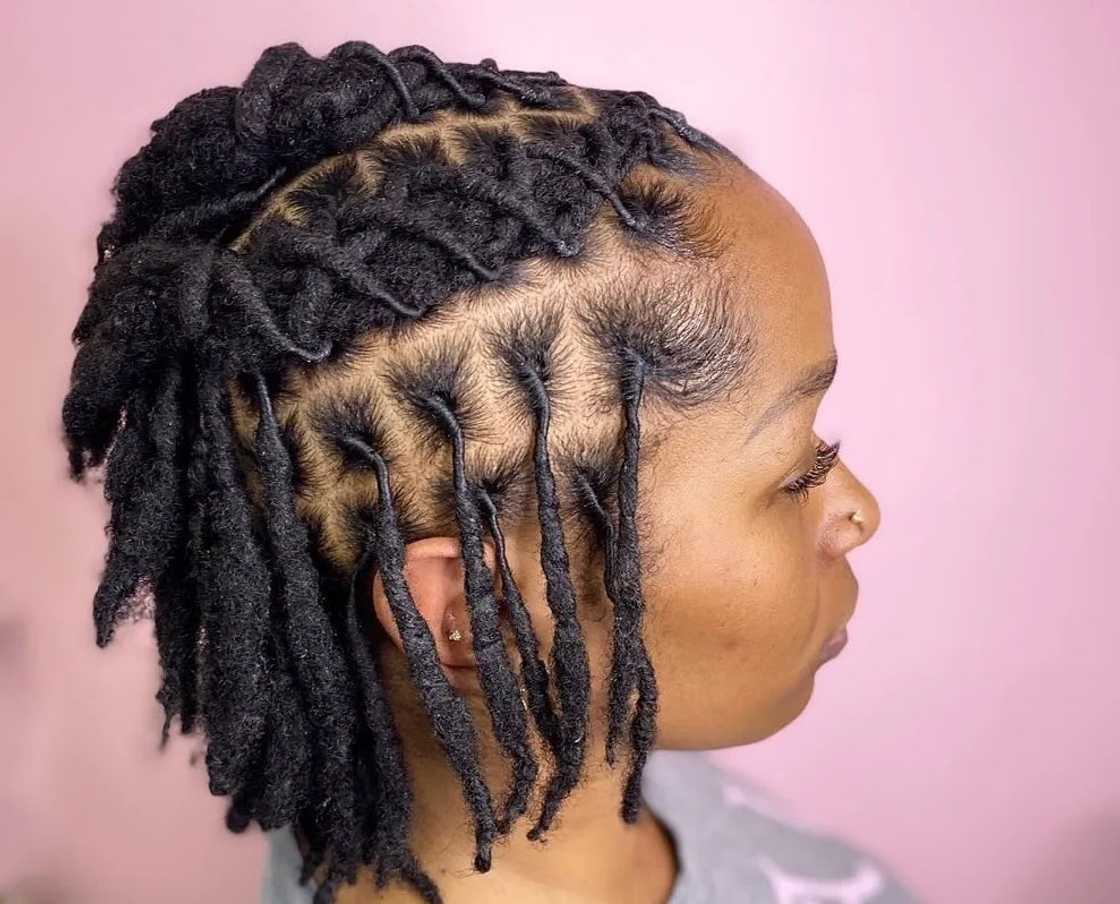
How do you keep a neat updo on locs that barely reach your collarbone? The answer is a middle part and face-framing pieces left loose, which gives the style height without sacrificing the texture that makes short locs interesting. Thick hair holds this shape best, since fine locs can slip out of pins before the evening starts.
Ask your stylist for: short locs updo, middle part, face-framing pieces. Once the updo is pinned, the loose locs around your face soften the whole look and hide any unevenness at the nape. Expect to reset the pins every few days, and book a trim every six to eight weeks to keep the ends clean. The style wears well for a full day, but the face-framing pieces will need a quick re-twist or re-pin by mid-afternoon.
12. Thick Black Locs In A High Bun
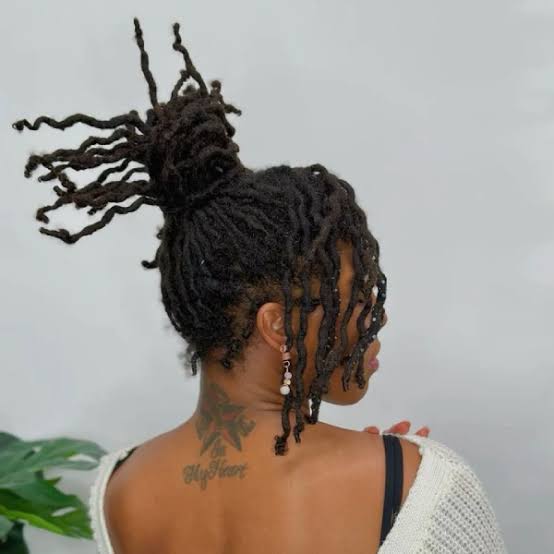
A high bun on shoulder-length locs only works when the hair has enough density to fill the shape, and thick locs deliver that volume without any padding. The bun sits high on the crown while a few locs fall forward around the face, so the style looks tidy but not severe. Ask your stylist for: thick locs updo, high bun, face-framing pieces. The black color keeps the bun looking solid and defined, and the thick texture means the style holds its shape through a long day. This one suits all face shapes, though the height does elongate a round face nicely.
13. Fine Density Micro Locs Partially Up
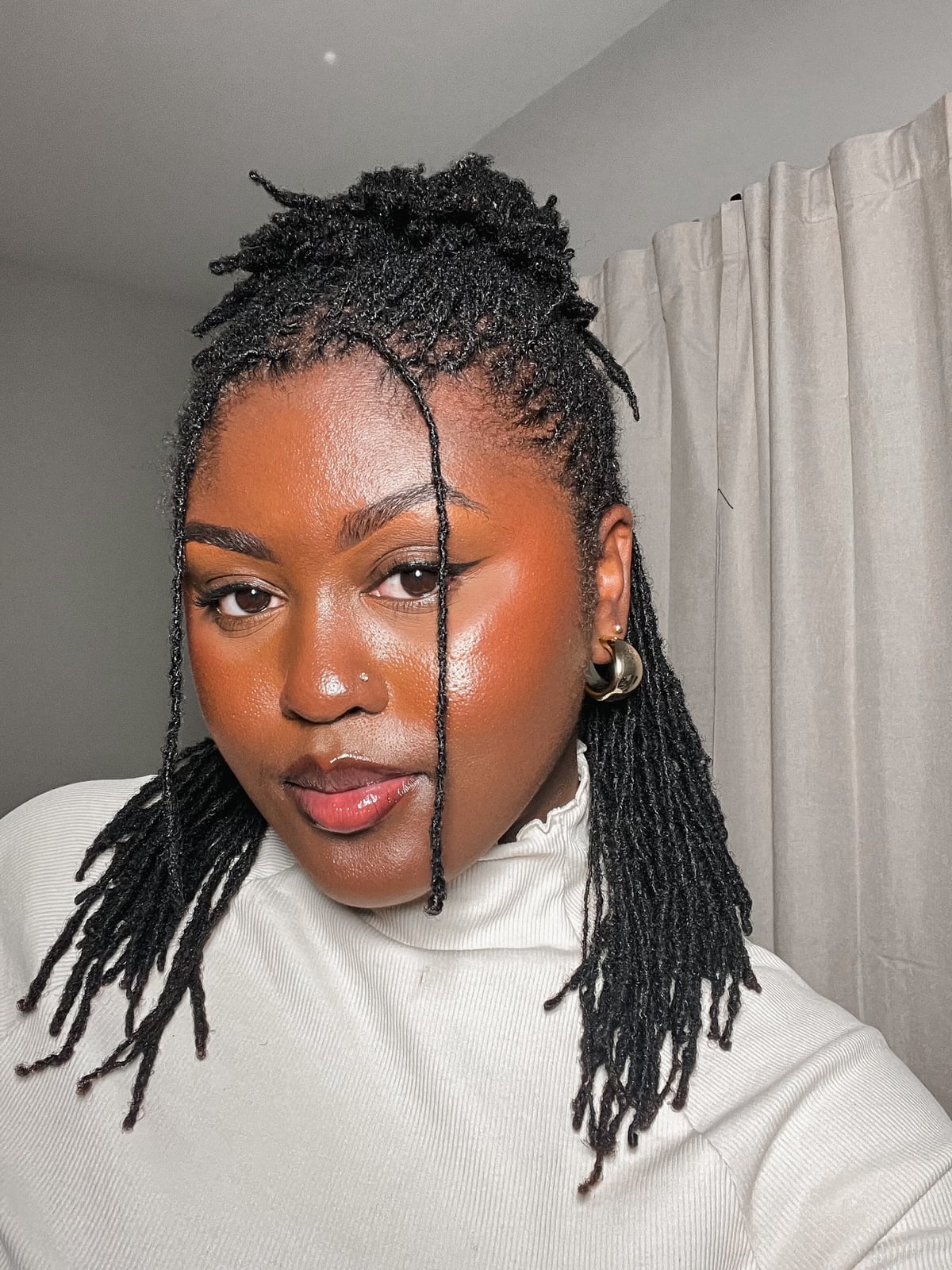
Micro locs are the lighter, finer cousins of standard locs, and that difference shows up most in how they style. Where thick locs hold a bun with sheer bulk, fine density micro locs move freely and tuck into a partial updo with less weight pulling at the roots. The front section is pinned up while the rest falls to the shoulders, which keeps the style from looking flat. The middle part and solid black color keep the fine texture from reading as messy.
Ask your stylist for: shoulder length micro locs, partially updo. This suits fine textured hair best, since the smaller locs match the natural density rather than fighting it. The partial updo gives you the neatness of an updo with the freedom of loose hair, and it holds well for a casual day. A light serum keeps the micro locs defined, and a trim every four to six weeks maintains the shape.
14. Shoulder Length Starter Locs With Curled Ends
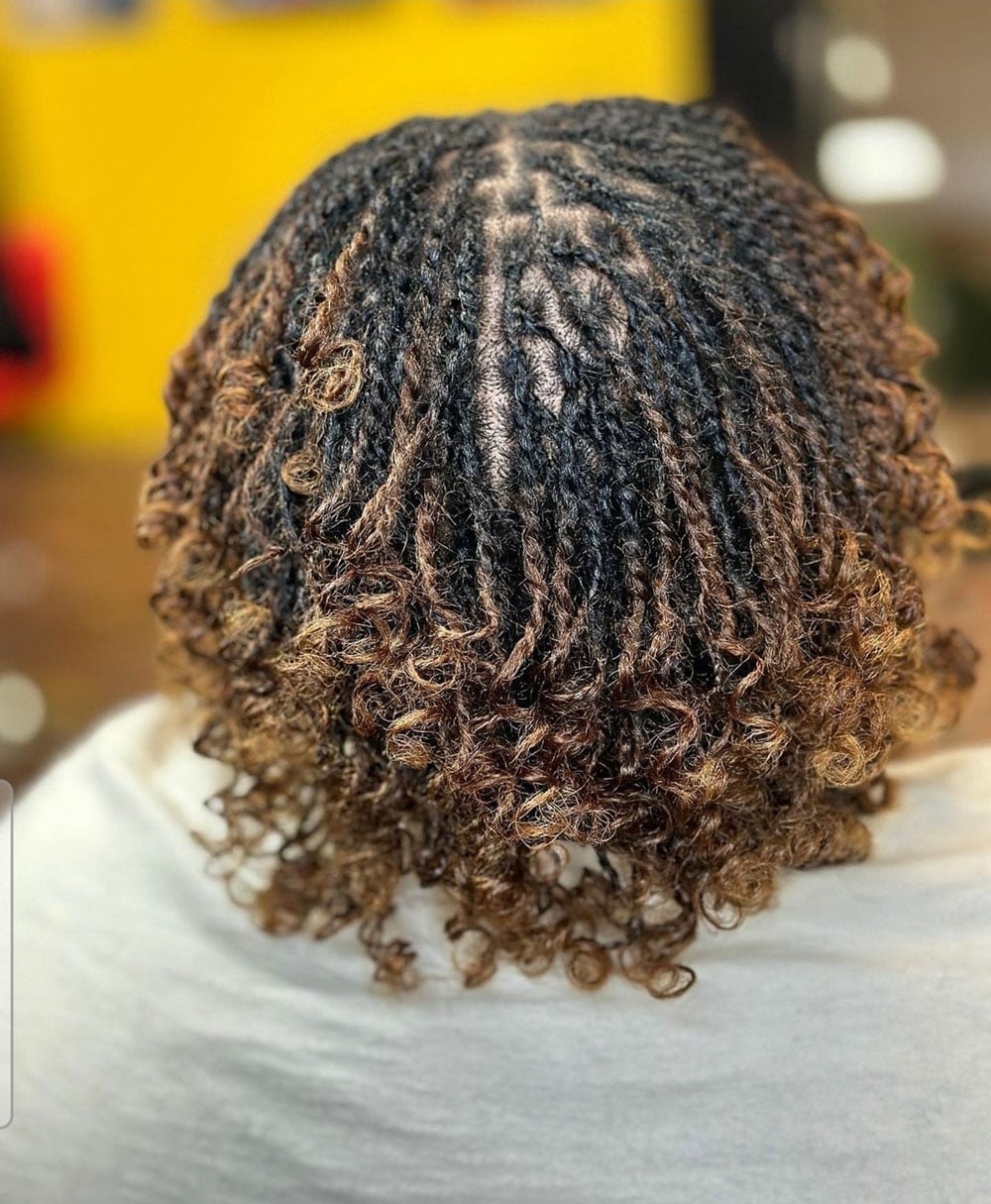
What if you want the structure of starter locs without the blunt, uniform ends? Curled ends add a playful finish that softens the whole style. The shoulder-length locs are parted down the middle, and each loc is curled at the tip, which gives the coily texture a bit of bounce. The black base carries subtle brown highlights, so the curls catch a little warmth without changing the overall color.
Ask your stylist for: shoulder length starter locs, middle part, curled ends. The curled ends are the key detail, so be specific that you want them on every loc, not just the front. This style suits coily hair that is long enough to wrap around a rod, and the middle part works on most face shapes. The curls soften the starter loc stage, making it feel more styled than in-progress.
15. Shoulder Length Half-Up Half-Down Locs
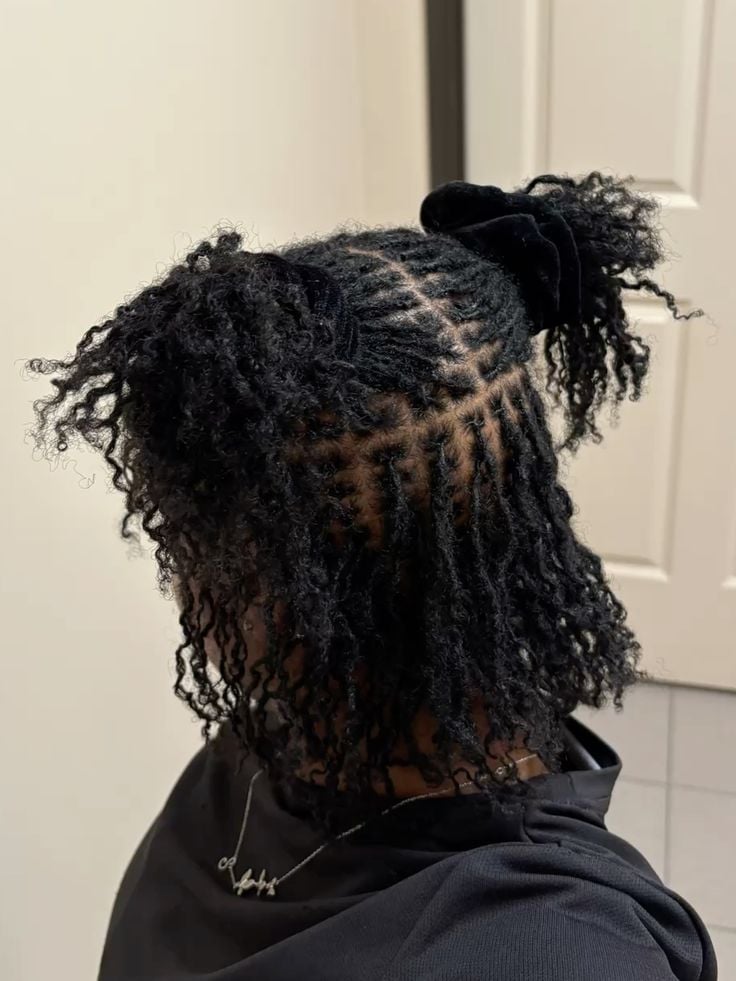
The half-updo here is built by gathering the top section into a high ponytail while the rest falls loose to the shoulders, which balances volume at the crown with the natural curly texture below. The locs are parted into neat squares, a sign of the early loc stage, and a voluminous scrunchie holds the top section without crushing the roots. Ask your stylist for: shoulder length locs, half up half down, neat parts. The style suits curly or thick hair best, since the loose bottom needs some weight to hang well. The scrunchie gives a softer hold than a tight elastic, so the top stays up without pulling at the edges.
16. Shoulder Length Coily Starter Locs With Clips
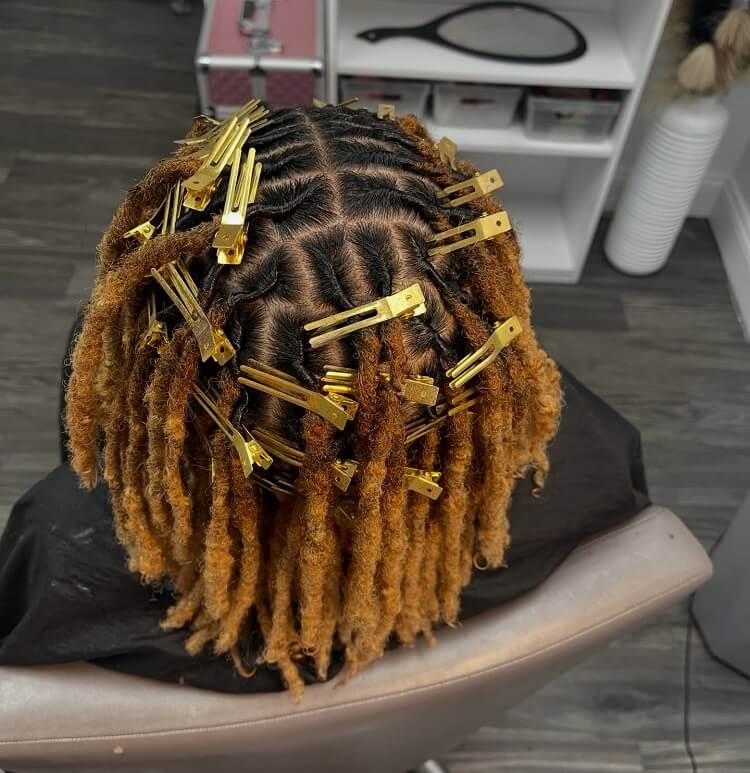
The gold clips are the dead giveaway that this look is a work in progress. Those sections are being held in place while the retwist sets, which means the blonde highlights at the ends are an intentional choice, not a happy accident. The square parting keeps everything organized during the process.
Ask your stylist for: shoulder length coily starter locs, square parts, gold clips. This setup suits coily, thick hair starting at shoulder length and works for all face shapes. Keep the clips in for a few days to help the locs hold their new shape, and schedule a trim every six to eight weeks to keep the ends clean.
17. Chin Length Coily Starter Locs Retwisting
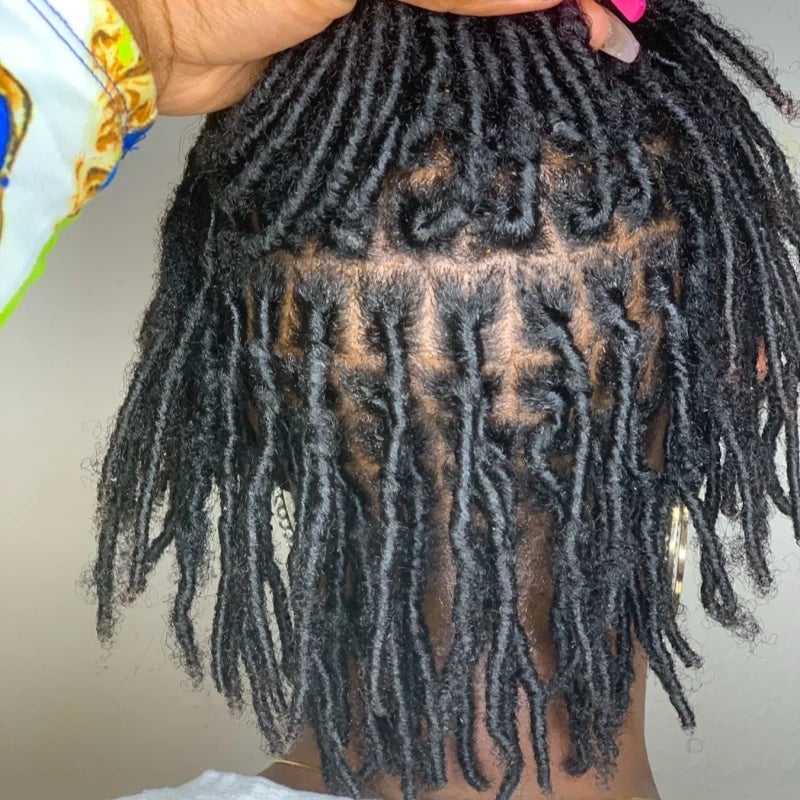
The neatness of the parts here is the whole point, and the most common place things go wrong. If the sectioning is sloppy during a retwist, the locs can end up uneven in size or direction, which is a headache to fix later. A middle part and precise square sections keep each loc on its own path. Ask your stylist for: chin length coily starter locs, neat middle part. The real drawback is that this precision takes time, about two to three hours in the chair, and rushing it guarantees wonky results.
18. Chin Length Thick Wavy Locs With Geometric Parts
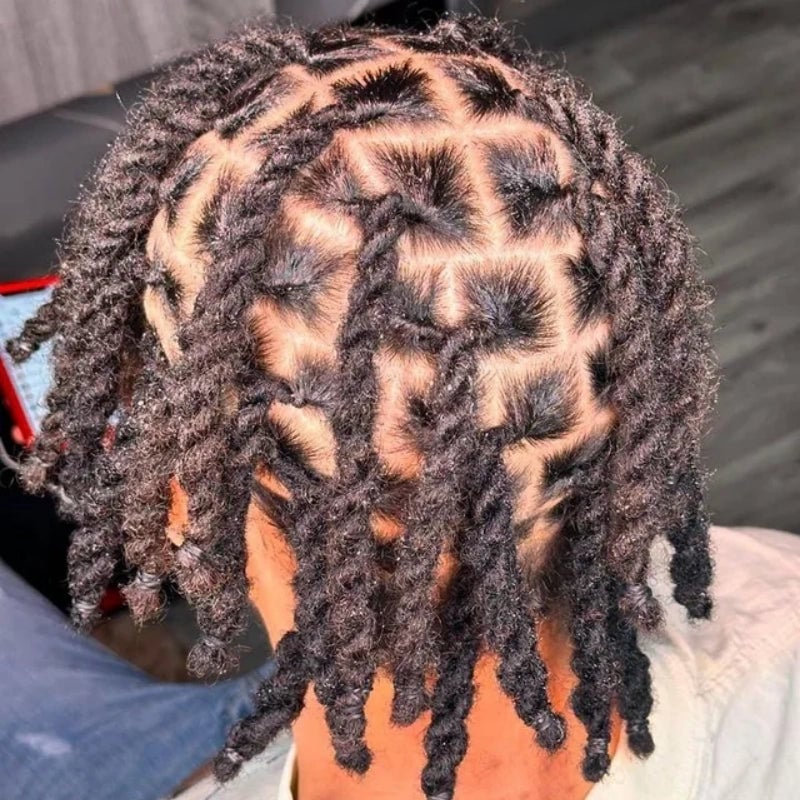
Who actually benefits from a geometric parting? Anyone with thick, wavy hair who wants the scalp to be part of the design. The clean lines of the sections show off the starting texture of the locs, and the chin length keeps the pattern visible without being hidden by length. Ask your stylist for: chin length thick wavy locs, geometric parting. This works for all face shapes, though it reads best when the hair is thick enough to fill each section without gaps.
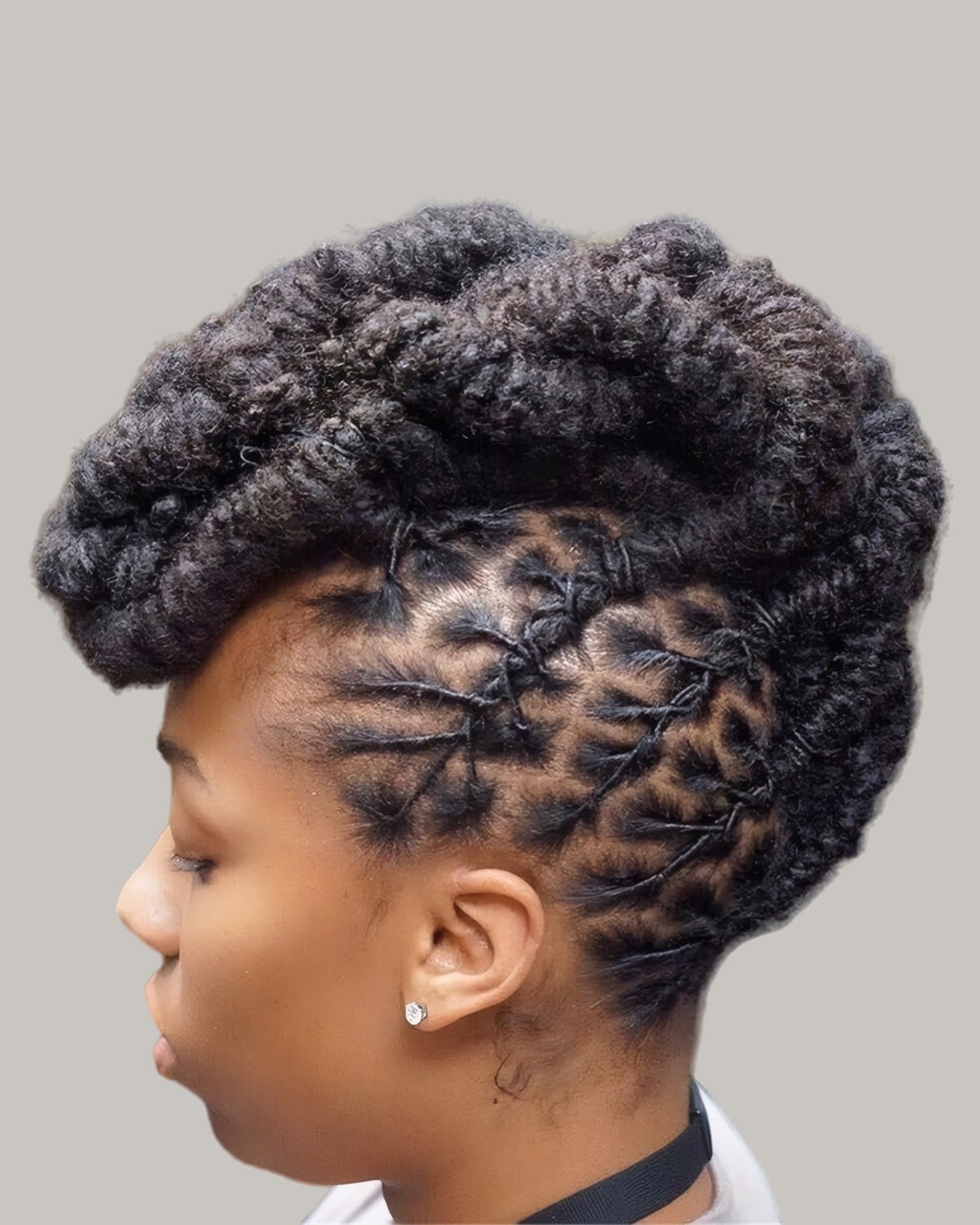
19. Stylish Types of Dreadlocks
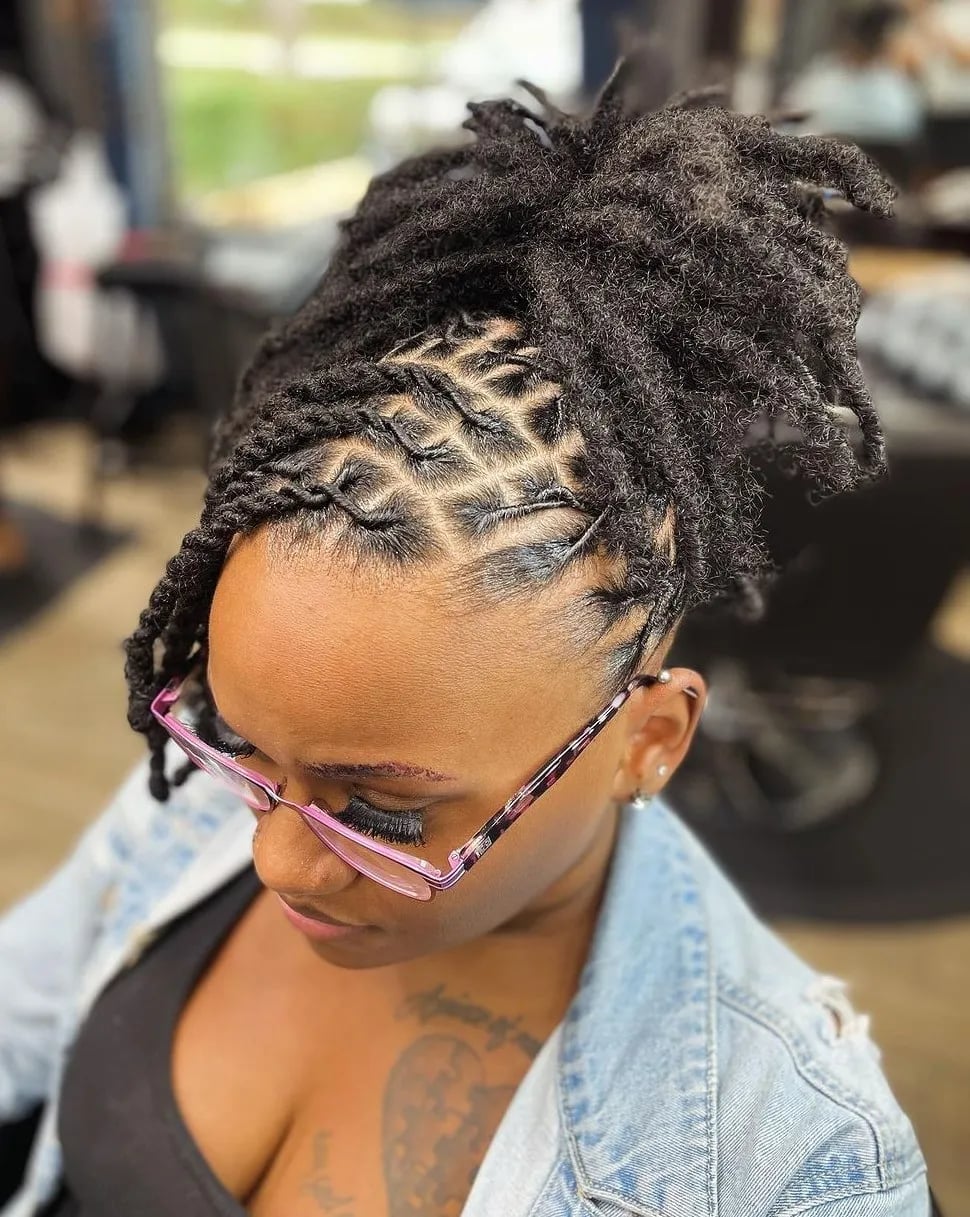
The technique behind a dreadlock style determines how it behaves over time. This shoulder-length updo with a zig-zag parting shows how the parting pattern can add visual interest even when the hair is pulled back. The coily, thick texture holds the shape well, and the dark brown color keeps the focus on the structure.
Ask your stylist for: stylish dreadlock ideas with a zig-zag parting. The variety in loc techniques, from twist and rip to interlocking to palm rolling, means the same length and texture can produce very different results. A salon-leaning approach is best for getting the parting precise and the base consistent.
20. DIY Shoulder Length Coily Locs Ponytail
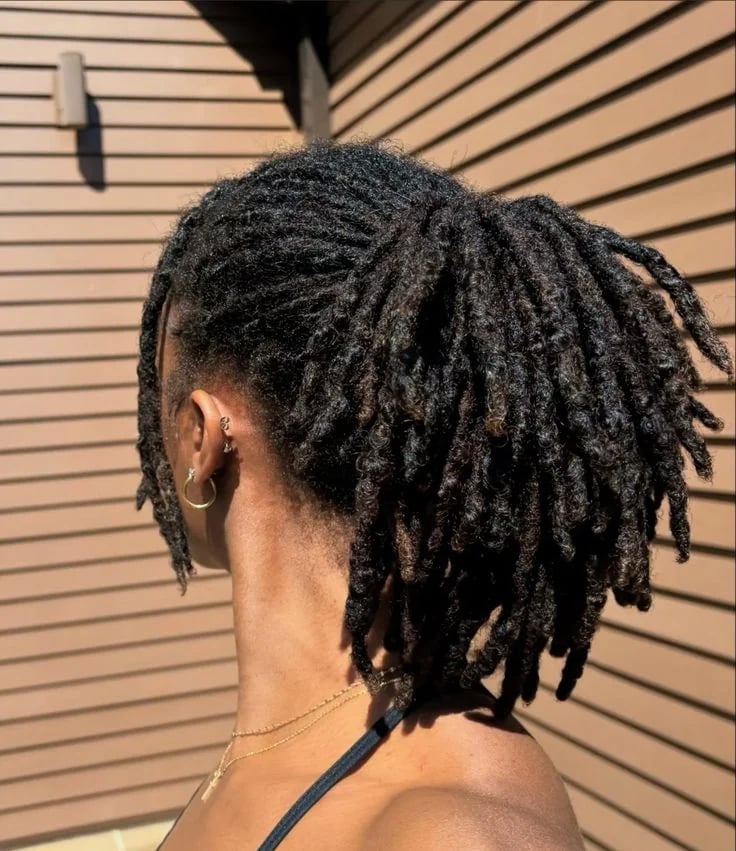
A neat ponytail with starter locs is absolutely doable at home, but it requires a realistic timeline. The side view here shows a middle part and shoulder-length coily texture pulled back smoothly, which only works if the locs are well-formed and the sections are consistent from the start. Ask your stylist for: shoulder length coily locs, neat ponytail, though the initial setup is best done in the salon to get the parting and base right.
After that, DIY maintenance is about patience. Retwisting every four to six weeks keeps the locs tidy enough to pull back cleanly. The ponytail itself takes about ten minutes to style with a soft elastic and a bit of oil on the edges. The trade-off is that skipping retwists means the ponytail will look looser and less defined, so consistent upkeep matters.
Final Thoughts
For the easiest growth phase, keep locs separated and allow the scalp to breathe. Neatly parted individual styles or styles that avoid tight manipulation let the locs form at their own pace without added stress on the roots.
- Retwist or maintain locs every 4-8 weeks, depending on hair texture and desired speed of locking.
- Keep scalp clean and moisturized with lightweight oils to prevent dryness.
- Avoid excessive manipulation and tight styles to prevent breakage.
- Protect locs at night with a satin bonnet or scarf.
Embrace the process and let your locs evolve naturally.